What a Half-Day Video Shoot Actually Produces
A half-day video shoot can bank weeks of content when it is planned as a batch. Of course, most owners book a shoot for one video. However, the same four hours, planned differently, can produce a whole stack of finished pieces. So this guide walks through a real half-day studio session: one lighting setup, one wardrobe change, a scripted list of short videos, and what leaves the studio at the end.
What a half-day video shoot produces
One shoot, one video is the expensive way to do it
A lot of the work in a shoot happens before anyone speaks. First, lights go up, cameras get framed, sound gets checked, and the host settles in. Then, in the one-video model, all of that gets torn down after a single piece. So you pay for the whole setup and use a sliver of it.
A batch, by contrast, flips that math. The setup happens once, and every video after the first rides on it. In fact, that is the whole idea behind a studio session. The lights, the framing and the sound are already right, so each extra video takes minutes, not a new setup.
That also changes what a shoot is for. So it stops being an event and becomes inventory: a bank of finished content you can post for weeks. The outcome: more pieces to publish from the same four hours, and a calendar that is filled before the month starts.
A half-day video shoot at a glance
Here is the whole session in one view. Each row is one piece of the batch model. Then the last two columns show where it comes from and what you will notice on the day.
| Trait | What it means | Where it comes from | What you notice |
|---|---|---|---|
| One setup | Lights, cameras and sound are set once | The studio | So no time is lost resetting between videos |
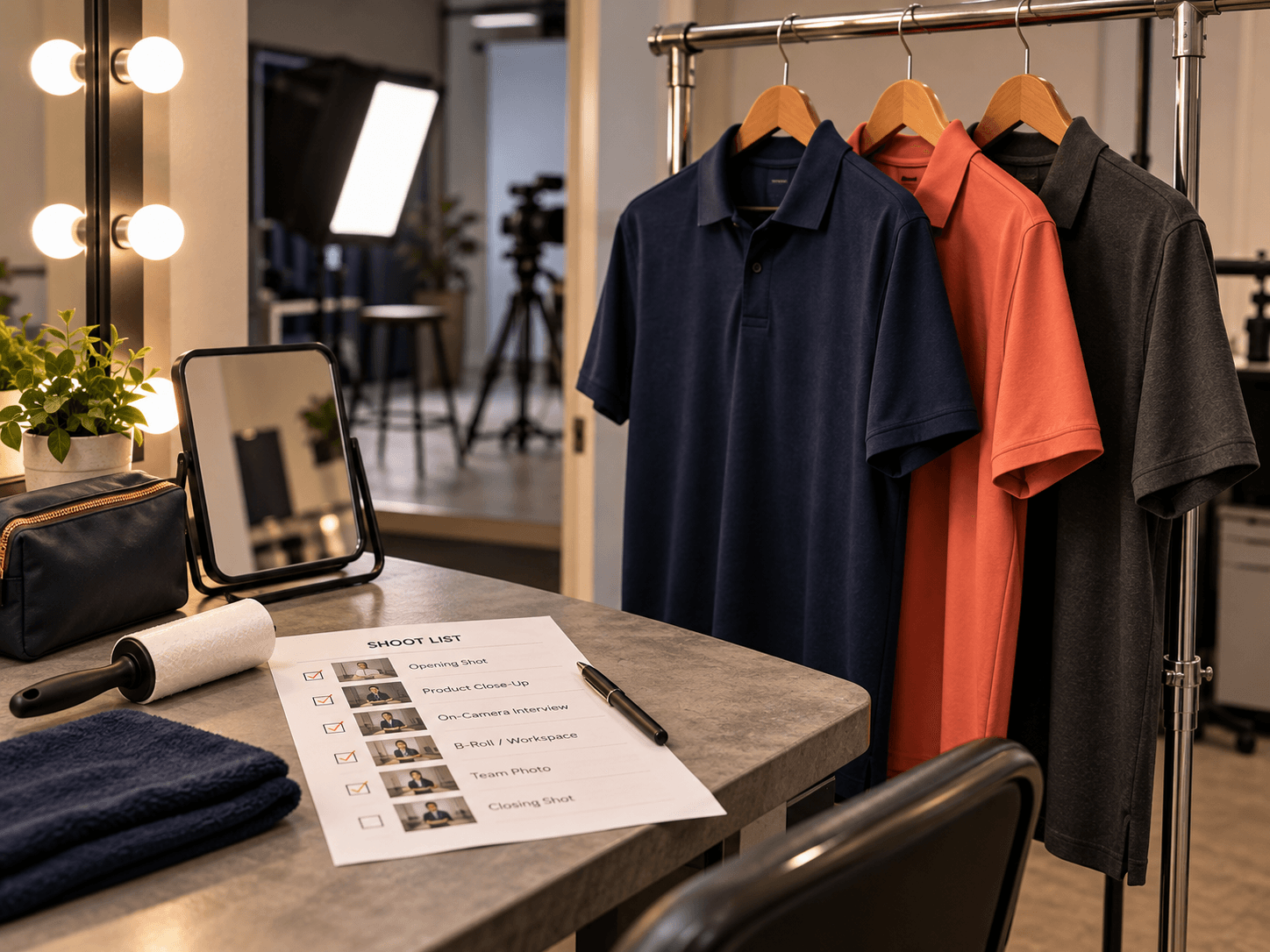
| One wardrobe change | Two looks across the session | Your prep list | So the videos do not all look alike |
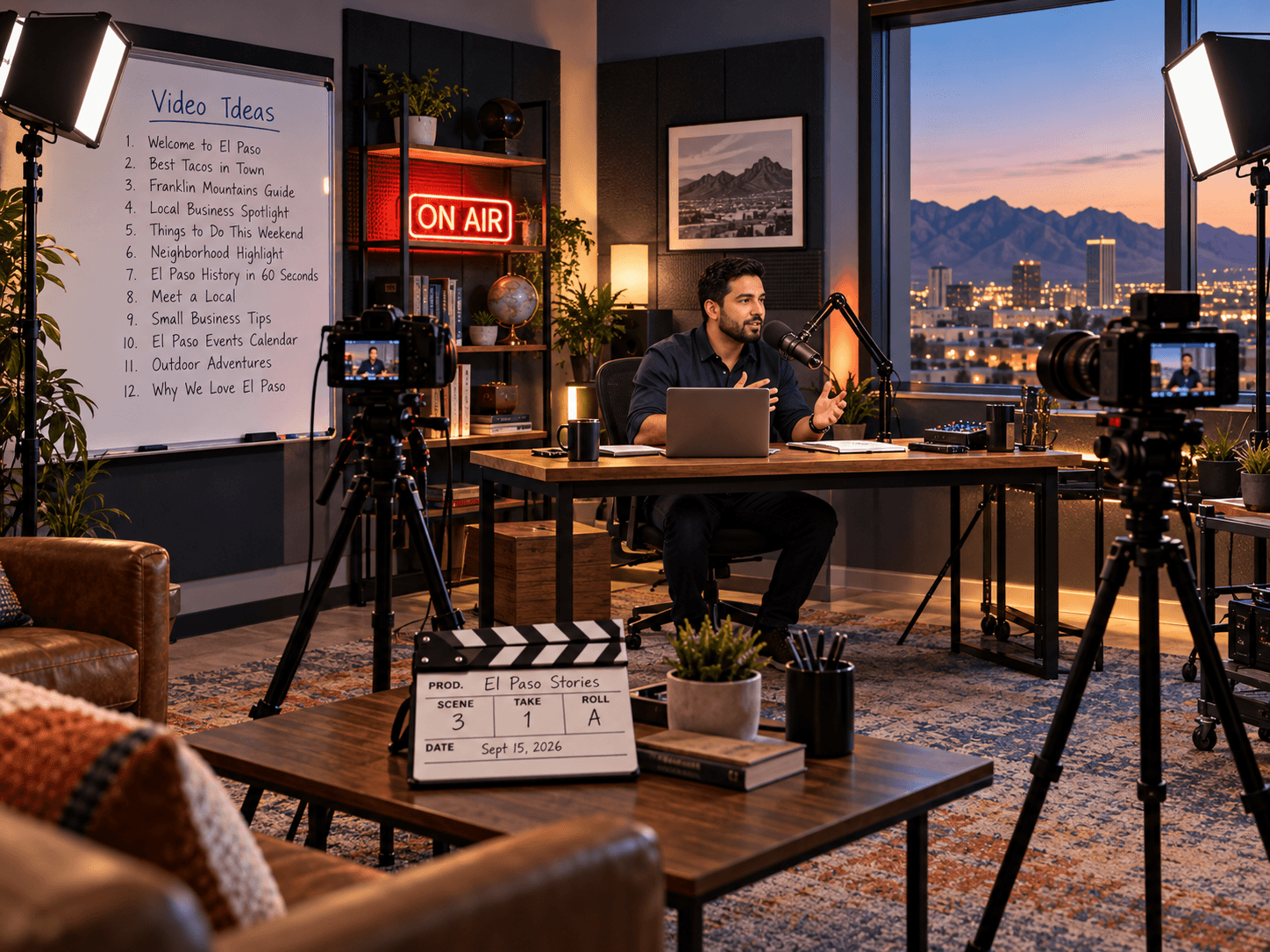
| A topic list | Every video named before the day | Your prep list | Then nobody stops to decide what to say |
| Short scripts | One or two sentences per video | Your prep list | So each take stays short and clean |
| On-screen graphics | Any numbers or visuals you want shown | Your prep list | Then edits move faster later |
| Your files | The footage from the session, yours to keep | The shoot itself | Ownership is not a question |
| The edit plan | What gets cut, in what order | The end of the session | You leave knowing what comes next |
The batch model: one setup, one wardrobe change, many finished pieces
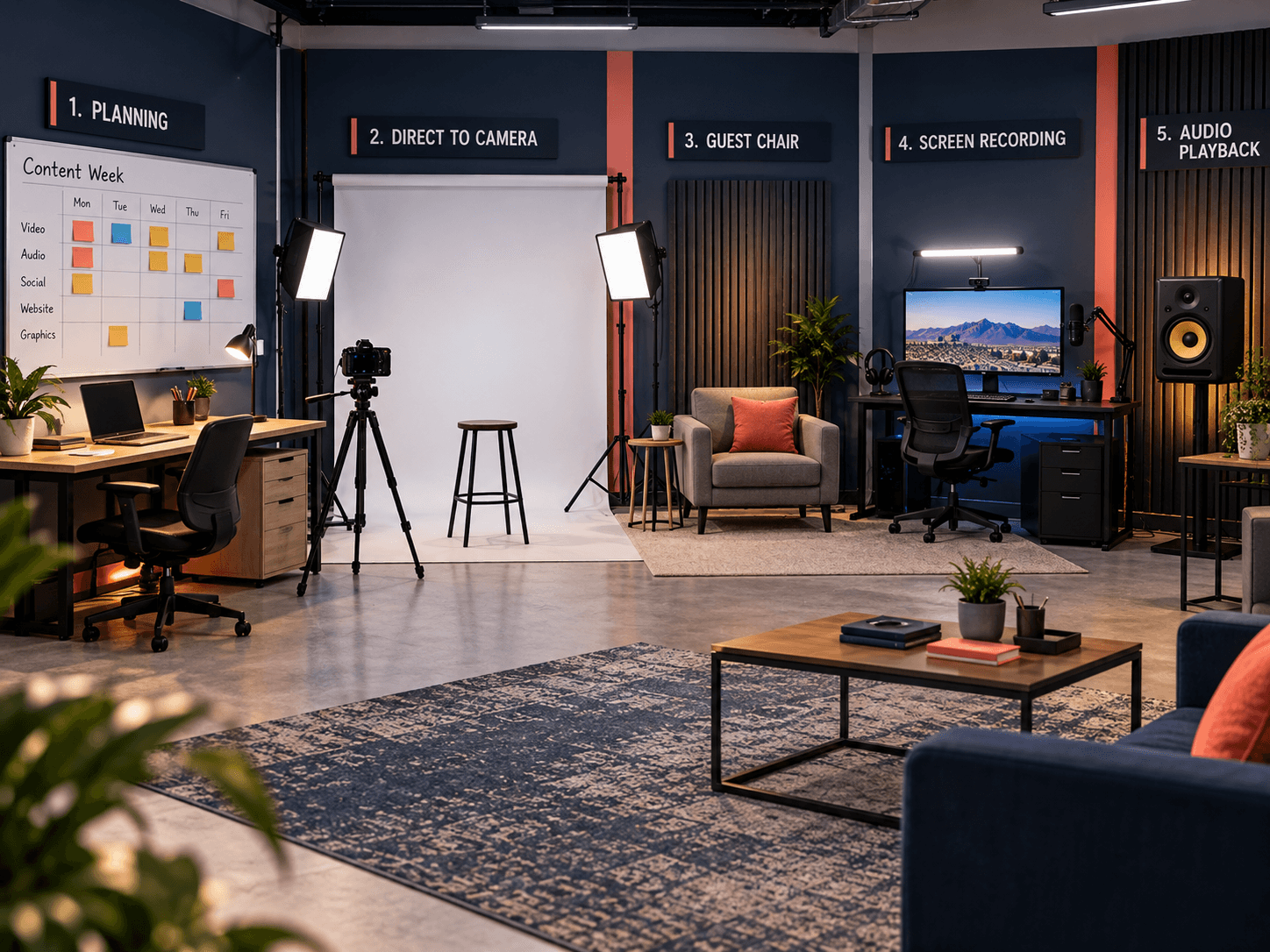
The batch model is simple. You set up once, then film many short videos in a row, and change clothes once in the middle. So the session produces a stack of pieces instead of a single promo. At VenPro Solutions, we run our own studio this way every week. We also book one-off shoots for El Paso businesses on the same model.
The structure works because each piece is short and scripted. A batch video shoot for a small business is not a documentary. It is a run of focused clips, each with one point, such as a tip, an answer to a common question, or a quick look at a service. Also, short pieces are easier to post, easier to reuse and easier to re-cut later.
Also, the wardrobe change matters more than it looks. It splits the session into two looks, so a month of posts does not feel like one long take. The outcome: a studio session that turns into a content bank, not a single clip.
What a real half-day video shoot looks like, hour by hour
Here is a sample four-hour plan built on the batch model. Of course, the exact order shifts with each client. However, the shape stays the same: set up once, film the list, change once, and close with a plan for the edits.
- Hour one: set up and warm up. Lights, cameras and sound get locked in. Then the first few scripts go on camera while the host gets comfortable.
- Hour two: work the list. Next, the session runs through the topic list in order, one short video at a time, with retakes only where needed.
- Hour three: change and switch it up. After the wardrobe change, the second half of the list gets filmed, often in a different format, such as direct to camera or a guest chair.
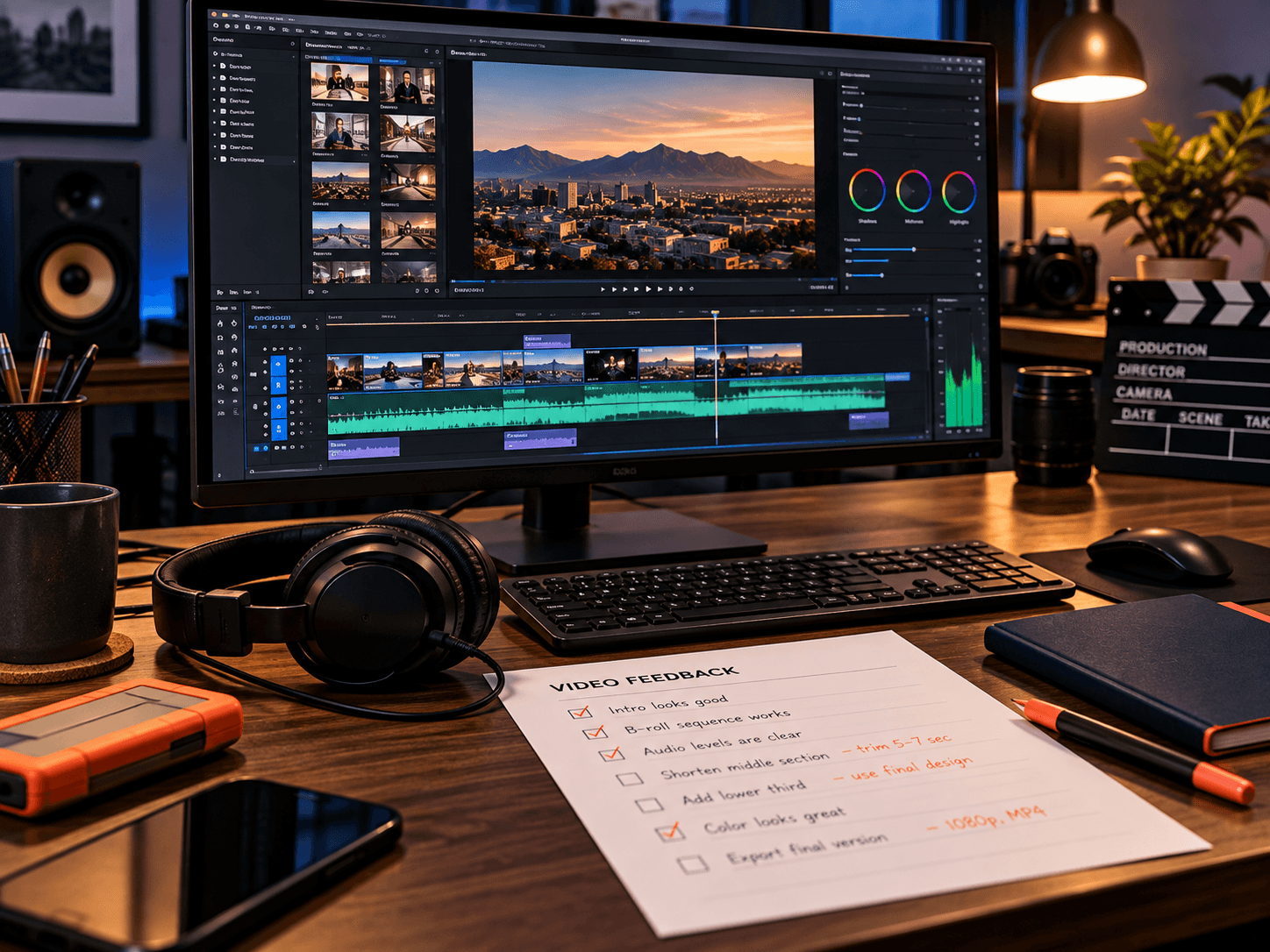
- Hour four: pickups and the plan. Finally, any missed lines get picked up, the files get checked, and the edit plan gets agreed before you leave.
Notice where the time goes. In fact, very little of it goes to deciding what to say, because the list and scripts came with you. That is what makes the hours count. The outcome: four hours of filming, not four hours of figuring it out.
Sun City Podcast Studio →What you walk out with: files, rough cuts, and what comes later
You leave with your files and a plan for the edits. The footage is yours to keep. Ownership is not a question, and that is on purpose.
Then come the rough cuts: first edits you review before anything is final. The timing of those gets set when the shoot is scoped, so you know when to expect them. After that, the finished videos are ready to post across your channels over the following weeks, which is where social media for business growth comes in. If you want help turning that bank into a plan, our guide to content strategy for local businesses covers the basics.
Also, when the videos go on your website, speed matters. A heavy video can slow a page down, so it is worth checking how video affects page performance using the guidance on web.dev. The outcome: files you own, edits you approve, and pages that stay fast.
What slows a session down, and how to avoid it
A lot of lost time on a shoot day is lost before the camera rolls. In our experience, the same few things cause it. So the good news is that each one gets fixed in prep, not in the studio.
- No topic list. For example, deciding what to say on the day eats the morning. So bring the list, written down, in the order you want to film.
- No scripts. A sentence or two per video is enough. Without them, every take turns into a first draft.
- Missing graphics or numbers. If you want a figure on screen, bring it. Then the edit does not stall waiting for it.
- Wardrobe problems. Bring the second outfit ready to wear, so the change takes minutes, not a trip home.
- Unchecked testimonials. If a video features a customer review or a paid partner, first check the Federal Trade Commission endorsement guidance.
In short, here is the prep list. Bring your topics, one or two sentences per video, a wardrobe change, and any on-screen graphics or numbers. The outcome: a session that runs on time and fills the bank.
Studio shoots vs a single promo video
A single promo video still has its place. If you need one polished piece for a launch, a homepage or an ad, it can be the right call. However, it is one piece. Then, once it has run, you are back to an empty feed.
A studio shoot planned as a batch does a different job. It fills weeks of posting from one session, and every piece carries the same look and voice. So the question is not which one is better. It is which job you need done this month: one big piece, or a steady supply of short ones.
In fact, you may need both, at different times. Either way, it pays to know what to look for in a partner before you book anyone. The outcome: you buy the shoot that matches the job, not the one that sounds impressive.
How to pick a video production partner →Frequently Asked Questions
Q1 Is a half-day video shoot enough for a small business?
Q2 How many videos can a half-day shoot produce?
Q3 What do I need to prepare?
Q4 Do I get the raw files?
Q5 How do I book?
Want a shoot? Message us SHOOT
So now you know what a half-day video shoot can produce: one setup, one wardrobe change, and a bank of short videos you own. You also know what to bring and what slows a day down. If it fits, the next step is one word. Message us SHOOT on Instagram or Facebook with what you want to film.