

Plug in. Hit record. Walk out with a finished episode.
This is the El Paso podcast room operators actually book — a treated booth, broadcast mics, multi-cam video on standby, and a producer who knows what "sounds bad" means. Whether you're recording episode one or shipping your two-hundredth, the studio meets you where you are.
Choose Your Next Step
Tell us where you are. We'll point you to the part of the hub that fits.
Start Here
Four reads that answer the questions every first-time renter asks before booking.
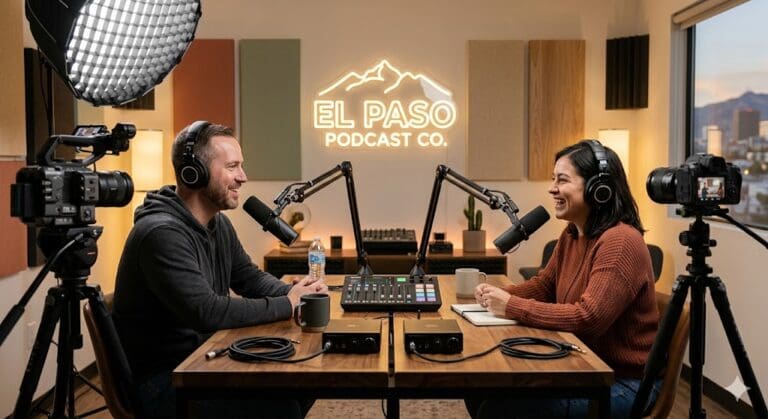
Podcast Studio Rental Cost El Paso: What You’ll Actually Pay in 2026
Hourly, half-day, recurring — the real El Paso pricing breakdown so you can budget before you book.
Read the article →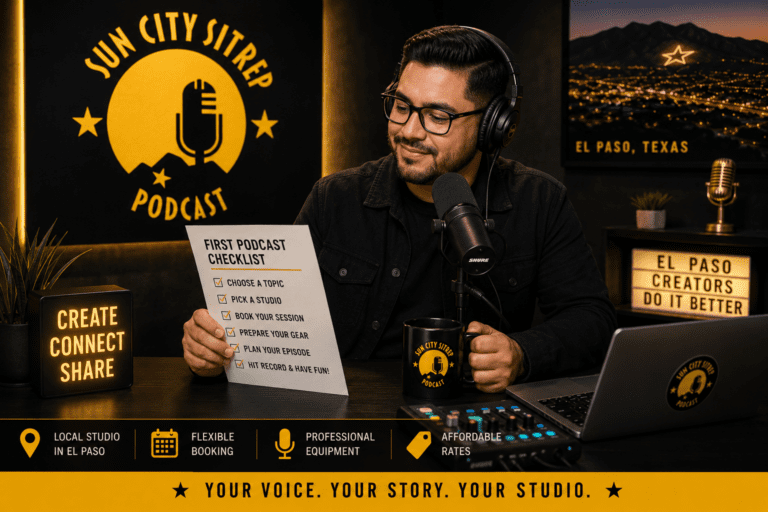
Podcast Recording Checklist First Time Hosts Need
Outline, water, headphones, voice rest, three backup questions — the pre-session list every first-time host should run.
Read the article →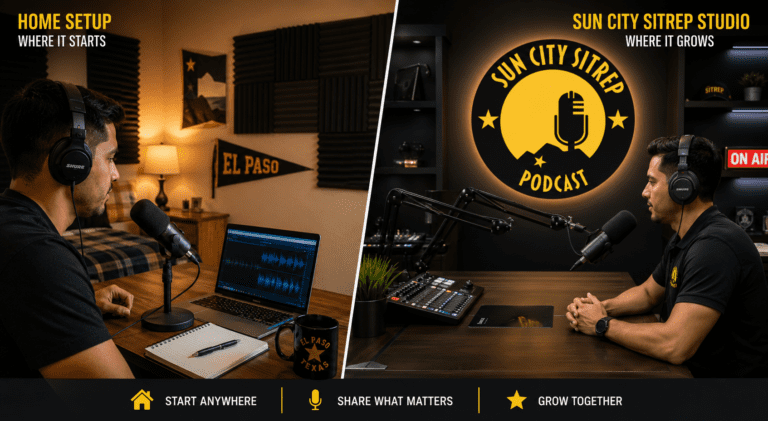
Home Studio vs. Professional Podcast Studio
An honest comparison covering audio quality, video capability, real costs, and a 5-question framework to pick the right setup.
Read the article →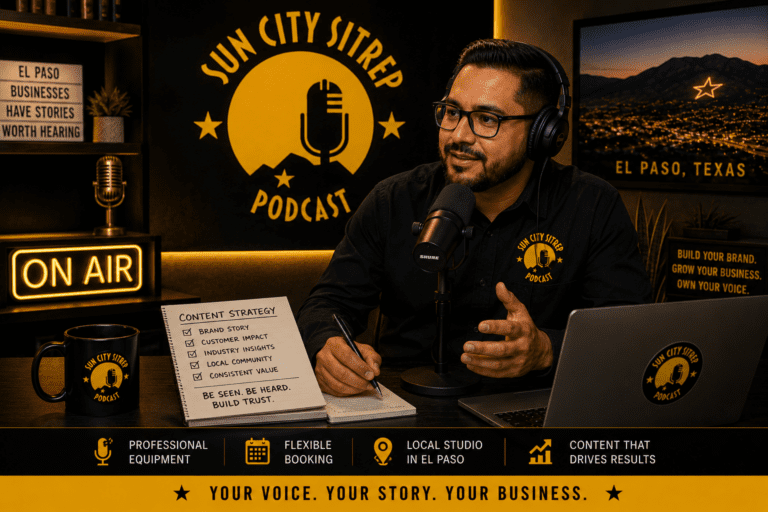
Is a Business Podcast Worth It El Paso?
For owners, founders, and local brands deciding whether to launch — how to know before you start.
Read the article →Built for El Paso Podcasters
Sun City Sitrep covers what national podcast blogs never will — the people, places, and stories that only matter from Mesa to Fort Bliss.
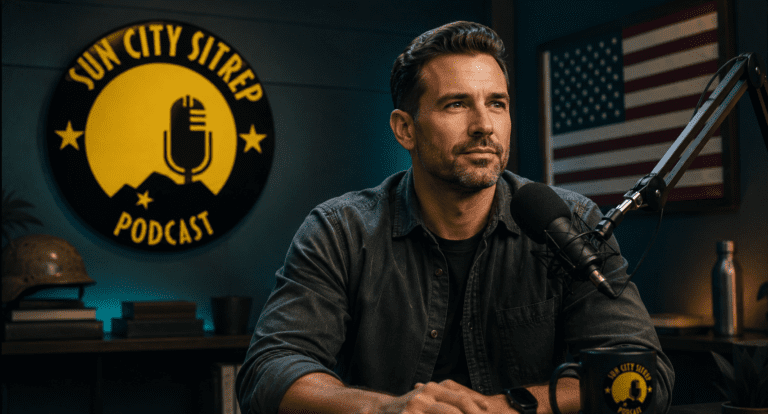
Veteran-Owned Podcast Studio in El Paso: Built for the Military Community
Sun City SITREP is the veteran-owned studio Fort Bliss entrepreneurs, service members, and military spouses trust.
Read the article →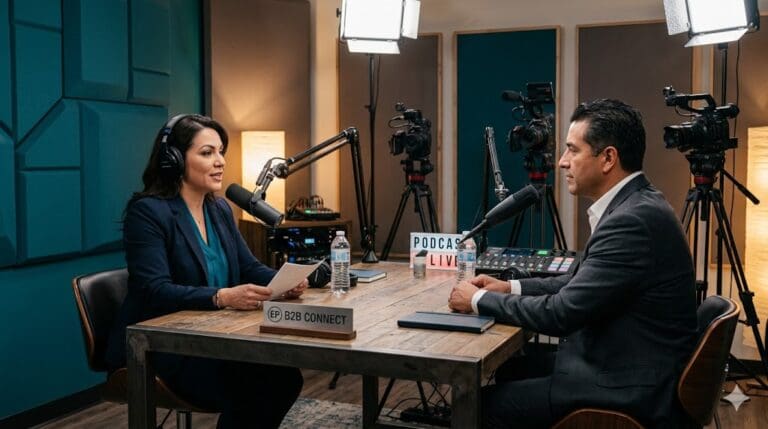
B2B Podcast Studio in El Paso: Why Branded Production Wins in 2026
Why El Paso B2B companies need professional podcast production in 2026 — and the studio built to make it happen.
Read the article →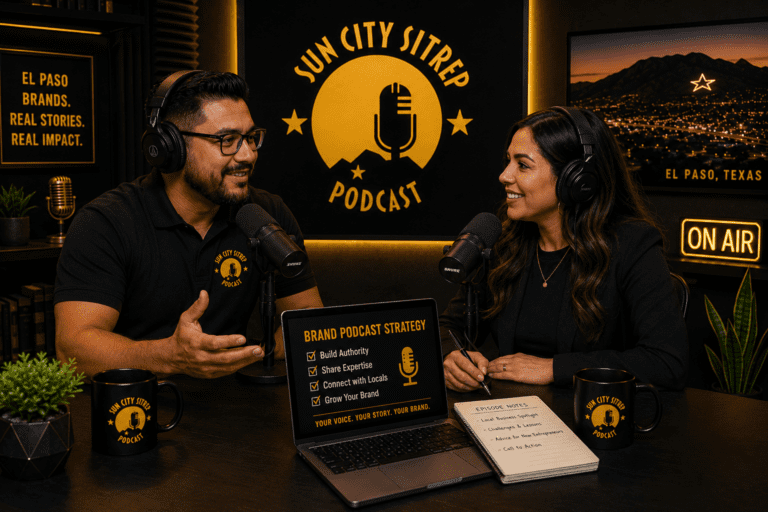
Branded Podcast El Paso: Turn Your Business Voice Into a Content Engine
For owners, founders, agencies, and nonprofits ready to launch — how a branded show becomes a long-term content engine.
Read the article →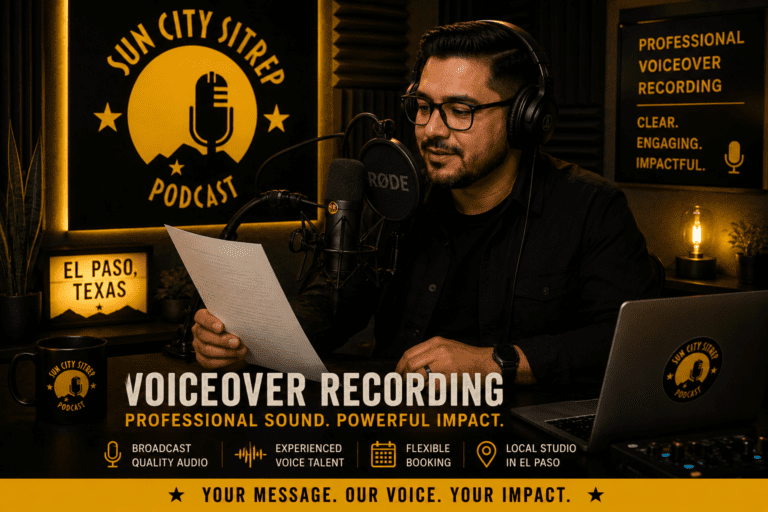
Voiceover Recording Studio El Paso: Clean Audio Without Home-Studio Stress
For voice talent, narrators, and creators who need clean audio without fighting background noise at home.
Read the article →Gear, Booth & Workflow
Four operator-grade reads on the technical decisions that separate "fine audio" from "this sounds like a real show."
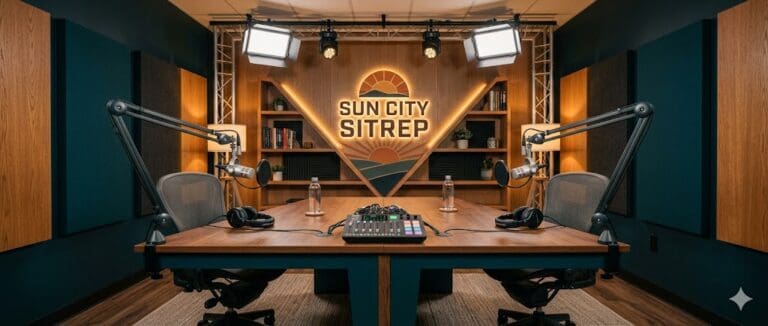
Automated Podcast Studio in El Paso: Professional Recording Made Simple
Pro audio, 4K video, repositionable sets, and seamless booking — the automated studio for the 915.
Read the article →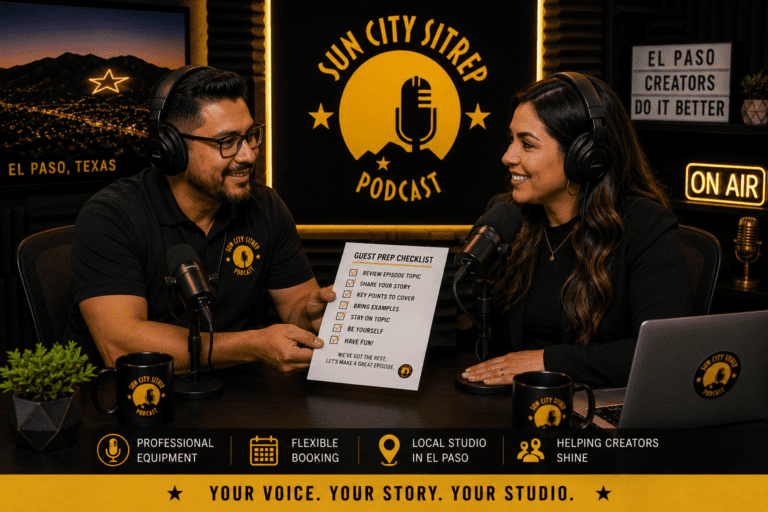
How to Prepare a Podcast Guest Before Recording
A great guest doesn’t happen by accident — the host’s pre-recording playbook for getting them ready.
Read the article →The Two-Track Workflow That Saves Episodes
Why splitting host and guest audio is the difference between a usable cut and a re-record.
Coming soonRemote Guest, Studio Host: Riverside, SquadCast, and What We Use
When the second mic is on a video call, the rules change. The settings, backups, and ship-it plan.
Coming soonFrom Recording to Released
Recording is forty percent of a podcast. Here's the rest of the line.
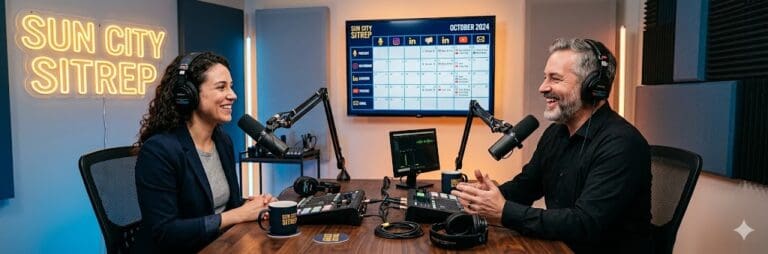
Podcast Content Repurposing for Business: One Recording, Ten Pieces of Content
A workflow any business can implement — turn one session into social clips, blog posts, and short-form video.
Read the article →Edit-In-Place: Cutting an Episode in the Same Session You Recorded
The lean workflow that turns a one-hour record into a publish-ready cut before you leave.
Coming soonHosting, Feeds, and Apple/Spotify Submission Without the Headache
Set the boring infrastructure up once, never think about it again. Includes the El Paso category traps.
Coming soonThe First 100 Listeners: What Actually Works for an El Paso Podcast
No paid-acquisition fairy tales — the local-first growth motion that compounds when you keep showing up.
Coming soonCommon Podcast Use Cases
Four formats the studio runs every week. Pick yours to see the gear pulled, the seating, and the timeline.
Interview show (1 host + 1 guest)
Two SM7Bs, headphone splitter, two-camera video on standby. Ninety-minute block covers ramp-up, record, and a quick listen-back. Most common booking.
Solo monologue
One mic, one chair, script light on the stand. Sixty-minute block for a 30-minute episode with retakes. Tight, fast, cheap.
Video-first podcast
Three cameras, broadcast lighting, teleprompter optional, host-cam plus two-shot wide. Full-day blocks; we cut social clips before you leave.
Live panel / event recording
Four-mic rig, in-ear mix, audience-safe recording with optional livestream. Pre-event walkthrough included.
Frequently Asked Questions
Eight answers to the questions every renter asks before booking.
Ready to record?
The studio is built. The mics are on. The only missing piece is the show in your head — and the only way to find out if Sun City fits it is a five-minute conversation.