What Is a Rough Cut? The Same-Day Cut and What Comes After
What is a rough cut, and why do you leave our studio with one the same day? Because seeing it early makes the final cut faster. In our experience, owners often wait weeks after a shoot, then get a finished video they wish they had seen halfway through. So this guide explains the same-day rough cut: what it includes, what it leaves out on purpose, how to give feedback that helps, what the final cut adds and what you receive at the end. At VenPro Solutions, we believe you should see your video before it is finished, so the rough cut leaves with you.
What is a rough cut, in short
Why you should see it before it is finished
Feedback on structure is cheapest early. Changing the order of a rough cut takes minutes. However, changing a finished video takes hours, because every color pass, sound mix and graphic has to be redone around the change.
So that is why the rough cut matters. It lets you answer the big questions first: is the order right, is it the right length, and did we keep the best take? Then the polish goes onto a video you have already approved.
Also, it takes the mystery out of editing. Instead of waiting and hoping, you see exactly where the video is headed. The outcome: fewer surprises and a faster path to the final cut.
What is a rough cut: the process at a glance
Here is the whole editing path in one view. Also, each row is one stage, from the rough cut to delivery. Then the last two columns show where it comes from and what you will notice.
| Trait | What it means | Where it comes from | What you notice |
|---|---|---|---|
| Rough cut | Structure and pacing in place | The same day as the shoot | So you see the shape early |
| Left out | Final color, sound mix, graphics, captions | A deliberate choice | It looks unfinished, on purpose |
| Your feedback | Notes on order, length and what to cut | You, after watching | Then the edit moves in the right direction |
| Final cut | Color, sound, graphics and captions added | The finishing edit | So the video is ready to publish |
| Delivery | Vertical and horizontal versions, plus source files | The platforms you use | Each version fits where it goes |
What is a rough cut, and what does it include?
In short, a rough cut includes the parts that decide what the video says. First, the structure: which takes are in, and in what order. Next, the pacing: where it moves fast and where it breathes. Then the length, so you can judge whether it runs long.
Basically, it is the story of the video, laid out end to end. You can watch it start to finish and understand what the final version will say. The outcome: a clear picture of the finished video, while it is still easy to change.
What it leaves out on purpose
A rough cut leaves out final color, the sound mix, graphics and captions. That is deliberate, of course. Polishing a video before the structure is approved wastes time, because any change to the order means redoing the polish.
So the rough cut may look a little flat, and the audio may be uneven. That is normal. Also, placeholder text or rough transitions may appear where graphics will go later. So knowing what is a rough cut, and what is not, keeps your feedback focused. The outcome: effort spent on the right things, in the right order.
How to watch it and what feedback actually helps
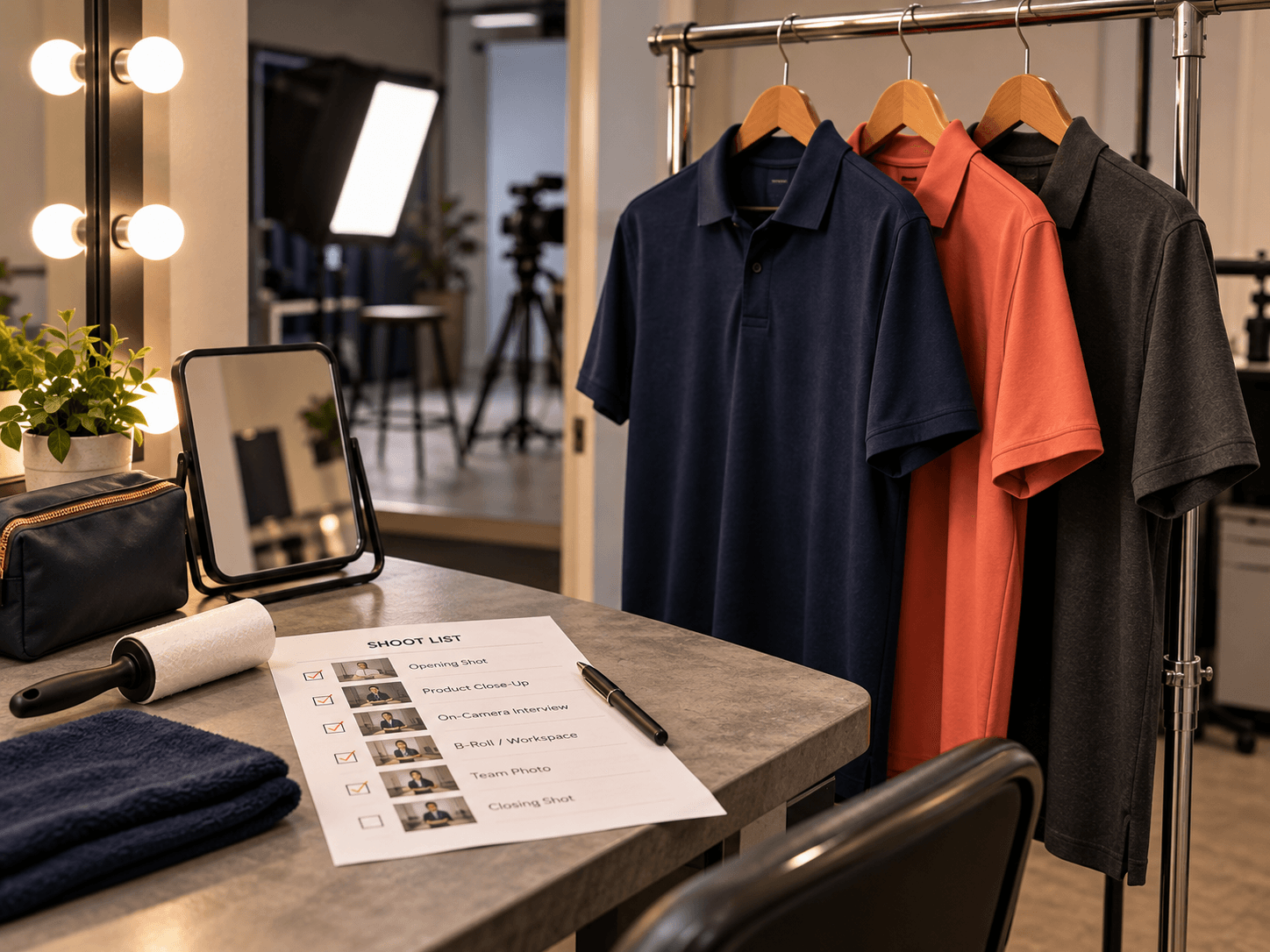
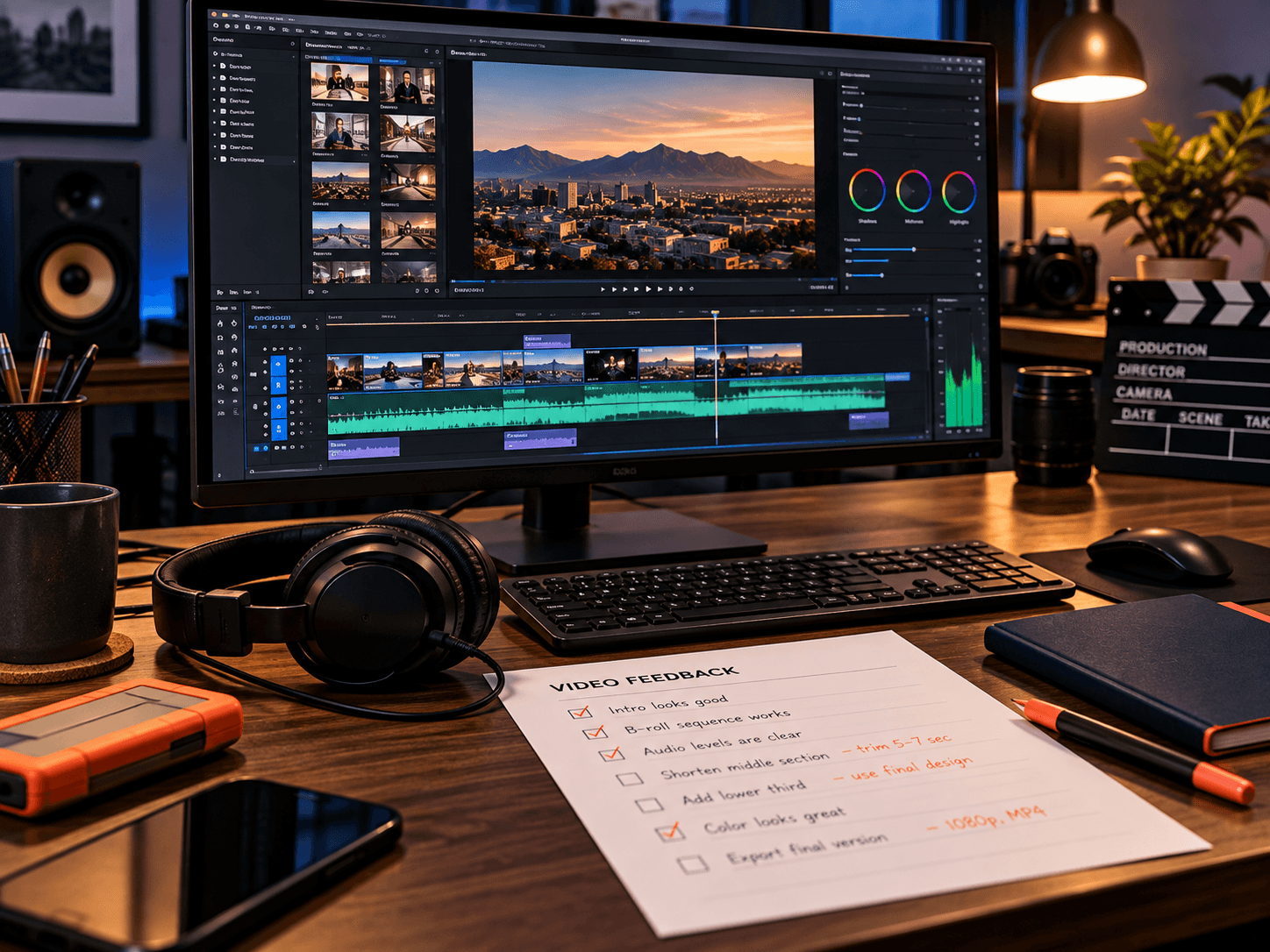
Watch the rough cut once all the way through without stopping. Then watch it again with a notepad. The first pass tells you how it feels, and the second tells you what to change. Here is a short feedback sheet:
- Order: is anything in the wrong place, or would a different opening work better?
- Length: does any part drag, or does anything feel rushed?
- What to cut: which lines, takes or moments can go?
- What is wrong: any names, numbers or facts that need fixing.
- Save for later: notes on color and music wait for the final cut.
Notes on order, length and what to cut help most. However, notes on color and music come later, since those are not set yet. The outcome: feedback that moves the edit forward in one round.
What the final cut adds: color, sound, graphics, captions
Then, once the rough cut is approved, the final cut adds the polish. Each piece does a specific job.
- Color: consistent, natural color across every shot, so the video looks finished.
- Sound: a clean, balanced mix, so every word is easy to hear.
- Graphics: names, numbers and your logo, placed where they help.
- Captions: text on screen, so the video works with the sound off.
Graphics and color are also where a series of videos starts to look like one brand, which ties into brand consistency in the digital age. Also, if a video includes a customer testimonial, the edit should never change what the customer meant. So check the Federal Trade Commission endorsement guidance too. The outcome: a finished video ready to publish.
Delivery: formats, sizes and where each one goes
You receive vertical and horizontal versions sized for the platforms you use, plus the source files. So each version fits where it goes.
- Vertical (9:16): for short-form feeds and stories on phones.
- Horizontal (16:9): for your website, YouTube and anywhere viewed on a wider screen.
- Source files: the footage itself, yours to keep and reuse later.
- Profile clips: short versions can also go on your Google Business Profile, and Google's help pages cover the video guidelines.
Then post each version where it fits, which is where social media strategies that work come in. For the website versions, the guidance on web.dev covers encoding and delivery, so video does not slow your pages. The outcome: the right file in the right place, every time.
Sun City Podcast Studio →Timelines, honestly
The rough cut leaves with you the same day. After that, the timing of the final cut depends on a few things, and we would rather name them than promise a date we cannot control.
- How many videos: a single piece finishes sooner than a full batch.
- How fast feedback comes back: the final cut starts when your notes arrive.
- How many rounds: one clear round of notes keeps things moving.
So the real timeline gets agreed when you book, based on what you are filming. In fact, the fastest projects are the ones where the feedback sheet comes back complete. The outcome: a timeline you can plan around, with no surprises.
How to pick a video production partner →Frequently Asked Questions
Q1 What is a rough cut?
Q2 What happens after the rough cut?
Q3 Why hand over a rough cut the same day?
Q4 What feedback helps most?
Q5 What formats do I receive?
Booking a shoot? Message us SHOOT
So, what is a rough cut? It is an early look at the shape of your video, while changes are still quick. You leave with it the same day, give one round of focused notes, and the final cut takes it from there. If you are ready to book, the next step is one word. Message us SHOOT on Instagram or Facebook.