





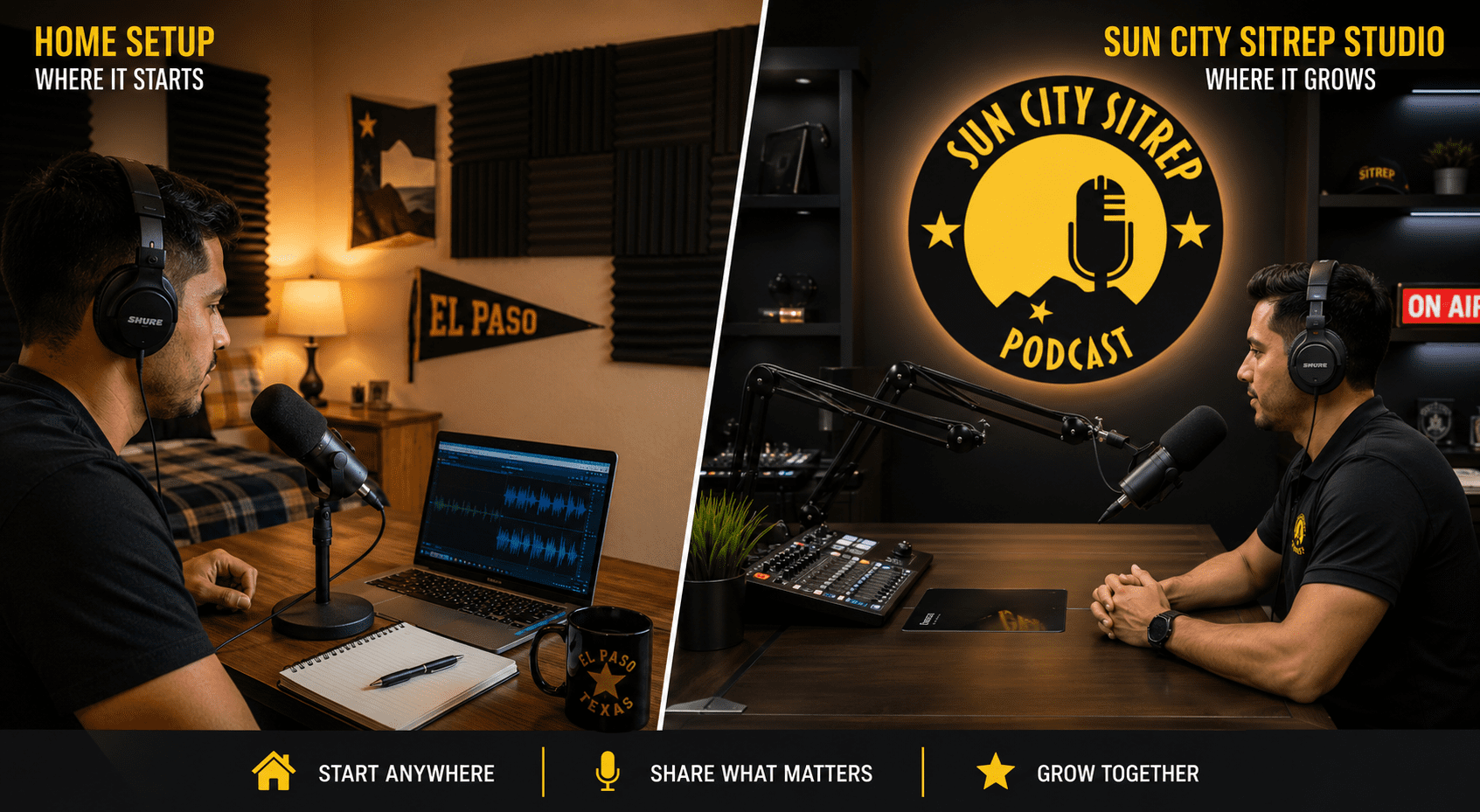
Home Studio vs Professional Podcast Studio: Which Wins?
Home Studio vs Professional Podcast Studio is not a simple quality contest. Instead, the right choice depends on your recording frequency, video goals, brand stakes, and room limitations. Home recording works well for early testing, solo audio, and tight budgets. However, a professional studio becomes the better investment when production quality affects trust, sales, and how your brand is perceived.
Why the studio choice matters
The honest starting point is simple. Home recording works. For many podcasters, it is the right first move because it keeps costs low and removes pressure. Furthermore, a show that gets recorded at home is better than a perfect show that never launches.
However, every home setup has a ceiling. Specifically, that ceiling usually appears in room acoustics, inconsistent sound, video quality, setup friction, or the way guests experience the recording environment. Therefore, the question is not whether home recording is bad. The better question is whether your podcast has outgrown it.
For El Paso creators, the environment matters even more. Traffic noise, HVAC hum, and ambient city sounds can enter a home recording fast. By contrast, a sound-treated studio keeps the output consistent. As a result, your audience hears the content instead of the room.
Home setup vs Sun City SITREP at a glance
Here is the practical comparison most creators need before buying gear or booking a session. Specifically, the table separates cost, quality, and fit.
| Option | Upfront Cost | Best For | Main Limit | Quality Level |
|---|---|---|---|---|
| Budget home setup | $150–$400 | Testing a new show | No acoustic control | Basic audio |
| Mid-range home setup | $600–$1,500 | Solo audio shows | Room sound remains | Acceptable audio |
| Professional home setup | $2,000–$5,000+ | Frequent creators | High setup burden | Strong but variable |
| SITREP raw audio | $0 upfront | Business podcasters | Requires booking | Professional studio |
| SITREP processed audio | $0 upfront | Publish-ready shows | Higher hourly rate | Ready to distribute |
When home recording is the right choice
First, home recording is smart when you are testing format viability. A new podcast concept does not always justify production investment on day one. Therefore, a simple setup helps you find your voice and prove the show before scaling quality.
Second, home recording can work well for audio-only solo shows. If your room is quiet and your audience values content over polish, the setup may be enough. Additionally, educational shows, personal journals, and low-stakes updates often benefit from convenience more than studio quality.
Third, home recording makes sense when frequency matters more than production value. Daily or near-daily formats need speed. Consequently, a professional studio may create friction for formats built around volume.
Where home recording hits its ceiling
Room acoustics are usually the first issue. Most homes have hard floors, parallel walls, and reflective surfaces. As a result, echo and room tone become part of the recording. Better microphones help, but they do not erase the room.
Consistency is the second issue. HVAC, traffic, neighbors, and weather can change the recording from one session to the next. Over time, that inconsistency makes a show feel less reliable. Meanwhile, a professional studio controls those variables before recording begins.
Video creates the biggest gap. Professional lighting, camera placement, 4K production, and purpose-built backgrounds are hard to replicate at home. Therefore, business podcasters using LinkedIn, YouTube, or social clips should treat video quality as a brand signal.
The real cost of home studio vs professional podcast studio
The equipment price is only part of the math. A mid-range home setup can reach $1,400–$2,500 in year one after acoustic treatment, camera gear, and maintenance. Furthermore, that figure does not include the time spent setting up, testing, troubleshooting, and tearing down.
At Sun City SITREP, raw audio runs $75 per hour and fully processed audio runs $150 per hour. Therefore, creators recording one to four times per month often find studio rental more practical than buying gear. In addition, they get the room, microphones, lighting, and technical setup included.
See Sun City SITREP studio details →How to decide between home studio vs professional podcast studio
Use these questions to make the decision quickly. Specifically, count how many yes answers apply to your podcast.
Is your podcast a business asset? If the show supports client development, authority, recruiting, or sales, production quality matters more.
Will video clips be part of distribution? If yes, a professional studio becomes much more valuable because visual quality affects trust before viewers hear a word.
Does your home environment create sound problems? If traffic, HVAC, neighbors, or room echo keep showing up, the home setup has likely reached its ceiling.
If you answered yes three or more times, a professional studio is probably the better fit. To book directly, visit the Sun City SITREP podcast studio page or call the team.
Frequently Asked Questions
Q1 Is a home studio vs professional podcast studio better for business podcasts? +
Q2 When is home recording good enough for a podcast? +
Q3 How much does a home podcast studio setup cost? +
Q4 Is a professional podcast studio worth it? +
Q5 What does a Sun City SITREP studio session include? +
Ready to record beyond your home setup?
Home recording has its place. However, when your show becomes a business asset, the production environment starts carrying real weight. If home studio vs professional podcast studio now points toward quality, consistency, and video, Sun City SITREP is where El Paso creators record what comes next.