Sponsor Read: 30 Seconds of Live Radio That Proves the Product
A sponsor read is your business named live, inside the game, by a voice El Paso already trusts. Of course, a logo on a fence is seen. However, a read is heard, in the middle of the game, while people are paying attention. So this guide explains what it is, where it sits in a Friday night broadcast, and why a live mention lands differently than a produced ad. It also covers how we play real reads back in the studio, so you can hear what you would be buying.
How a sponsor read works on a Friday night
Seen vs heard: why the fence banner loses
A banner on a fence waits for someone to look at it. So a banner has to compete with the game itself for a glance. It also only reaches the people who are in the stadium that night.
A live read, however, works the other way around. It goes to people who chose to tune in, and it arrives in the voice they are already listening to. In fact, the listener does not have to look anywhere. Then the name simply shows up inside the story of the game.
That is the difference between being seen and being heard. A banner is a picture in the background. By contrast, a read is a moment in the foreground. The outcome: your name reaches people while their attention is already locked in.
The sponsor read at a glance
Here is the whole idea in one view. Each row is one part of how a live read works. Then the last two columns show where it comes from and what a business owner will notice.
| Trait | What it means | Where it comes from | What you notice |
|---|---|---|---|
| Live, not produced | Spoken in the moment by the broadcast voice | The Friday night call on 600 ESPN El Paso | So it sounds like part of the game |
| Inside the game | During play or between plays, not in a break | The flow of the broadcast | So your name lands while people listen |
| Borrowed trust | The voice calling the game says your name | The listener's link to that voice | Then the mention feels like a nod, not a pitch |
| Short wording | A name, a place and one reason to remember | Worked out together on the call | So you do not have to write it alone |
| Playback | Real Friday night reads played back in the studio | VenPro studio segments | So you hear it before you decide |
| The first step | One word: SPONSOR | A message on Instagram or Facebook | Then we send you a real read to hear |
What a sponsor read is and where it lands in the game
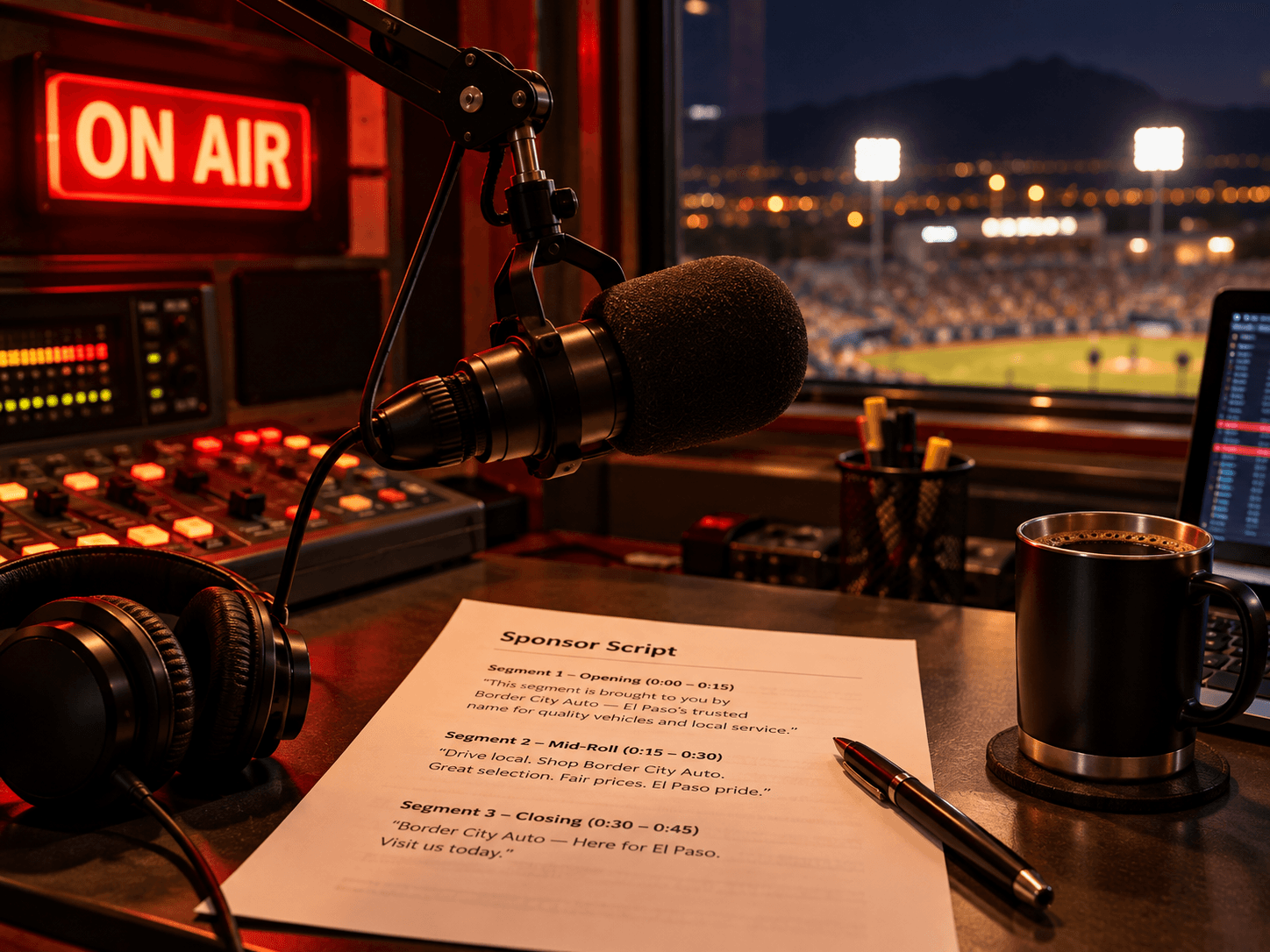
A live read is a short mention of a business, spoken by the broadcast voice during the game or between plays. So it is not a commercial that plays in a break while people wait for the action to return. Instead of stepping away from the game, the mention happens inside it.
In fact, that placement is the whole point. Listeners tune in to follow the game, so the call is where their attention sits. Also, a mention inside the call does not ask anyone to switch modes. It simply arrives, in the same voice, with the same energy as the play before it.
For radio sponsorship in El Paso, that is what you are really buying: a place inside the broadcast, not a slot next to it. Then the exact timing of each mention gets worked out on the call. The outcome: your name heard in the game, not skipped in a break.
Why the play-by-play voice carries trust a produced ad cannot
Listeners have a relationship with the voice calling the game. They hear it on Friday nights, win or lose. So when that voice names a business, the mention borrows some of that trust.
A produced spot, by contrast, works differently. In our view, it is polished, but it sounds like an ad. On the other hand, a play-by-play sponsor mention sounds like part of the night. That is why we think a live mention carries weight a produced spot cannot match.
Of course, borrowed trust has to be respected. For example, a read that sounds forced or crams in too much breaks the spell. The outcome: a mention that feels like a local voice vouching for a local business.
Listen for yourself: how we play real reads back in the studio
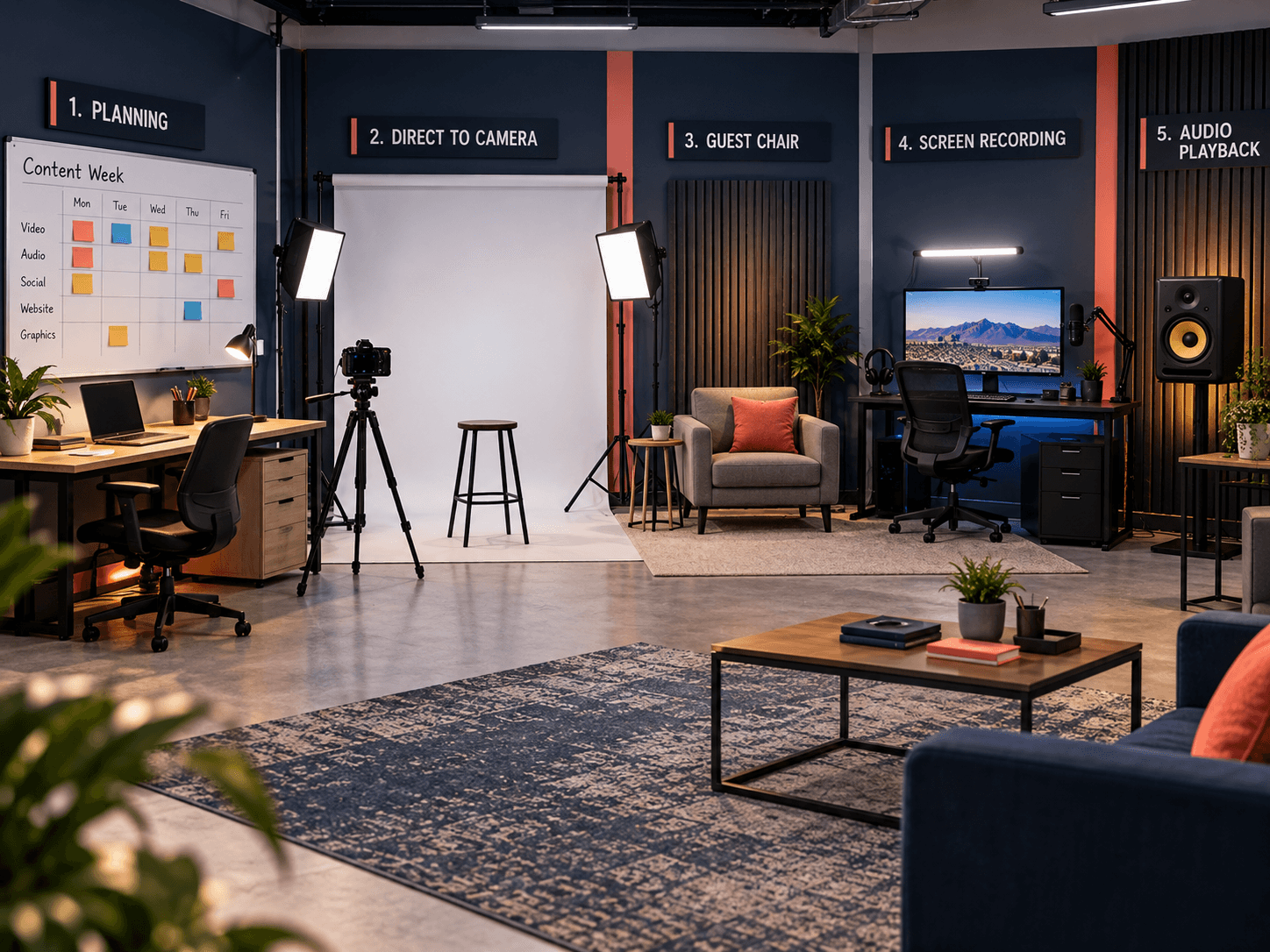
The fastest way to explain a sponsorship is to let you hear one. So we play real Friday night reads back in our studio. It is one of the formats we film this October, alongside desk segments and guest chair interviews. You hear the call, the read and the moment it lands.
That playback does two jobs. First, it shows an owner what the product actually sounds like, instead of describing it. Second, it becomes content on its own, so the read keeps working after Friday night. In short, you hear it before you decide, and it lives past the game.
So if you want to hear one first, just ask. Message the word SPONSOR, and we will send you a real example. The outcome: you judge the product with your own ears.
Sun City Podcast Studio →What makes a read work: name, place, one reason to remember
A good live read is short, so every word has to earn its place. In our view, three pieces do most of the work. Everything else is extra, and extra tends to get lost at game speed.
- Your name. Said clearly and said the same way every time, so it sticks.
- Your place. Where to find you, such as a street, a neighborhood or a landmark people in the 915 know.
- One reason to remember. A single line about what you do or why people come to you. Not a list of services.
Also, you do not have to write it yourself. The wording gets worked out together on the call, so it sounds like your business and fits the broadcast. The outcome: a read that is easy to remember and easy to repeat.
Simple brand awareness techniques →What a read cannot do
Here is the honest part, before any ask. A live read builds recognition. However, it does not close the sale for you, and it will not fix a weak offer.
- It cannot promise calls. A name on the air builds familiarity. Whether that turns into calls depends on your offer and how easy you are to find.
- It cannot be clicked. Radio has no link to tap, so measuring it takes a plan. Our guide to marketing metrics that matter is a good place to start.
- It cannot replace your website. A listener who looks you up needs a site that answers them, which is the work of turning browsers into buyers.
For a wider view of where local advertising fits, the Small Business Administration has plain guidance for small businesses. Also, if you reuse read audio in your own posts, keep it clearly labeled as a sponsorship. The Federal Trade Commission explains the disclosure basics. The outcome: you go in knowing what a read can carry and what it cannot.
Frequently Asked Questions
Q1 What is a sponsor read?
Q2 Is a sponsor read the same as a radio ad?
Q3 Why does a live read work better than an ad?
Q4 Can I hear an example?
Q5 Do I write the read?
Want to hear what yours would sound like? Message us SPONSOR
So now you know what a sponsor read is: your name, said live inside the game, by a voice listeners already trust. You also know what it cannot do. If you want to hear what yours would sound like, the next step is one word. Message us SPONSOR on Instagram or Facebook, and we will send you a real example.