Studio vs On Location Video: The Honest Trade-Off
Studio vs on location video is a real trade-off, and neither one is better. In fact, they fail in opposite ways. In our experience, owners book location shoots for atmosphere and get wind noise and a rain delay. Then they book studio shoots for control and get a video that could be anywhere. So this guide lays out what each setup gives, what each one costs, and a simple test for choosing. At VenPro Solutions, we shoot both, and we will tell you which one your project needs before you book either.
Studio vs on location video: which one fits?
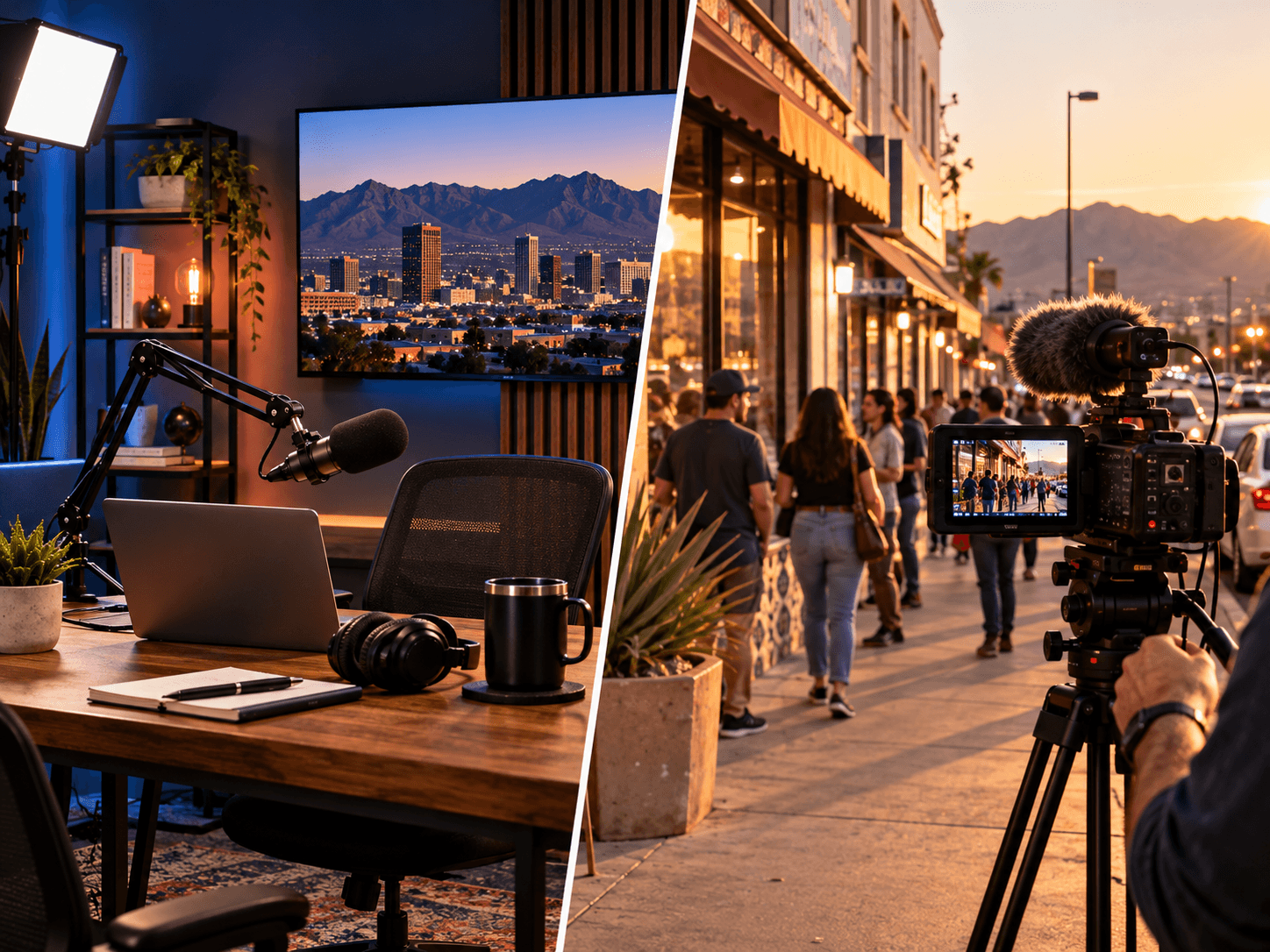
Studio vs on location video: two setups, two opposite failure modes
Of course, every setup has a way it goes wrong. A studio goes wrong by being too clean: the video looks fine, but it could have been shot anywhere. By contrast, a location goes wrong by being too wild: the place looks great, but the sound, the light or the weather wrecks the take.
That is why the choice is not about which setup is better, but which failure you can live with. If a generic background would hurt the message, then a studio is the wrong call. On the other hand, if one bad afternoon would sink the project, a location is the risky one.
So the trade-off is honest, and it should be stated before anyone books anything. The outcome: you pick the setup whose weak spot matters least to your video.
Studio vs on location video at a glance
Here is the whole trade-off in one view. Also, each row is one strength or one risk. Then the last two columns show which setup it comes from and what you will notice in the finished video.
| Trait | What it means | Where it comes from | What you notice |
|---|---|---|---|
| Control | Light, sound and framing set once | A studio setup | So every take looks and sounds the same |
| Weather independence | Wind, heat and rain do not matter | A studio setup | So the shoot happens on the day it was booked |
| Volume | Many finished videos in one session | A studio setup | Then your calendar fills ahead of time |
| Atmosphere | The real place and the real people | A location shoot | So viewers see your actual business |
| Noise and weather | Sound and light you cannot fully control | A location shoot | So some takes get lost to the conditions |
| One shot at the day | The moment happens once | A location shoot | So a bad afternoon is hard to redo |
| The mix | Studio talking segments plus short location footage | Both setups | Control where it counts, texture where it helps |
What a studio gives you: control, weather independence, volume
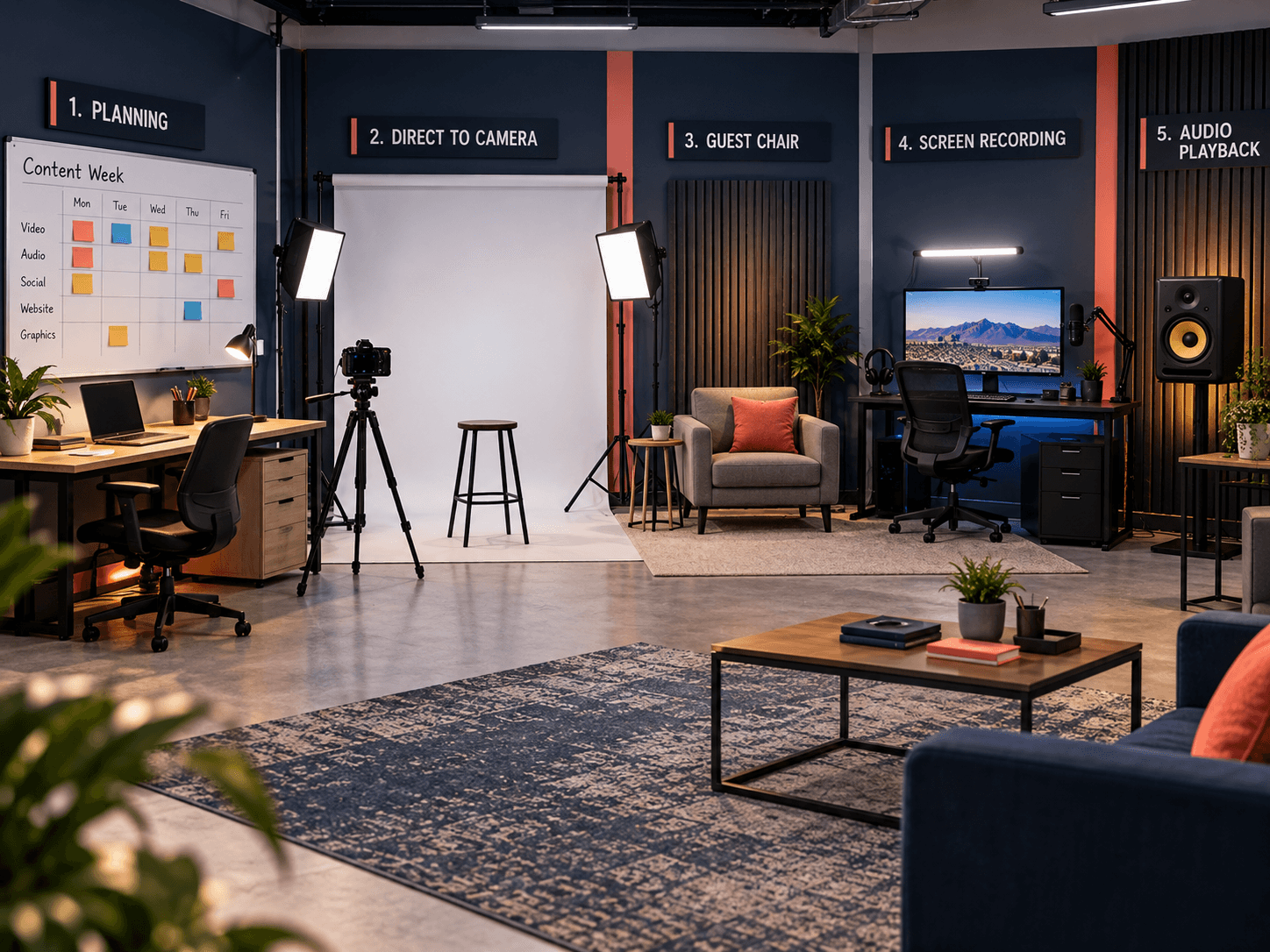
A studio gives you three things a location cannot promise. First, control: the light, the sound and the framing get set once and stay that way. Second, weather independence: wind, heat and rain never cancel the day. Third, volume: because nothing needs resetting, you can film many finished pieces in one session.
That control also makes your videos consistent. As a result, every piece shares the same look and sound, which supports brand consistency across platforms. In short, the studio is repeatable. The outcome: a steady supply of clean, on-brand video, shot on the day you booked.
What a studio costs you: atmosphere
The price of all that control is atmosphere. A studio does not show your dining room, your shop floor or your crew at work. So a studio video tells people about your business rather than showing it to them.
Of course, for some messages, that is fine. A tip, an answer to a common question or a short explainer lives on what you say, not where you stand. However, if the video has to prove the place itself, a studio will fall short. The outcome: great for talking, weak for showing.
What a location gives you: the real place, the real people
A location shoot gives you the one thing a studio cannot: the real place and the real people. Viewers see your actual storefront, your actual team and your actual work. So a location video can prove things a studio can only describe.
That matters most when the place is the product, such as a restaurant's room or a finished remodel. Also, real people on camera bring a kind of proof that a script cannot. If a customer speaks on camera, check the testimonial and endorsement guidance from the Federal Trade Commission first. The outcome: video that shows, not just tells.
What a location risks: noise, weather, one shot at the day
Every location shoot carries three risks. First, noise: traffic, wind, music and customers all end up in the audio. Next, weather: light changes, heat builds and rain can stop the day. Finally, one shot at the day: the moment you came to film happens once, and it may not happen again on cue.
However, none of those are reasons to avoid a location. They are reasons to plan for it. So build in time, have a backup plan and keep the list short.
A few habits help. Film the talking parts first, while the light is steady. Next, record a few seconds of room sound for the edit. Also, keep a second date in mind in case the weather turns. Then the day has a fallback. The outcome: a location shoot that survives the day instead of losing it.
Batch and bank vs capture and cut
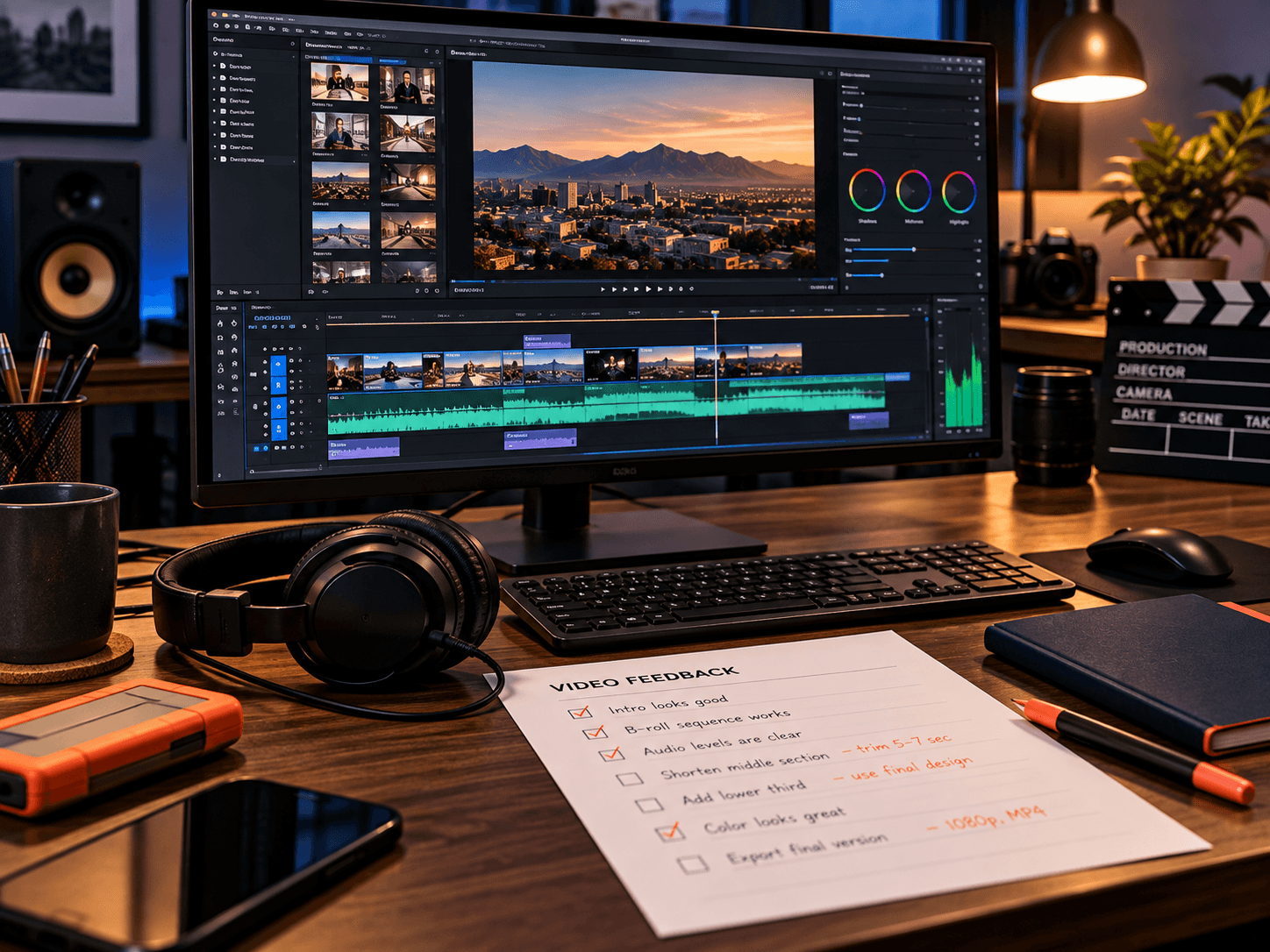
These two setups also lead to two different ways of working. Batch and bank means shooting many finished videos in one controlled session and scheduling them ahead, so a bad week does not empty your calendar. In short, that is the studio method. By contrast, capture and cut means filming a real place or event as it happens, then shaping the footage in the edit. That is the location method.
For a small team, batch and bank is the safer default. So the work gets done in one session, and the calendar is filled before the month starts. Then location footage can be added on top, when there is a moment worth capturing. Our guide to content marketing strategies covers how to plan the calendar that bank feeds. The outcome: a content bank that keeps posting, even when the week goes sideways.
Sun City Podcast Studio →A simple test for choosing, and when to mix both
Here is the test: first, ask what the video has to prove. Then let the answer pick the setup.
- It has to prove you know your stuff. Choose the studio. Expertise lives in what you say, so control and volume win.
- It has to prove the place is real. Choose a location. The room, the work or the crowd is the message.
- It has to prove both. Mix them. Controlled talking segments in the studio plus short location footage for texture is a common and cost-effective mix.
- It has to keep coming every week. Lean on the studio. Then batch and bank keeps the calendar full.
Also, when the videos go on your website, keep them from slowing the page down. The video optimization guidance on web.dev is a good checklist. The outcome: the right setup for the job, chosen before the camera ever rolls.
Strategic content creation →Frequently Asked Questions
Q1 How do I decide on studio vs on location video?
Q2 Is studio video better than location video?
Q3 What is batch and bank?
Q4 Can I do both?
Q5 How do I book a one-off shoot?
Want to talk it through? Message us SHOOT
So now you have the honest version of studio vs on location video: control and volume on one side, atmosphere on the other, and a mix when you need both. If you are not sure which one your project needs, ask. Message us SHOOT on Instagram or Facebook with what you need filmed, and we will tell you before you book either.