





How To Be A Podcast Guest Hosts Actually Want
The people who ask us how to be a podcast guest usually assume the bar is higher than it is. They picture a guest spot needing an audience, a title, or something impressive enough to justify the ask. Of course, hosts are not choosing credentials. They are choosing conversations. So here is what that means in practice in El Paso, how to put yourself forward in a single sentence, and what the day involves once somebody says yes.
How To Be A Podcast Guest: The Short Answer
The Thing Most People Get Wrong About Pitching
The instinct is to lead with credentials. A bio, a job title, a list of the things you have done. It reads as a job application, and a host is not hiring.
So the pitch that works is smaller than the one most people send. One sentence on what you would talk about, written the way you would actually say it out loud. Specifically, name the thing, and not your relationship to the thing.
Of course, that feels far too thin to send. It is not. A host reading it is asking one question only: is there a conversation in here? Then everything else follows from the answer.
What Hosts Are Choosing For, At A Glance
First, here is what actually moves a booking. Overall, none of it is about how well known you are.
| Trait | What it means | Where it comes from | What you notice |
|---|---|---|---|
| The one-sentence pitch | What you would talk about, said in a single line. | The host needs to hear a conversation in it. | It beats a resume every time. |
| Specific over famous | A working knowledge of something most people find opaque. | Curiosity rather than name recognition. | Being interesting on one topic is enough. |
| A local story | Something rooted in this city rather than in a category. | An audience that recognises the detail. | The specifics travel further than the theory. |
| Unscripted | A rough sense of two or three points, and no script. | The conversation is what the audience came for. | Scripted answers are audible. |
| What it costs | Your time, and nothing beyond it. | Guests are not a revenue line. | No charge, and no pitch on the way out. |
How To Be A Podcast Guest Without A Media Kit
You do not need one. Specifically, a media kit answers questions a host with a local show is not asking, and it takes longer to read than the sentence it would replace.
So write the sentence instead. What you would talk about, and why now. Then, if the host wants more, they will ask, and that reply is a far better use of your afternoon than a document nobody requested.
Also, being specific beats being broad. A working knowledge of something most people find opaque is worth far more to a host than name recognition. Indeed, being interesting on one topic beats being known for none. For how guesting generally works across shows, the Podcasters Association publishes podcasting industry practice material.
Local Stories Travel Further Than General Expertise
A story rooted here lands differently. The audience recognises the street, the employer, the season, the traffic, the thing that only makes sense if you live here. So the detail does work that general expertise simply cannot.
For example, the Stephanie Han episode recap and the Minerva Torres Shelton episode are both local stories, and that is exactly what we look for.
Meanwhile, if your expertise is genuinely national, anchor it locally anyway. The University of Texas at El Paso publishes regional research and media work, and a regional angle is often what turns a general topic into a specific conversation.
What To Prepare, And What To Leave Alone
Prepare a rough sense of the two or three things you want to say. Honestly, that is the whole preparation.
However, do not script it. Scripted answers are audible, and they flatten the conversation, which is the thing the audience actually came for. So let the host steer, and answer honestly rather than accurately.
Of course, do bring the specifics. Names, dates, the number that surprised you, the thing that went wrong. Specifically, the details are what make a story sound lived rather than summarised.
The Day Itself: Arrival, The Room, The Conversation
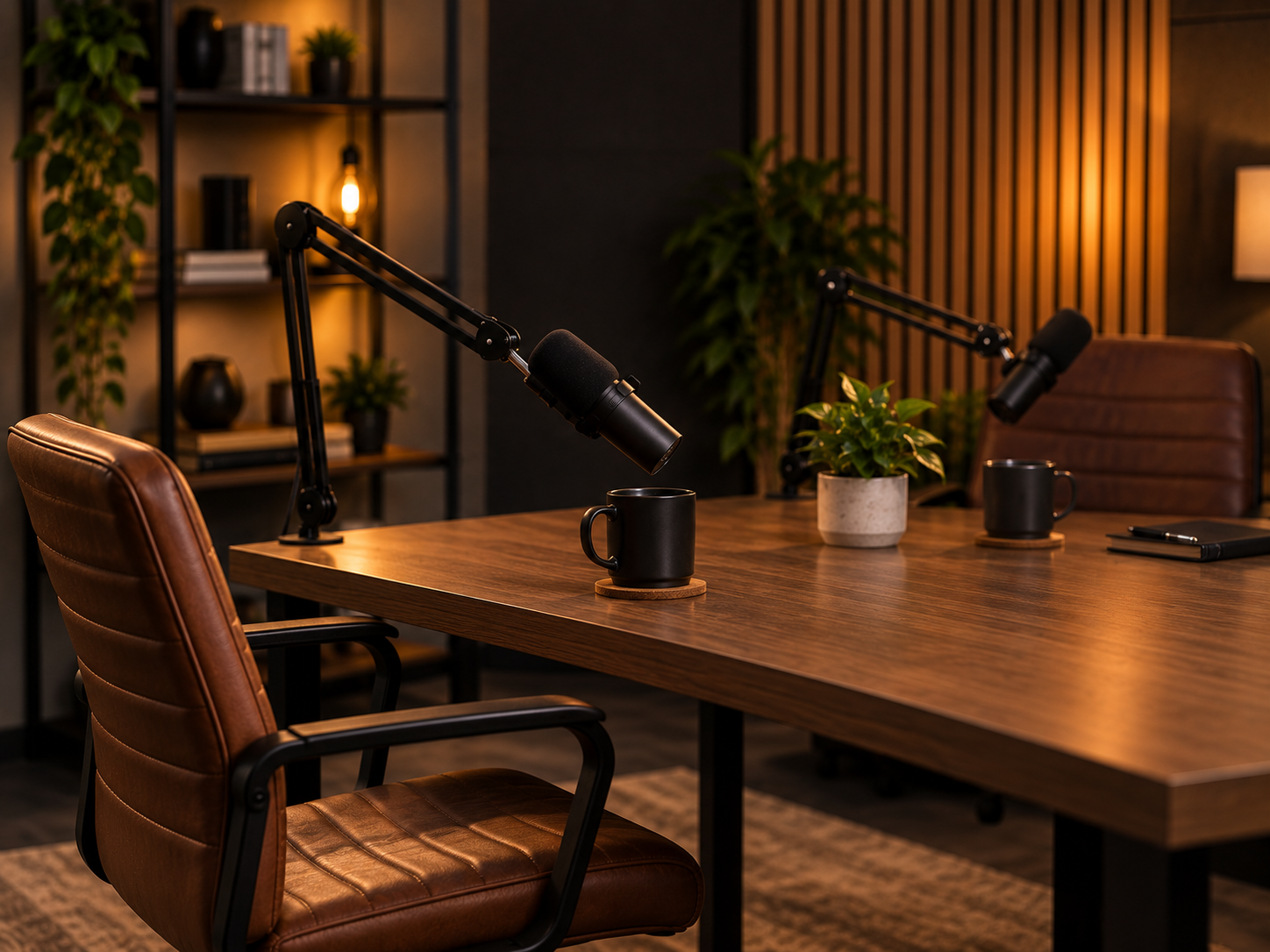
You arrive, you see the set, you sit down and get the headphones on. An engineer runs the session, so nothing technical is yours to worry about. Then the host starts, and it stops feeling like a recording faster than you expect.
The conversation runs longer than the finished episode does. Restarts are normal. So if you fumble a line, you pause and say it again, and the edit takes care of it afterwards.
Nobody asks anything of you beyond turning up on time and being willing to say the thing you actually think. There is no dress rehearsal, no brief to read, and no test at the end. The host has done this before and the engineer does it every week, so neither of them needs anything from you except the conversation.
Also, more than one guest is common. For instance, the intake counseling episode runs with two, so the room was set for three voices rather than one. Meanwhile you will see the room properly, which matters, because being a guest is the simplest way to see a studio from the inside before you ever book one yourself.
What It Costs You, And What You Get Back
It costs your time and nothing beyond it. You come in, you talk, and you go. Nobody charges you, and nobody pitches you anything on the way out.
It also takes less of your day than the invitation suggests. A guest slot is a conversation rather than a production. You arrive, you talk, and you leave, and the whole visit fits comfortably inside an afternoon with room left over for the rest of your work.
So what you get back is the recording. Then the clips, the episode link, and something to point people at that is not your own website talking about you.
Also, use it. Put the episode on your profile, send the clip to the people who should hear it, and mention it next time somebody asks what you do. Of course, an episode nobody knows about does the same work as no episode at all. Meanwhile the archive is the fastest way to hear what a finished one sounds like.
Studio news and events →Should You Put Yourself Forward?
So run the short test. Then send the sentence, or do not, but stop weighing it.
- You can name your topic in one line. Specifically, if it takes a paragraph, it is probably still two topics.
- The story belongs somewhere. Then a local detail gives the audience something to hold onto.
- You are willing to be unpolished. Of course, the unscripted version is the one people finish listening to.
- You have five minutes for the sentence. Also, that genuinely is the whole application.
However, if you would rather see the room before you say yes to anything, start there instead.
El Paso podcast studio for rent →Frequently Asked Questions
Q1 Do I need experience to know how to be a podcast guest? +
Q2 How do I get on a podcast as a guest? +
Q3 Do I need to be well known to be a guest? +
Q4 What should I prepare? +
Q5 What does being a guest cost? +
How To Be A Podcast Guest In El Paso
So how to be a podcast guest is a far shorter answer than it looks. One sentence, a story that belongs to this city, and a willingness to talk without a script in front of you. Then turn up, and an engineer handles everything else in the room. Ultimately the most interesting person in it is usually the one who assumed nobody wanted to hear from them.