





Zero Click Search Strategy: When the Answer Replaces the Visit
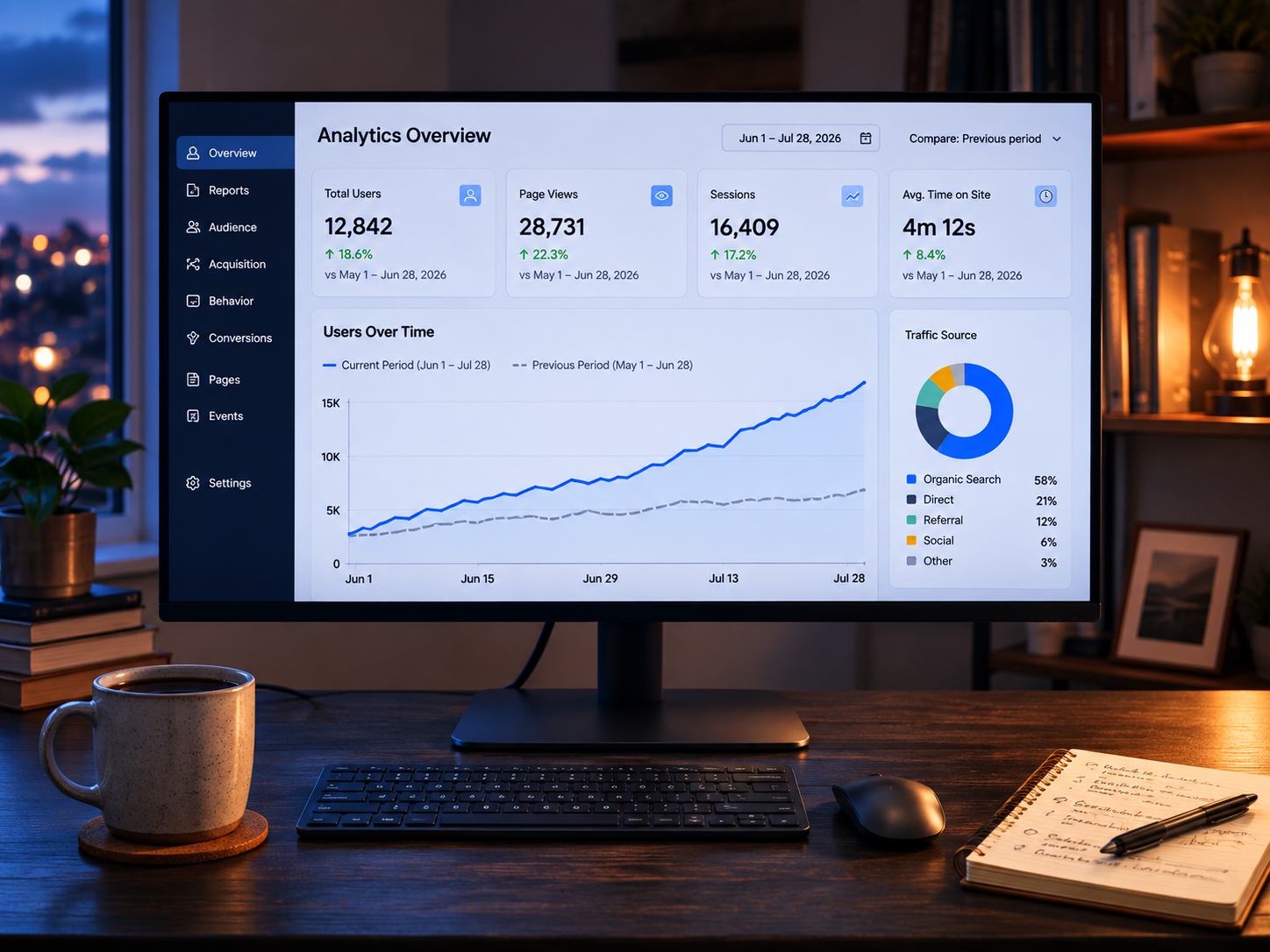
A zero click search strategy starts with an uncomfortable chart: impressions climbing, clicks flat or falling. Most owners read that as failure and ask what broke. Nothing broke. More people are seeing you and fewer of them need to arrive to get what they came for. So the question is not how to win the clicks back. It is what value you can capture from being the answer, and which queries still send someone to your door.
How a Zero Click Search Strategy Works
What a Zero Click Search Strategy Means for Revenue
Start with what a zero click result actually is: a search where the user gets their answer directly in results without visiting any website. So the visit disappears, but the exposure does not. Someone read your sentence and saw your name attached to it.
Notably, that is closer to how most advertising has always worked than to how SEO reporting works. Nobody expects a billboard to produce a click. However, marketing teams built a decade of reporting on the assumption that a visit is the only countable outcome, and that assumption is what makes the current chart look like a crisis.
Here is the honest trade-off. Being cited without being visited is worth less per impression than a visit, and anyone claiming otherwise is selling something. Also, it is much harder to attribute, which matters when you have to justify the spend. So the honest framing for a board is that reach grew and the route to measuring it changed. Neither half of that sentence is comfortable, and leaving either half out is how reporting loses credibility. Outcome: a smaller share of demand arrives as traffic, so the work shifts toward being the named source and toward the queries that still convert.
Reading Impressions and Clicks Correctly
The same two lines tell four different stories depending on how they move together. So before changing anything, work out which pattern you are actually looking at. Also note which pattern is missing from your own data, since an absent pattern is information too.
| Trait | What it means | Where it comes from | What you notice |
|---|---|---|---|
| Impressions up, clicks flat | You are being surfaced more and answered for more often. | Brief search intent: impressions rising while clicks fall. | Notably, this is the pattern people mistake for a penalty. |
| Impressions up, clicks up | Growth on queries where the answer still needs your page. | Brief FAQ Q3, on which queries still generate clicks. | So these are the terms worth defending hardest. |
| Impressions flat, clicks down | A genuine problem, usually position or title related. | Brief outline, H2 2: reading impressions and clicks correctly. | Meanwhile, this is the only pattern that is actually bad news. |
| Branded impressions rising | People are searching your name, not just your category. | Brief FAQ Q4, on tracking branded search growth. | For example, the quiet payoff of being cited repeatedly. |
| Citation frequency | How often answer engines name you when covering your topic. | Brief FAQ Q4, on citation frequency in AI answers. | In short, the metric nobody had to think about until recently. |
Content Built to Be Cited, Not Just Clicked
Content written to earn a click withholds a little, because the click is the goal. Content written to be cited gives the answer away and attaches a name to it. So the two strategies pull in opposite directions, and you have to pick per page.
- Answer in the first sentence. Then a machine lifting one sentence lifts the right one, rather than your throat-clearing.
- Keep blocks self-contained. So a forty to sixty word chunk makes sense without the paragraph above it.
- Attach your name to claims you own. Notably, a figure or method credited to you travels with the attribution attached.
- Use plain definitions. In fact, the sentence most often quoted is usually the one defining a term simply.
Google's Search Central documentation covers how that content gets found in the first place, which still has to happen before anything can quote it. Also, structure helps human readers for the same reasons, so this is rarely a trade-off against quality. Outcome: pages that get quoted with your name rather than paraphrased without it.
One caution: giving the answer away does not mean giving everything away. The definition, the framework, and the plain explanation are what get quoted, so lead with those. Then the depth, the worked example, and the specific application are what reward a visit. In fact, that split works as an editing test on its own.
AI and automation in marketing →Capturing Value Before the Click
If the visit is optional, the result page itself has to do some selling. So treat everything visible before a click as owned real estate rather than a preview.
- Write titles that state a position. Then someone who never clicks still leaves knowing what you think.
- Fill your profile completely. So the panel answers hours, location, and services without needing your site at all.
- Put the phone number where it can be tapped. Notably, a call from a result page is a conversion that never registers as a visit.
- Keep your name in the sentence. For example, a definition phrased around your own method carries further than a generic one.
This is uncomfortable for teams trained to measure sessions, since much of the value now happens somewhere you cannot instrument. Then check what a result page currently shows for your own brand name. Most owners have never looked, and it is the one place where a wrong answer costs you directly. Our notes on clicks that actually count cover why fewer, better visits beat volume anyway. Outcome: value collected at the impression, not only at the session.
Which Queries Still Drive Visits
Not everything is being answered in place. Transactional, comparison, and locally specific queries where users need to act still send people through, because a result page cannot complete a booking or compare your prices against a rival's.
So sort your keyword list into two piles: terms where you want the citation, and terms where you want the visit. Then spend differently on each. Informational terms get structured, quotable content. Transactional and local terms get proper landing pages, real pricing, and a next step, because those are the pages a click is worth paying for. Outcome: effort concentrated where a visit is still available to win.
A few signals sort the two piles quickly. First, does the query contain a place name, a price, or a brand? Those almost always want a page. Second, could a competent answer fit in three sentences? If so, expect it to be answered in place. Third, does acting require a form, a booking, or a call? Then the visit survives, because a result page cannot complete it. Also watch which of your own pages still earn clicks at their current position, since that is direct evidence rather than inference.
Rebuilding Your Reporting Around Visibility
Reporting is where this becomes a management problem rather than a marketing one. So change the report before the next quarter's numbers make someone panic.
- Lead with impression share. Then the headline number reflects reach rather than only arrivals.
- Track branded search growth separately. So the effect of being cited shows up somewhere on the page.
- Record citation frequency. Notably, this means running the same prompts each month and writing down what you find.
- Keep conversions where they are. In fact, the bottom of the report should not change at all, because that is what proves the rest is working.
Run the citation check the same way each month or it is not a measurement. Pick five prompts, ask them in the same engines, and record whether you appear and how you are described. Ten minutes, written down, dated. So after two quarters you hold a trend line for something most competitors are not tracking at all.
Explain the change before you make it, since a report that quietly swaps its main metric looks like someone hiding a bad quarter. Our notes on KPIs worth reporting cover how to frame that conversation, and Search Console help documents where the impression data comes from. Outcome: a report that survives the question of why traffic is flat.
The Channels That Hedge This Risk
Depending entirely on one channel was always risky, and this makes the risk legible. So build the hedges deliberately rather than in a panic.
- Email. The only audience you own outright, so it is the first hedge worth building.
- Your own profile and listings. Then a result page that answers everything still answers it in your words.
- Paid, used surgically. Notably, paid is worth most on exactly the transactional terms where clicks still happen.
- Recorded and spoken formats. So there is a version of your expertise that a text answer cannot summarise away.
Also rank the hedges by what you would lose tomorrow. A business with no email list and one ranking page sits in a different position from one with three channels working, and that ranking exercise usually settles the budget argument faster than a strategy document. None of these replaces search. They reduce how much a single change in one results page can cost you, which is a different and more realistic goal. Our notes on balancing SEO and paid cover how to split the budget between them. Outcome: a mix where no single channel decides the quarter.
Build a multichannel strategy →Frequently Asked Questions
Q1 What does a zero click search strategy look like in practice? +
Q2 What is zero-click search? +
Q3 Is SEO still worth it with zero-click results? +
Q4 Which queries still generate clicks? +
Q5 How do I measure zero-click value? +
Build a Zero Click Search Strategy Around Visibility
A zero click search strategy accepts the change instead of arguing with it. So structure the informational pages to be quoted by name, put real effort into the transactional ones where a visit is still on offer, rebuild the report before someone panics at a flat line, and hedge the channel risk you now know you have. Ultimately, the businesses that struggle are the ones still counting only the visits.