This Is What a Video Podcast Ad Looks Like on Sun City SITREP
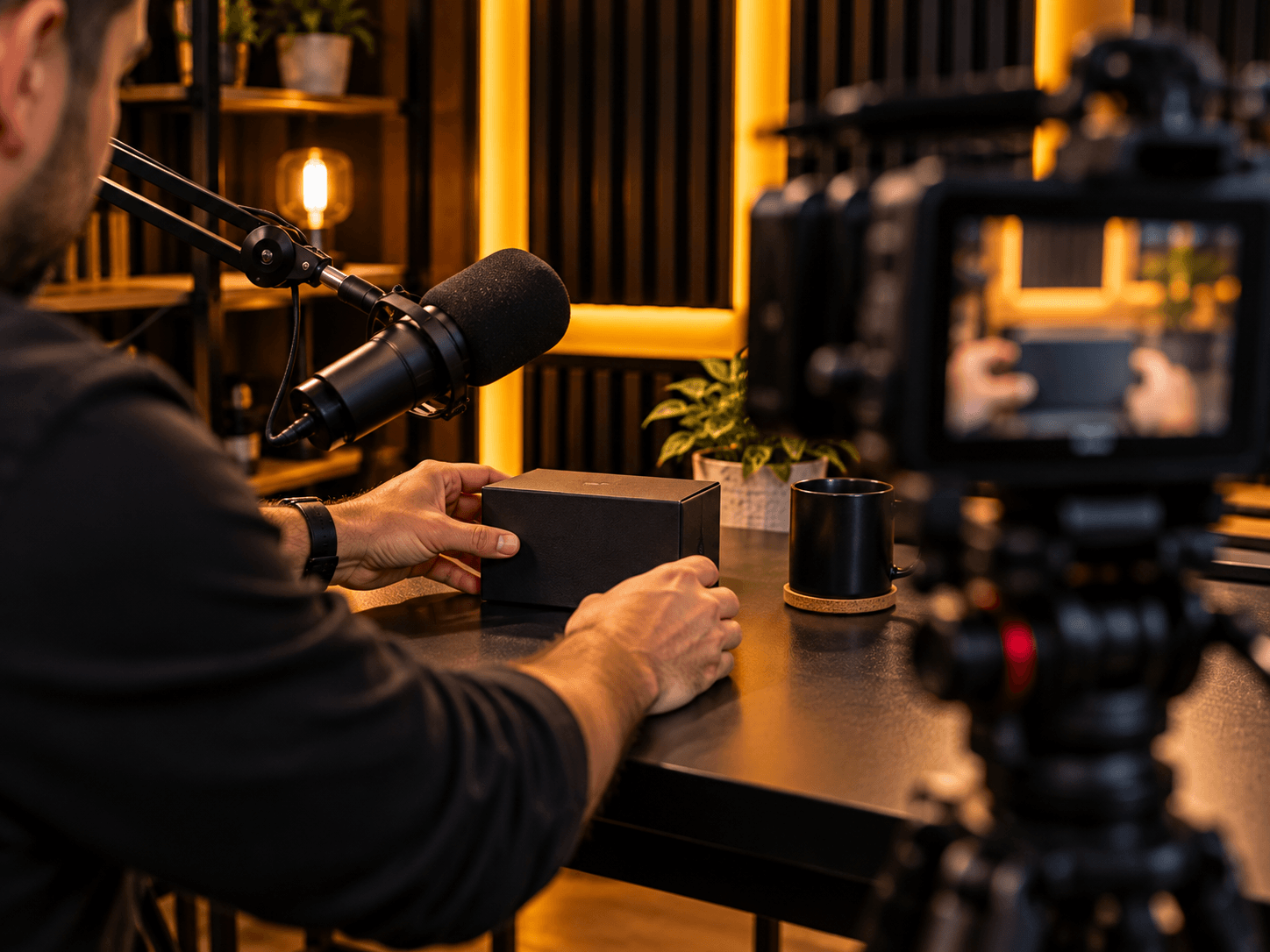
A video podcast ad lets you see exactly what you are buying before you buy it. Radio asks you to imagine your ad, so most owners never see the spot until it airs. However, on Sun City SITREP, recorded right here in El Paso, the spot is on camera. You see the host, your product on the desk and your name on screen. So here is what that looks like, beat by beat, and why it works.
Audio Asks You to Imagine. A Video Podcast Ad Shows You.
Anatomy of a Video Podcast Ad: Five Beats From Lead-In to Handoff
Every spot on the show follows the same five beats. Here is what each one means, where it comes from and what a viewer notices. So by the end of the table, you can picture your own spot.
| Trait | What it means | Where it comes from | What you notice |
|---|---|---|---|
| The lead-in | The host steers the talk toward your spot, so it does not start cold. | It comes from the host, in the middle of the episode. | Then the read begins without a hard cut. |
| The host read | The host tells viewers about your business in their own words. | It is recorded in the studio, on mic and on camera. | It sounds like the host, so it fits the show. |
| The product in frame | Your product also sits on the desk, right next to the mic. | It is set on the studio desk before the camera rolls. | Viewers see the real thing, not just hear about it. |
| The name on screen | Your business name shows on screen during the read. | It is part of the video version of the spot. | So viewers see how to spell it and how to find it. |
| The handoff | The host turns the talk back to the guest or the topic. | It closes the spot inside the same conversation. | Then the show keeps going, so the spot feels like part of it. |
Watch It: Real Spot Clips From Published Episodes
Of course, the best way to judge a spot is to watch one. That is why every spot clip on the Sun City SITREP channels is a real spot from a published episode, tagged to its sponsor. Nothing is staged for a sales pitch, so you see exactly what a sponsor got. Then you decide if you want the same.
You will find the clips where the show already posts: YouTube, Instagram, Facebook and TikTok. When you watch, look for the five beats from the table above. Also notice how short each clip is. Then count how many of the five beats fit inside it.
Want a feel for the show around the spot first? Start with the Minerva Torres Shelton episode write-up. Then watch a clip with that context in mind. In fact, that is how a viewer meets your spot: in the middle of a real conversation.
Why a Spot That Feels Like Part of the Show Earns More Trust
A spot that feels like part of the show earns more trust because it arrives in the same voice as the talk around it. So the viewer does not tune out for a break. Instead, they hear the host they chose to watch speak about a business. So the read carries some of the goodwill the host has built.
A spot that feels cut in does the reverse. It sounds like a break from the show, not a piece of it. So the host read is where we put the effort. Of course, the lead-in and the handoff matter too, because they are what make the read feel like it belongs.
Also, feeling natural never means hiding the sponsor. The Federal Trade Commission explains how sponsored content should be disclosed, and you can read its guidance at ftc.gov. So a good read is clear about who backs the show and still sounds like the host. In fact, both things can be true at once.
Audio Still Matters: How the Sound-Treated Room and Shure SM7B Mics Keep the Read Clean
Audio still matters because the audio feed carries the read too. Some of your audience will only hear the spot, never see it. So it has to sound as sharp as it looks. Audio-first listening builds deep attention, and a clean read keeps that attention on your business.
The result you hear is a clean, broadcast-quality read. That comes from a sound-treated room that shuts out El Paso traffic noise, HVAC hum and city sounds. Then Shure SM7B mics and an engineer on every session take care of the rest. So you never touch a knob.
Also, broadcast-quality recording has real standards behind it. The Audio Engineering Society publishes audio engineering standards at aes.org. The same room and gear handle our audio recording and voiceover sessions. So your spot is recorded where serious voice work happens.
Finding a podcast studio near you →What the Viewer Sees Versus What the Sponsor Keeps
In short, a spot does two jobs at once. The viewer gets a moment inside the show, and you get pieces that keep working after it. Here is how that splits.
- The viewer sees the host and your product. Both sit in one frame, so the read comes with visual proof.
- The listener hears the read in the audio feed. So people who never open the video still hear your name.
- You keep a standalone clip. It is cut from the episode, so you can post it on your own channels.
- You get a tag each time the clip goes out. Then viewers can tap straight through to your business.
Our next post breaks down each piece a sponsor gets in more detail. Until then, the blog is where studio news and new episodes go up.
Studio news and events →Frequently Asked Questions
Q1 What is a video podcast ad?
Q2 Are video podcast ads better than audio ads?
Q3 How long is a podcast sponsor spot?
Q4 Can I see a sponsor spot before I sponsor?
Q5 Can I post my video podcast ad clip on my own social media?
Want a Video Podcast Ad? Message SPONSOR
You have seen how a spot works, beat by beat. So here is the only question left: want one? Message SPONSOR, and we will plan your video podcast ad with you on a quick call, from the lead-in to the handoff. Or, if you want a show of your own on camera, book a studio session with our engineer.