Q3 marketing checklist planning gives your business a chance to fix what slipped in the first half of the year before Q4 pressure hits. July, August, and September are not just “in-between” months. They are the reset window where smart teams review performance, clean up SEO issues, improve website conversions, plan content, tighten paid media, and make sure lead tracking is actually telling the truth.
Quick answer block
Why Q3 Is the Reset Quarter Before Q4 Gets Expensive
Q4 often brings higher competition, tighter timelines, holiday pressure, and more expensive media. By then, many businesses are trying to launch campaigns, fix websites, refresh offers, and improve visibility at the same time. That is stressful. It is also avoidable.
Q3 gives you room to breathe. You can study Q1 and Q2 results, find weak points, and make smart improvements before the rush. For example, a business might discover that organic traffic is growing but leads are not. Another might see that paid ads drive clicks while landing pages fail to convert.
Google’s SEO Starter Guide explains that helpful content, clear structure, and accessible pages help both search engines and users understand a website. Google Analytics 4 documentation also shows why event tracking matters when businesses want to measure meaningful actions instead of only pageviews. Review Google’s SEO Starter Guide and Google Analytics event guidance.
Strengthen your Q3 SEO foundation
Q3 Marketing Checklist at a Glance
A strong third-quarter marketing plan should separate unfinished first-half work from high-impact Q3 priorities. That way, the team knows what to fix, what to launch, and what to measure.
| Marketing area | Q2 leftover | Q3 priority | Why it matters | Metric to watch |
|---|---|---|---|---|
| SEO | Stale pages, missing metadata, weak internal links | Refresh priority pages and fix technical gaps | Improves organic visibility before Q4 | Rankings, clicks, impressions |
| Website | Slow pages, weak CTAs, unclear service pages | Improve conversion paths and mobile UX | Turns more traffic into leads | Forms, calls, bookings |
| Content | Inconsistent publishing or thin blog topics | Build a Q3 content calendar | Supports search and AI discovery | Published assets and engagement |
| Paid media | Budget waste or low-quality clicks | Reallocate spend to stronger campaigns | Protects ROI before costs rise | Cost per lead and conversion rate |
| Local visibility | Outdated listings or weak reviews | Update GBP and local signals | Supports Maps and local search | Calls, directions, profile actions |
| Analytics | Unclear tracking or vanity metrics | Track actions that connect to revenue | Makes decisions easier | Qualified leads and source data |
| Offers | Old promotions or vague messaging | Refresh seasonal campaigns | Gives buyers a timely reason to act | CTA clicks and close rate |
Review First-Half Marketing Performance
Q3 marketing checklist work should begin with a clear look at Q1 and Q2. Do not start by creating more campaigns. First, ask what already happened.
Look at website traffic, organic search performance, paid media results, email engagement, social content, calls, form fills, sales conversations, and closed deals. Then, compare those numbers against business goals. Did traffic increase without leads? Did leads increase without quality?
This review should also include your best-performing pages and weakest pages. If a service page gets traffic but does not convert, the problem may be CTA placement, messaging, proof, mobile design, or offer clarity. However, if an important service page gets no impressions, the problem may be SEO structure, content depth, internal links, or technical visibility.
Clean Up SEO Before You Add More Campaigns
SEO cleanup is one of the highest-value Q3 marketing priorities because it improves the foundation before Q4 demand rises. A business does not need to rebuild everything. However, it should fix the pages and issues that are already holding visibility back.
Start with title tags, meta descriptions, headings, internal links, image alt text, service-page depth, broken links, crawl issues, and outdated content. Additionally, review whether your core service pages match what customers actually search for.
This is also a good time to review AI-search readiness. Search is becoming more conversational, and AI systems rely on clear answers, structured content, helpful FAQs, and strong topical connections. Therefore, your Q3 SEO plan should make pages easier for both people and search systems to understand.
See how SEO drives measurable growth
Fix Website Conversion Gaps
A Q3 marketing checklist should always include the website. After all, every campaign eventually sends people somewhere.
If the website is slow, confusing, outdated, or unclear, more traffic will not solve the real problem. Review your homepage, service pages, contact page, pricing cues, forms, call buttons, navigation, mobile experience, and trust signals. Then, look for friction.
Small conversion fixes can make a big difference. For example, adding stronger service-page CTAs, simplifying forms, improving mobile buttons, showing project proof, or clarifying pricing language can help more visitors take action.
Improve your website conversion path
Refresh Local Visibility and Reviews
For local businesses, Q3 is a smart time to refresh visibility across Google Business Profile, Maps, directories, social profiles, and review platforms. Customers often check business information quickly before calling, visiting, or requesting a quote.
Start by confirming name, address, phone number, hours, categories, services, photos, links, and descriptions. Then, review whether your Google Business Profile reflects current offers and service areas. If your business has added services, changed hours, or shifted focus, your local presence should reflect that.
Reviews also deserve attention. Ask recent customers for specific feedback, especially when the experience was strong. Additionally, review responses show that the business is active and engaged.
Plan Content Around Q3 and Q4 Buyer Intent
Content planning belongs in every third-quarter marketing checklist because content takes time to build traction. If you wait until Q4 to create holiday, year-end, or seasonal content, you may miss the window.
Start by identifying the questions customers ask in Q3. Then, map those questions to blog posts, service pages, FAQ updates, email campaigns, social posts, landing pages, and sales enablement content.
Additionally, content should support the full funnel. Some pieces should help people discover the business. Others should help them compare options, understand pricing, overcome objections, or request a consultation.
Align SEO, content, and brand messaging
Recheck Paid Media and Campaign Budgets
Paid media should not run on autopilot through Q3. Campaign costs, audience behavior, conversion quality, and seasonal demand can all shift.
Review which campaigns produced qualified leads in Q1 and Q2. Then, look at spend, cost per lead, conversion rate, landing-page performance, and sales feedback. If campaigns drove clicks but poor leads, the issue may be targeting, messaging, landing-page fit, or offer quality.
This is also a good moment to test before the busy season. Test new offers, headlines, landing pages, creative, audiences, and retargeting flows while there is still time to learn. As a result, your Q4 campaigns can launch with stronger data instead of assumptions.
Align paid media, SEO, and content
Q3 Marketing Checklist for El Paso Businesses
Use this Q3 marketing checklist to reset your marketing system before the final quarter.
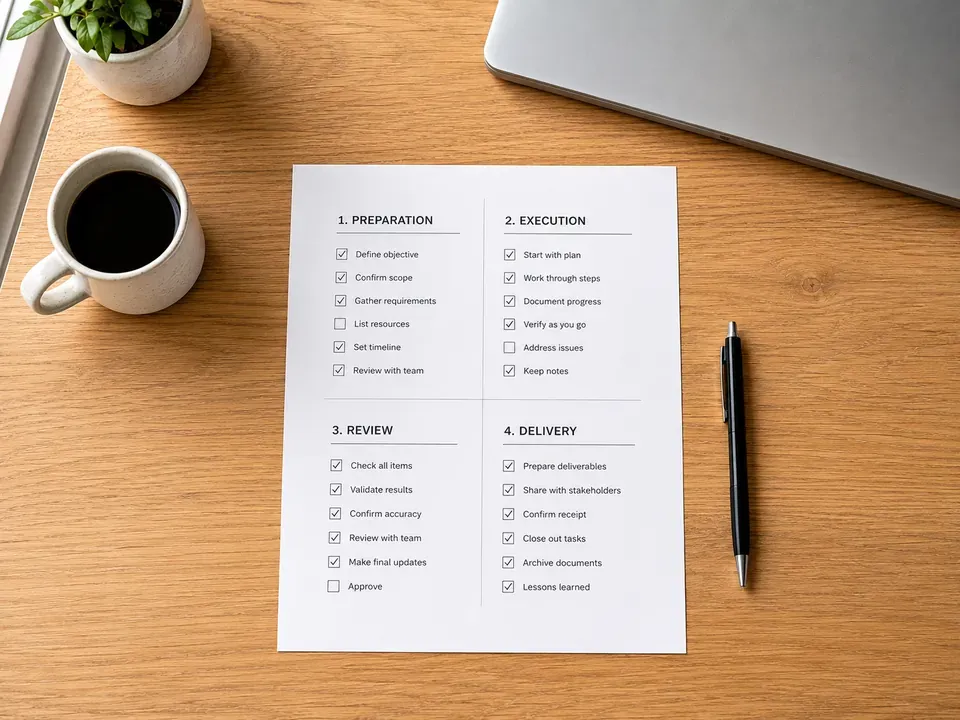
- Review Q1 and Q2 performance. Look at traffic, leads, calls, form fills, sales quality, rankings, campaign spend, and closed deals.
- Identify your biggest growth blocker. Decide whether the main issue is visibility, conversion, lead quality, tracking, content, or follow-up.
- Refresh priority SEO pages. Update service pages, metadata, headings, internal links, FAQs, images, and outdated information.
- Fix technical SEO issues. Check page speed, crawl errors, broken links, mobile usability, redirects, indexing, and schema opportunities.
- Improve website CTAs. Make calls, quote requests, bookings, downloads, and consultation actions clear on important pages.
- Update local listings. Confirm business details, hours, services, categories, photos, and links across Google Business Profile and directories.
- Ask for better reviews. Encourage customers to mention specific services, outcomes, and local context naturally.
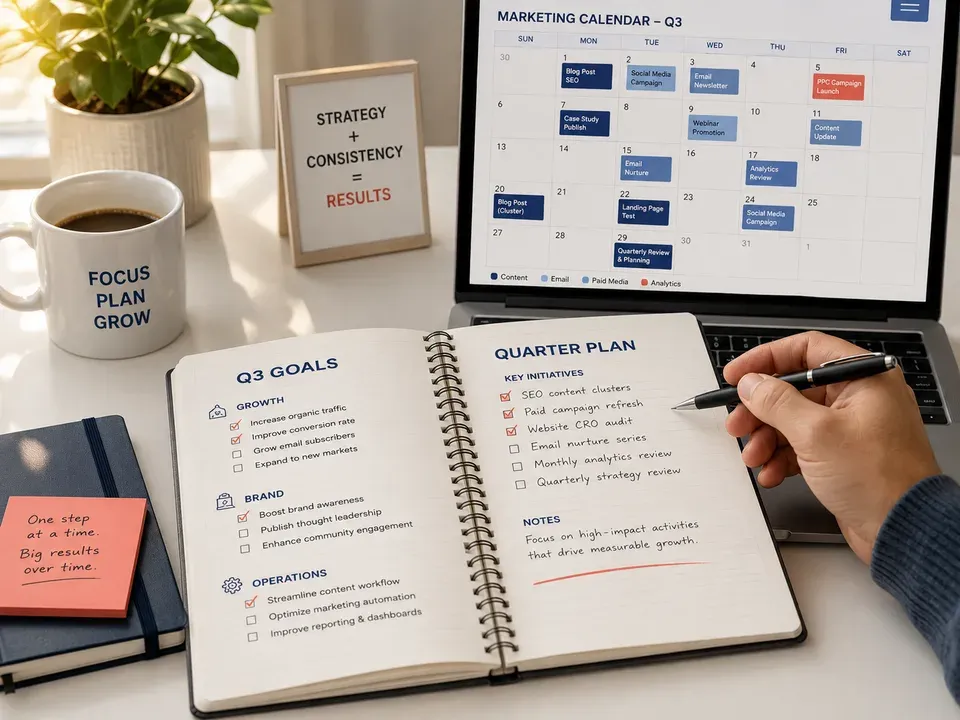
- Build a Q3 content calendar. Plan blogs, FAQs, emails, landing pages, social posts, and seasonal campaign content.
- Prepare Q4 campaign assets. Draft offers, landing pages, ad creative, email flows, and lead magnets early.
- Audit paid media performance. Pause waste, reallocate budget, test new messaging, and improve landing-page alignment.
- Clean up analytics. Track forms, calls, bookings, CTA clicks, campaign sources, and qualified leads.
- Schedule a monthly review. Check progress in July, August, and September so the plan stays active.
Start with a free marketing audit
Common Q3 Marketing Mistakes to Avoid
Many businesses treat Q3 like a waiting room before Q4. That mistake can make the final quarter harder and more expensive.
- Skipping the first-half review. Without a performance review, Q3 planning becomes guesswork.
- Launching new campaigns before fixing the website. More traffic will not help if visitors cannot easily convert.
- Ignoring SEO cleanup. Small technical and content issues can quietly reduce visibility.
- Letting paid media run unchanged. Campaigns need budget, audience, and landing-page reviews.
- Waiting too long to plan Q4. Content, SEO, landing pages, and offers need time to gain traction.
- Tracking vanity metrics only. Clicks and impressions matter less if they do not connect to calls, forms, bookings, or revenue.
- Forgetting local visibility. Outdated business profiles and weak reviews can cost local leads.
Frequently Asked Questions
A Q3 marketing checklist should include a first-half performance review, SEO cleanup, website conversion fixes, Google Business Profile updates, review generation, content planning, paid media budget checks, analytics cleanup, lead tracking, and Q4 campaign preparation.
Q3 is important because it gives businesses time to fix weak points before Q4 competition and costs rise. It is the best quarter to review first-half results, update campaigns, improve web performance, and prepare seasonal offers.
A small business should start by reviewing Q1 and Q2 performance. Then, it should choose the highest-impact fixes, such as SEO updates, website conversion improvements, local listing cleanup, content planning, paid media adjustments, and better lead tracking.
Review organic traffic, rankings, impressions, calls, form fills, bookings, paid media cost per lead, conversion rates, email engagement, landing-page performance, Google Business Profile actions, qualified leads, and closed revenue.
Yes. VenPro can help businesses build a Q3 marketing checklist that connects SEO, web design, content, paid media, local visibility, AI-search readiness, analytics, and lead tracking into one practical growth plan.
Build a Smarter Q3 Marketing Checklist Before Q4
Q3 marketing checklist work helps your business enter the final quarter with fewer surprises and stronger systems. When your SEO is cleaner, your website converts better, your local presence is updated, and your tracking is accurate, every campaign has a better chance to perform.