





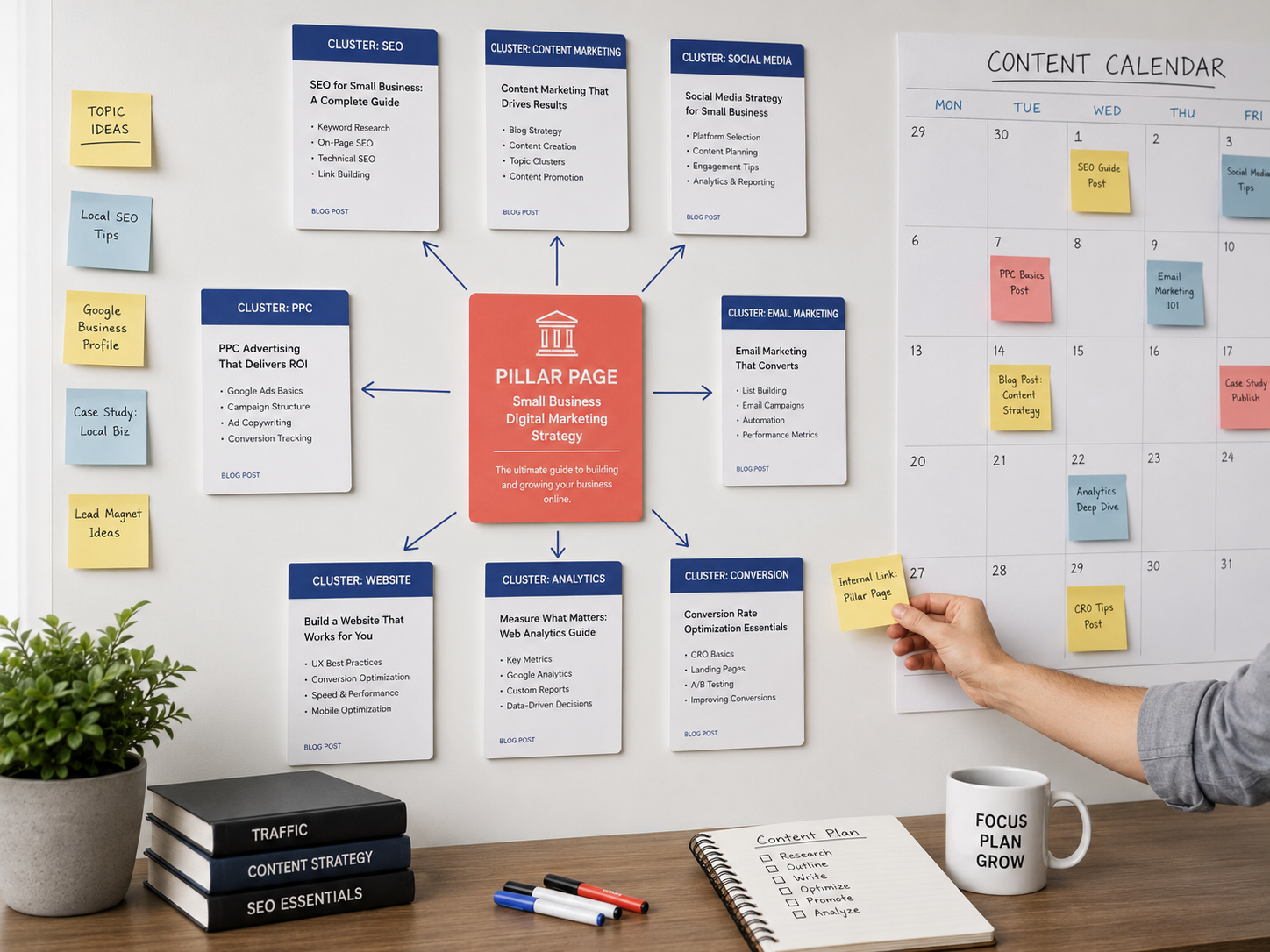
Content System for Business: Build a Repeatable Growth Engine
content system for business is more than a posting calendar. It is a repeatable way to turn ideas, customer questions, SEO research, brand messaging, content creation, distribution, measurement, and optimization into one connected growth engine. Instead of publishing whenever inspiration hits, a content system helps a business create useful assets that support visibility, trust, leads, and sales over time.
What Is a Content System for Business?
Why Businesses Need a Content Operating System
Most businesses do not struggle because they lack ideas. They struggle because they lack a system for turning those ideas into consistent, useful, measurable content.
Without a system, content becomes reactive. Someone remembers the blog has not been updated. A social post gets written because the feed feels quiet. A landing page gets revised only after leads slow down. As a result, the business creates content in fragments instead of building momentum.
Google’s helpful content guidance encourages publishers to create people-first content that is useful, reliable, and made for readers rather than search engines alone. Google Search Central also explains that SEO helps search engines understand content and helps users find useful information. Review Google helpful content guidance and Google’s SEO Starter Guide.
Build a stronger SEO content system →Content System for Business at a Glance
The best content system for business includes more than blog posts. It connects core pages, supporting articles, social distribution, email nurture, proof assets, and conversion paths.
| System component | Asset examples | Business purpose | Metric to watch | Common mistake |
|---|---|---|---|---|
| Strategy foundation | Audience, offers, goals | Decide what content should support | Lead quality | Starting with random topics |
| SEO research | Keywords, questions, clusters | Match content to search intent | Organic clicks | Chasing volume only |
| Pillar content | Service pages, guides | Build topical authority | Rankings and conversions | Making pages too thin |
| Supporting content | Blogs, FAQs, explainers | Answer specific questions | Engagement and assists | Publishing without links |
| Distribution | Email, social, paid boosts | Extend content reach | Clicks and return visits | Posting once and stopping |
| Conversion paths | CTAs, forms, lead magnets | Turn attention into leads | Forms, calls, bookings | Weak next steps |
| Measurement | Dashboards, reports, tests | Improve the system over time | Revenue and qualified leads | Tracking vanity metrics only |
Start With Strategy Before Content Creation
A content system starts before anyone writes a headline. First, the business needs to define the audience, offer, market position, sales cycle, and content goals.
For example, a local service business may need content that answers pricing questions, explains service options, supports local SEO, and drives phone calls. A B2B company may need educational guides, comparison content, case studies, email nurture, and sales enablement assets.
The point is simple: content should be built around business priorities. Otherwise, the team may create pieces that get views but do not support trust, pipeline, or revenue.
Build Around Search Intent and Customer Questions
SEO content strategy gives a content system its structure. Instead of guessing what to publish, the business can use keyword research, customer questions, sales conversations, and support themes to identify what people actually want to know.
Search intent matters because different topics serve different stages. Some people are learning. Some are comparing. Some are ready to buy. Therefore, a content system should include awareness content, consideration content, decision-stage content, and retention content.
VenPro’s purpose-led content approach connects SEO-driven topics to business goals, so content is not just published for traffic. It supports qualified leads and measurable growth.
See how purpose-led content supports growth →Turn One Idea Into Multiple Content Assets
A repeatable content workflow gets more value from every strong idea. One topic should not live in only one format.
For example, a long-form SEO article can become a short email, several social posts, a lead magnet section, an FAQ block, a video outline, a sales follow-up resource, and an internal link hub. Similarly, a case study can become a blog post, a testimonial graphic, a nurture email, and proof on a service page.
This is where content repurposing becomes useful. Repurposing does not mean copying and pasting the same message everywhere. Instead, it means adapting one useful idea for different channels, audiences, and moments in the buyer journey.
Connect Content to Conversion Paths
Content should help people take the next step. That does not mean every article needs a hard sales pitch. However, every asset should have a clear purpose.
A beginner guide may invite readers to download a checklist. A service page may ask them to book a consultation. A comparison article may link to pricing or projects. A blog post may move readers into a newsletter or related service page.
This is especially important for service businesses. If SEO brings traffic to the site but the content does not guide users toward action, the business may earn visibility without leads.
Build pages that support your content system →Use Distribution to Extend Content Reach
A content system does not stop when something is published. Distribution is what helps the asset keep working.
Search can bring long-term visibility. Email can bring people back. Social can create discovery and conversation. Paid media can amplify important assets. Sales teams can use content in follow-up. Internal links can help users and search engines understand how topics connect.
Therefore, every content brief should include a distribution plan. When distribution is planned early, content becomes more efficient. The business gets more mileage from the work it already created.
Measure the System, Not Just the Post
A content system for business should be measured as a system. One blog post may not tell the whole story. A topic cluster, email sequence, service page, and lead magnet may work together before a customer converts.
That is why measurement should include visibility metrics, engagement metrics, conversion metrics, lead quality, assisted conversions, and revenue impact. Rankings and clicks matter, but they are not the full story.
VenPro’s full-funnel marketing approach helps align SEO, content, and brand messaging so the entire path supports growth.
See how full-funnel content supports growth →Content System for Business Checklist
Use this checklist to turn scattered content into a repeatable business content engine.
- Define the business goal. Decide whether content should support leads, bookings, sales, retention, hiring, authority, or brand awareness.
- Clarify the audience. Identify who the content is for, what they care about, and what problems they need solved.
- Map the buyer journey. Create content for awareness, consideration, decision, retention, and referral stages.
- Build topic clusters. Group keywords, questions, and ideas around services, pain points, locations, and offers.
- Prioritize core pages. Strengthen service pages, landing pages, and pillar guides before chasing endless blog topics.
- Create content briefs. Include the audience, keyword, angle, search intent, internal links, CTA, proof points, and distribution plan.
- Set a publishing workflow. Define who researches, writes, edits, approves, publishes, promotes, and measures each asset.
- Repurpose major assets. Turn blogs into emails, social posts, lead magnets, sales resources, and FAQs.
- Add conversion paths. Connect each asset to a relevant next step, such as a form, call, download, newsletter, or service page.
- Use internal links. Connect related content so readers and search engines can move through the topic clearly.
- Measure business impact. Track organic traffic, email clicks, forms, calls, bookings, qualified leads, and revenue.
- Improve the system. Refresh old content, strengthen weak CTAs, expand winning topics, and retire content that no longer helps.
Common Content System Mistakes to Avoid
Many businesses produce content without building the system behind it. That leads to inconsistency, low ROI, and unclear reporting.
- Starting with a calendar before strategy. A schedule is useful, but it cannot fix weak direction.
- Publishing without search intent. Content should answer what people actually need to know.
- Creating one-off assets. A strong idea should support multiple channels and stages.
- Ignoring internal links. Related content should connect naturally across the site.
- Using the same CTA everywhere. Different topics and buyer stages need different next steps.
- Measuring only traffic. Traffic is useful, but leads and revenue show business value.
- Skipping refreshes. Old content can lose accuracy, rankings, and usefulness over time.
Frequently Asked Questions
Q1What is a content system for business?+
Q2Why does a business need a content system?+
Q3What should be included in a content system?+
Q4How do you build a content system for business growth?+
Q5Can VenPro help build a content system for business?+
Build Content That Compounds
content system for business is about creating structure around growth. Instead of relying on random posts or last-minute campaigns, the business builds a repeatable engine for visibility, trust, conversion, and improvement.