





Personal Brand Content Strategy: The Four-Format Engine
A personal brand content strategy usually fails for the same reason most diets fail: the plan assumes a version of you with more time than you have. Four posts a week, three platforms, a newsletter. It holds for a month. So the fix is not more discipline. It is a set of formats where each one produces the raw material for the next, which means one real effort a week can carry the whole thing.
What a Personal Brand Content Strategy Needs
Why a Personal Brand Content Strategy Beats Pure Volume
Of course, volume is the obvious answer, and it rarely survives contact with a working week. Posting more does produce more. However, the pieces never accumulate into anything. Each one starts from zero, gets its moment, and disappears. So the effort resets every single time.
What compounds is a library. One anchor piece weekly, repurposed into several derivatives, outperforms daily disconnected posting. Notably, the reason is not reach. It is that a body of connected work answers a buyer's questions in sequence, so someone can arrive anywhere and find their way to the rest.
Here is the honest trade-off. It typically takes two to three consistent quarters before the library starts working for you, which is a long time to keep going on modest feedback. Also, this system deliberately ignores the numbers that move fastest, because follower counts and reactions tell you very little about whether anyone hired you. Outcome: slower signals, tied to actual business.
The Four Formats at a Glance
Each format does a different job, and the order matters because three of them depend on the second. So the table below names what each one produces and where it comes from.
| Trait | What it means | Where it comes from | What you notice |
|---|---|---|---|
| The anchor piece | Specifically, one long-form article carrying the full argument. | Brief outline, H2 2: the anchor long-form piece. | Notably, it is the only piece still useful in a year. |
| The recorded conversation | Talk first, because it yields the most derivative material per hour. | Brief FAQ Q3, on which format to start with. | So one session refills the queue for a fortnight. |
| The short vertical cut | Clips harvested from the recording, one idea each. | Brief outline, H2 4: the short vertical cut. | Meanwhile, the editing job becomes selection rather than writing. |
| The perspective post | Basically, two hundred words, one opinion, written fast. | Brief outline, H2 5: the written perspective post. | For example, the ones drawing replies rather than reactions. |
| The loop | Each format feeds the next instead of standing on its own. | Brief outline, H2 6: the repurposing loop. | In short, the weekly question stops being what to post. |
Format One: The Anchor Long-Form Piece
First, the anchor is the piece with the full argument in it. A long article, a guide, a detailed breakdown, something that would still be useful in a year. So it carries the depth the other three formats point at rather than repeat.
Write one a week if you can and one a fortnight if you cannot. Then treat it as the source document. Every clip, post, and talking point for the next seven days should trace back to it, which quietly removes the daily question of what to publish. Outcome: one decision replaces seven.
Notably, the anchor does not have to be new thinking every week. A clear explanation of something you tell clients constantly will do more than a novel idea nobody asked about. So start with the question you answer most often, then write the version you wish you could send instead of repeating yourself.
Format Two: The Recorded Conversation
Start here if you are starting anywhere. The recorded conversation generates the most derivative material per hour, because forty minutes of talking produces a transcript, an audio episode, several clips, and usually two article ideas you would not have reached alone.
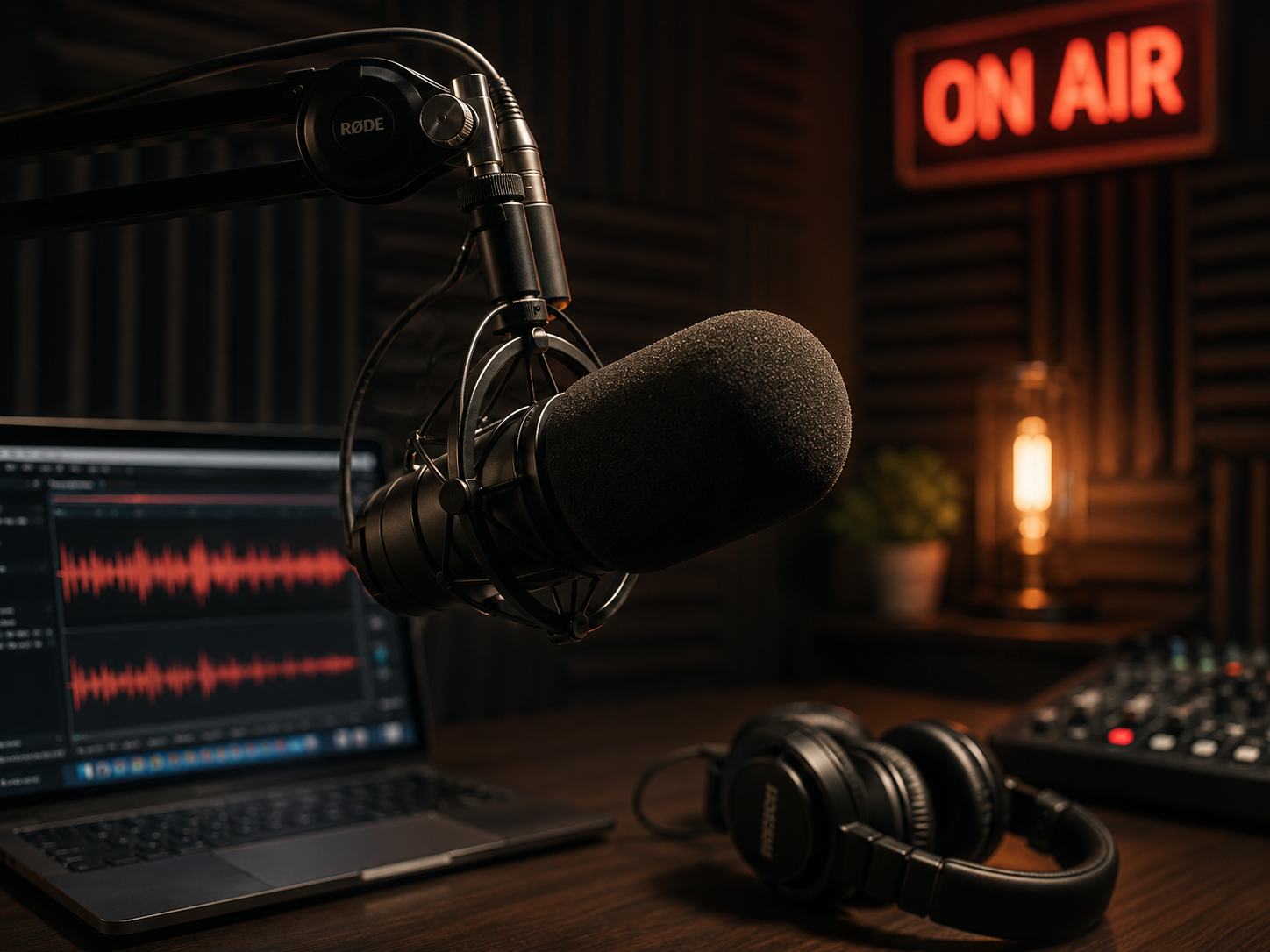
You do not need professional recording equipment to begin, though audio quality is the fastest credibility upgrade available. A treated room and a decent microphone change how the same conversation lands. For El Paso creators that is a booking rather than a purchase, which removes the most common reason for not starting. Outcome: one session feeds a fortnight.
Sun City Podcast Studio →Format Three: The Short Vertical Cut
Cuts are harvested, not created. Pull them from the conversation you already recorded, choosing the moments where you said something slightly sharper than you meant to. So the editing job is selection rather than writing.
Keep each cut to one idea and let it end abruptly. Then point it somewhere: the anchor piece, the full episode, or a page that does something. A clip with no destination is a nice moment nobody can act on. If the editing becomes the bottleneck, our notes on picking a video production partner cover what to hand over. Outcome: attention that leads somewhere.
Also, resist the urge to polish. A clip that took twenty minutes and lands is worth more than one that took three hours and looks like an advert. In fact, the rougher cuts often travel further, because they read as a person talking rather than a brand broadcasting.
Format Four: The Written Perspective Post
Notably, the perspective post is the cheapest of the four and the most useful for testing. Two hundred words, one opinion, no preamble. So you find out whether an idea carries weight before spending a recording on it.
Write these in response to something real: a client question, an argument you had, a piece you disagreed with. Then watch which ones draw replies rather than reactions, because a reply means somebody cared enough to type. If any of this becomes sponsored, the FTC's endorsement and disclosure rules set out what has to be said and where. For the broader discipline, see our notes on strategic content creation. Outcome: a steady supply of tested angles for the anchor.
The Repurposing Loop Between All Four
The loop is what makes this a system rather than four separate habits. So run it in one direction and let each output become the next input.
- Conversation to transcript. Record first, because everything downstream comes from it. Then read the transcript for the two or three moments worth keeping.
- Transcript to anchor. The argument you made out loud becomes the article you write properly. So the hard thinking is already done.
- Anchor to cuts. Pull the vertical clips from the recording, then point every one of them back at the anchor.
- Cuts to perspective posts. Notably, the replies to your clips are next week's opinions, so the loop closes itself.
First, note what the loop does not need. It does not need a new idea every day, a second platform, or another tool subscription. So the failure mode is almost never a shortage of material. It is a week where the recording slipped and nothing downstream had a source.
Run it weekly and the calendar stops being a question. Also, the loop survives a missed week better than a schedule does, because what accumulates is material rather than obligations. Our notes on social media strategies that work cover distribution once the loop is turning. Outcome: one recording, a week of output.
A Realistic Weekly Production Rhythm
Be honest about the hours before committing to a rhythm. So here is what a working week actually looks like when it holds.
- Monday: record. One conversation, forty minutes, booked as a fixed appointment rather than a maybe.
- Tuesday: write the anchor. Then publish while the conversation is still fresh in your head.
- Wednesday and Thursday: cut and post. So the clips go out while the anchor is live to point at.
- Friday: one perspective post. Short, opinionated, and written inside twenty minutes.
In short, that is roughly six hours, not twenty. However, the six have to be protected, because this system fails on interruption rather than on effort. Also, drop the Friday post before you drop the Monday recording, since the recording feeds everything else. Then protect the Monday slot the way you would protect a client meeting. If you are treating the brand as a business rather than a hobby, the SBA's small business guidance covers the surrounding basics. Outcome: a rhythm that survives a busy month.
Align storytelling with sales →Frequently Asked Questions
Q1 What does a personal brand content strategy look like week to week? +
Q2 How often should a personal brand publish? +
Q3 Do I need professional recording equipment? +
Q4 Which format should I start with? +
Q5 How long before a personal brand compounds? +
Run Your Personal Brand Content Strategy as One Loop
A personal brand content strategy works when the formats stop competing for your week and start feeding each other. So record first, write from what you said, cut what landed, and test the next idea in public. Ultimately, the people who compound are not the ones producing the most. They are the ones whose work from six months ago is still doing something today.