The About Us Video: What to Say in 90 Seconds
An about us video is how customers meet you before they ever call. Most small business websites have an about page full of text nobody reads, or a video that runs five minutes and says very little. So the page that should build trust ends up doing nothing. This guide gives you a simple 90-second structure, a way to tell your story without the life story, and a plan to film it in one session.
Your About Us Video in 90 Seconds: The Short Answer
What an About Us Video Is For: Trust Before the First Call
First, people like to know who they are dealing with. For a local business, that often means the owner. So an about us video does one job: it lets a customer see and hear you before they pick up the phone. Then the first call feels like the second conversation, not the first.
That is why it should be short. A customer watching your video is deciding whether to trust you, not studying your history. In addition, a short video is more likely to be watched to the end, which is where the next step lives.
So think of it as a handshake, not a biography. Outcome: customers arrive already feeling like they know you, which makes the first call easier for everyone.
The 90-Second Structure at a Glance
Here is the structure in one view, with roughly how long each part runs.
| Trait | What it means | Where it comes from | What you notice |
|---|---|---|---|
| Who you are | Your name and your business | About ten seconds | A clear, warm opening |
| Who you help | The customers you serve best | About fifteen seconds | The right people lean in |
| How you work | What makes your process yours | About thirty seconds | A reason to choose you |
| One piece of proof | A result, a review or a number | About twenty seconds | Trust backed by fact |
| The next step | Call, book or visit | About ten seconds | Viewers know what to do |
The 90-Second About Us Video Structure
Next, here is each part in a little more detail. Keep each one tight, and don't add a sixth.
- Who you are. Your name, your business and where you are. For example: "I'm Ana, and I run a bakery on the Westside of El Paso."
- Who you help. Name the customers you serve best, so the right people know it is for them.
- How you work. One or two things about your process that customers notice, such as how you quote or how you follow up.
- One piece of proof. A real result, a short review or a fact about your experience. Just one.
- The next step. Tell them exactly what to do: call, book or stop by.
So write three or four lines for each part, then read them out loud. If it runs long, cut, don't speed up.
Then rehearse, but only a little. Read your lines out loud twice, then put the page down and say them from memory. It is fine if the words change, since that is what makes it sound natural. Also pick your clothes the day before: solid colors, nothing with big logos, and something you would wear to meet a customer. Finally, get a good night of sleep. In short, a calm, rested owner reads better on camera than a perfect script. For help naming what makes you different, see how to create a strong value proposition.
A Founder Story Without the Life Story
Owners often want to start at the beginning. However, the beginning usually takes too long. Instead, pick one moment that explains why you do this work. For example, the day a customer's problem made you change how you do things, or the reason you opened your own shop.
In fact, one moment is enough. Then connect it to how you work today. As a result, the story has a point, and it fits inside thirty seconds. For more on sounding like yourself, read how to create a strong brand voice.
Show the Real Place and People, Not Stock Footage
In our view, stock footage looks like everyone else. So skip it. Instead, show your real shop, your real team and real work in progress. A few seconds of your hands at work says more than a polished clip of strangers.
Also include the people customers will meet. If a manager answers the phone, show them. If a technician comes to the house, show them too. In short, the video should look like the business a customer will actually walk into. You can see how we introduce our own work on our about page.
Where It Lives
So put the video where people decide. First, your about page, near the top. Next, your homepage, where many first-time visitors land. Then your Google Business Profile, where you can add video. Google's Business Profile help center explains how to add videos there.
Finally, proposals and first emails to new leads. A short link to the video lets a new customer meet you before the first meeting. Also cut a few shorter clips for social media from the same footage. Outcome: one video works across your site, your profile and your sales follow-up.
Filming It in One Studio Session Plus a Few Shots at Your Business
Basically, the easiest plan has two parts. First, film the talking part in a studio, where sound and light are under control. Then, on another short visit, film a few shots at your business: the front door, the team at work, a product or a finished job.
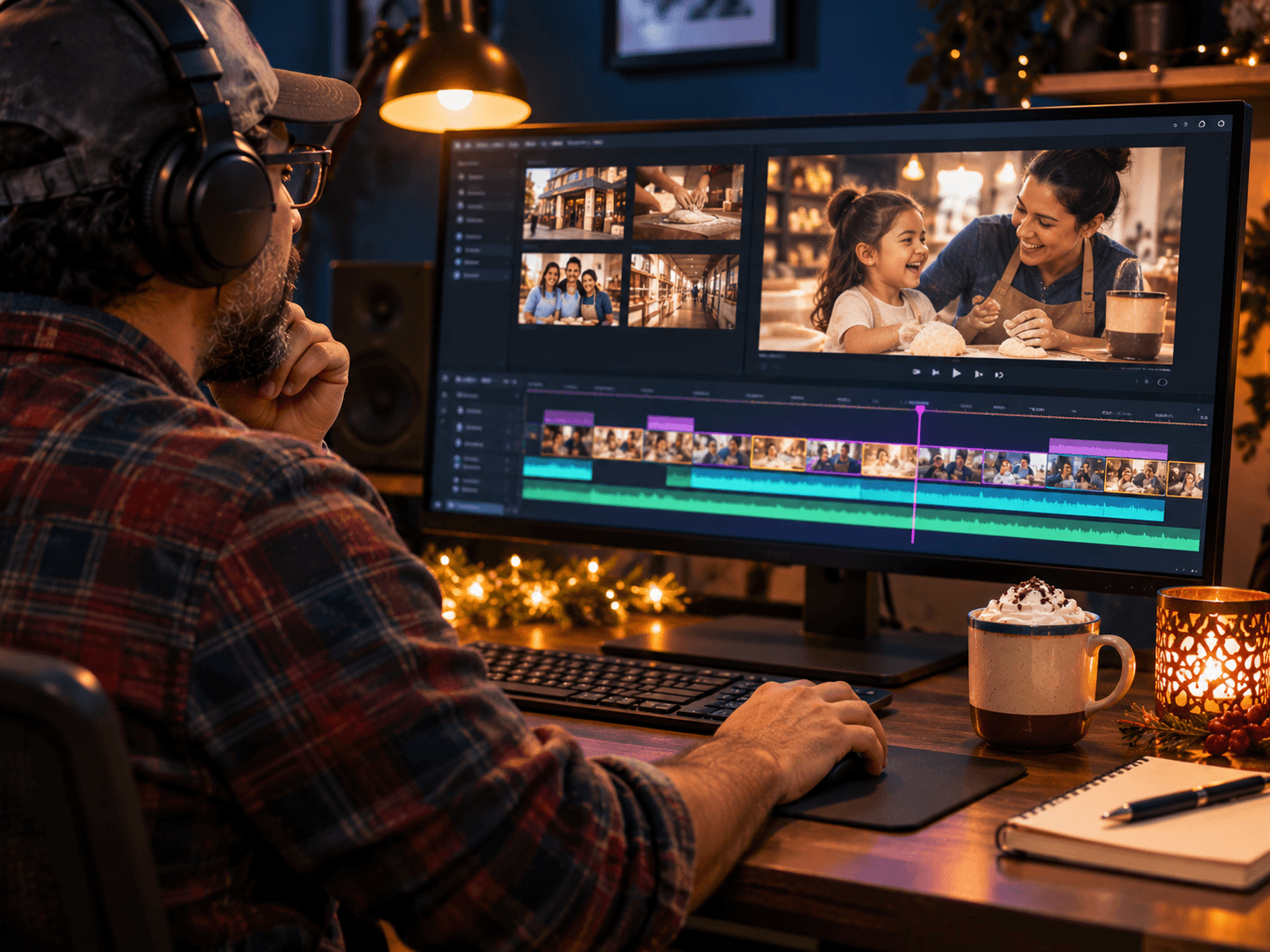
After that, the editor joins them. The talking part carries the story, and the shots at your business show the real place. So you get a polished video without closing the shop for a full day. In our studio, a producer is in the room for the whole session, which keeps the takes on track. The YouTube creator resources also have tips on presenting to camera.
See the Sun City Podcast Studio →Frequently Asked Questions
Q1 What makes a good about us video for a small business?
Q2 How long should an about us video be?
Q3 What should an about us video include?
Q4 Should the owner be in the about us video?
Q5 Where should I put my about us video?
Want Yours Filmed in One Session? DM SHOOT
You know your site needs this video. Now you have the structure, so the only step left is the shoot. Bring your three or four lines per part, and we will handle the room, the light and the takes. It is one shoot, not a retainer. Then your about us video does the introducing for you.