





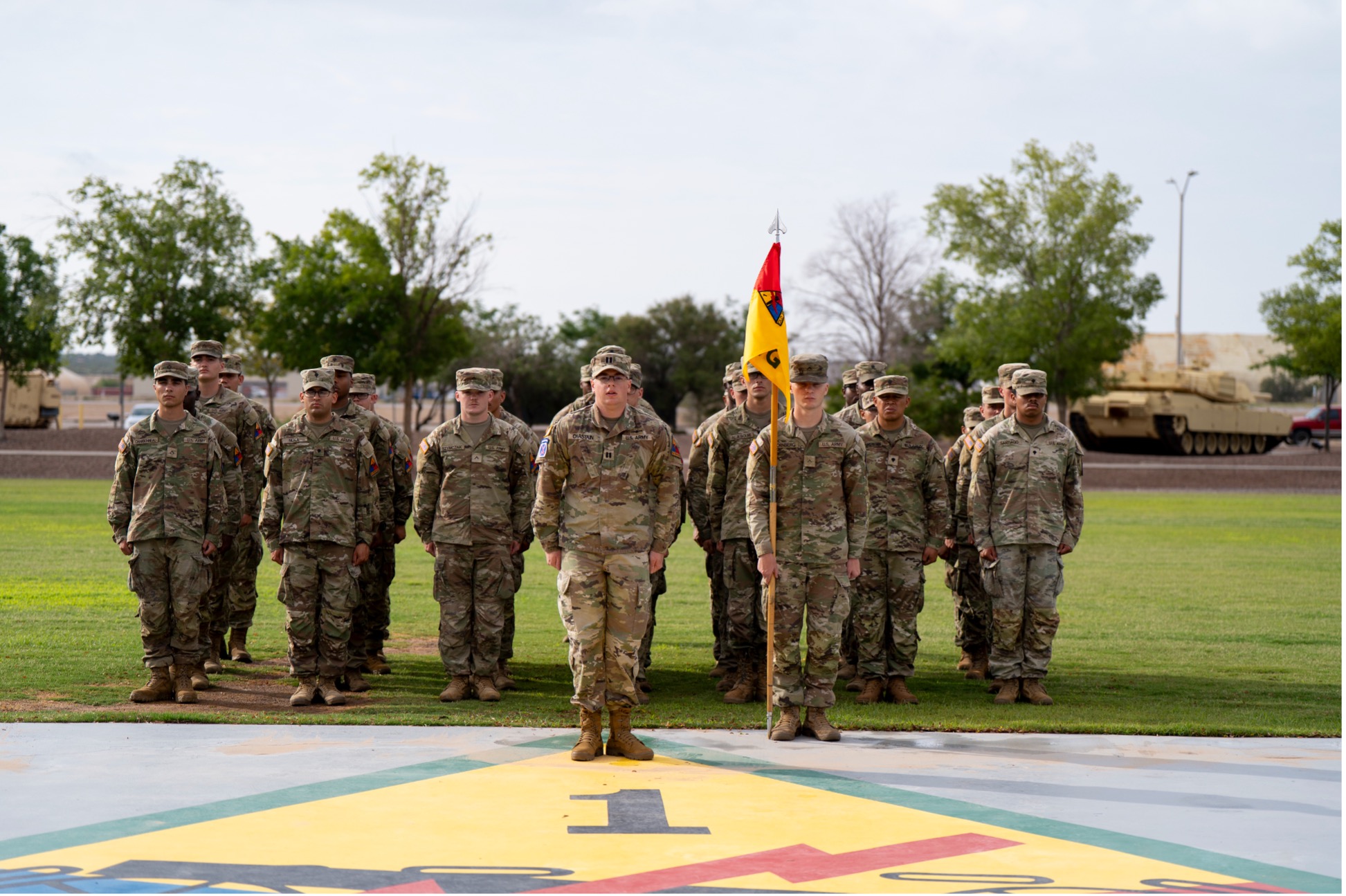
1st Armored Division Engineer Brigade Activated at Fort Bliss
The 1st Armored Division Engineer Brigade officially returned on June 15, 2026, when the Army activated the brigade's Headquarters and Headquarters Company at Fort Bliss, Texas. This was not a routine ceremony. It marked the deliberate restoration of organic combat engineering to Old Ironsides, a move tied directly to the Army 2030 force design. For Fort Bliss and the wider El Paso community, the activation signals something far bigger than a new headquarters element.
What the activation means
Why this activation matters now
The Army does not reactivate a brigade on a whim. Every structural change ties back to a strategic blueprint, and this one traces straight to the Army 2030 force design. That initiative reorganizes divisions to win Large-Scale Combat Operations against peer adversaries, not the counterinsurgency fights that defined the last two decades.
Combat engineers clear obstacles, breach defenses, build river crossings, and harden positions under fire. When that capability lives inside the division rather than being borrowed from a separate command, the division moves faster and fights harder. Consequently, restoring the 1st Armored Division Engineer Brigade gives Old Ironsides a self-contained ability to shape the modern contested battlefield.
Moreover, the timing is deliberate. Leadership repositioned this force ahead of schedule, reaching initial capability by early 2027. That urgency reflects how seriously the Army treats readiness for Large-Scale Combat Operations.
The activation at a glance
Here is how the 1st Armored Division Engineer Brigade activation breaks down across its key milestones, capabilities, and significance.
| Milestone | Date | Capability Restored | Why It Matters | Force-Design Link |
|---|---|---|---|---|
| HHC activation | June 15, 2026 | Brigade headquarters element | Stands up command structure for Old Ironsides engineers | Launches the Army 2030 restructure |
| Initial operational capability | Early 2027 | Core combat engineering functions | Brigade can support division operations | Ahead-of-schedule milestone |
| Full operational capability | Early 2028 | Complete engineer and protection warfighting | Self-contained capability for LSCO | Inside the 2028-2032 window |
| Structure guidance window | 2028 to 2032 | Force-design alignment | Locks the brigade into Army 2030 | Army Structure Guidance |
| Old Ironsides lineage | Bosnia to Baghdad | Restored organic engineering | Reconnects a storied force to its combat roots | Heritage of the Iron Sappers |
Old Ironsides and the Iron Sappers' lineage
From Bosnia to Baghdad, the engineers of the 1st Armored Division have cleared the way for one of America's most decorated formations. The Iron Sappers carry a combat history that spans peacekeeping in the Balkans to high-intensity urban operations in Iraq. Reactivating their brigade reconnects that lineage to the present fight.
This is not the establishment of something new. It is the deliberate repositioning of a storied force, as Col. Ada L. Cotto, commander of the 555th Engineer Brigade and future commander of the 1st Armored Division Engineer Brigade, made clear at the ceremony. Her dual role bridges the unit that built toward this moment and the one now carrying the mission forward.
For a division nicknamed Old Ironsides, organic engineers are foundational. Tanks need breachers, bridges, and cleared routes to maneuver. Therefore, returning that capability to the division's own formation restores a tactical completeness the force had been missing.
How the activation supports Army 2030
The Army 2030 force design reshapes divisions to fight and win against peer competitors. So how does one brigade activation feed that larger plan? It comes down to three deliberate moves.
First, it restores combat engineering as an organic division asset rather than a borrowed one. Second, it adds protection warfighting functions that harden the division against modern threats. Third, it positions the brigade to reach full operational capability by early 2028, inside the structure window.
- Speed of maneuver. Organic engineers mean the division clears its own path without waiting on external support.
- Survivability. Protection functions harden command posts and forces against precision strikes.
- Readiness for Large-Scale Combat Operations. The whole point of Army 2030 is winning the next fight, and self-contained engineers are central to that.
VenPro Solutions served as the press communications partner for this activation announcement. See how we approach mission-driven storytelling for organizations across El Paso and beyond.
VenPro Projects and Case Studies →What this means for Fort Bliss and El Paso
Fort Bliss anchors the El Paso region, and a brigade activation ripples outward. More structure can mean more personnel, more families, and a deeper footprint for the installation that has long defined the area's identity.
The activation also reaffirms Fort Bliss as a centerpiece of Army modernization. As the home of Old Ironsides, the post sits at the leading edge of how the Army restructures for the next era of conflict. For more on the official initiative, the Army's Army 2030 force design and Fort Bliss official page carry the primary-source detail.
Social Media Services in El Paso →Frequently Asked Questions
Q1 What is the 1st Armored Division Engineer Brigade? +
Q2 Who is Col. Ada L. Cotto? +
Q3 What is Army 2030 force design? +
Q4 When will the brigade be fully operational? +
Q5 Why was the activation held at Fort Bliss? +
Honoring the mission behind the milestone
The 1st Armored Division Engineer Brigade activation is more than a headquarters standing up. It is a storied force repositioned, ready to ensure America's Tank Division is structured, postured, and prepared to win on the modern contested battlefield. Stories like this one deserve to be told with precision and reach.