How to Sponsor a High School Team: What ADs Wish You Knew
Learning how to sponsor a high school team the right way takes more than writing a check. Plenty of sponsors mean well and still get it wrong: late banners, missed games, a check and then silence. So this guide covers what a good sponsor does before the season, how to show up without getting in the way, what helps a program, what to never ask for, and why the businesses that get renewed treat it as a relationship. Also, it draws on what athletic directors have told us they dislike, plus our own advice from the Friday night side.
How to sponsor a high school team, in short
The sponsor everyone dreads, and why
Athletic directors have told us what they dislike most. It comes down to late materials, sponsors who want playing-time favors or access to athletes, and sponsors who disappear after paying. Of course, none of those come from bad intentions. Instead, they come from treating a sponsorship like a transaction instead of a partnership.
For example, a late banner means a program has to chase you during its busiest weeks. Similarly, a favor request puts a coach in an impossible spot. On the other hand, a sponsor who vanishes after the check sends a message too: the name mattered more than the kids.
So the good news is that avoiding all three is easy. So be early, ask for nothing that touches the team, and stay present. The outcome: a sponsor the program is glad to hear from, not one it tolerates.
How to sponsor a high school team at a glance
Here is the whole playbook in one view. Also, each row is one habit of a good sponsor. Then the last two columns show where it comes from and what you will notice.
| Trait | What it means | Where it comes from | What you notice |
|---|---|---|---|
| Start early | Reach out before the season | The athletic department or booster club | So nobody chases you once practice starts |
| Ask first | Find out what the program needs | A short conversation | So your help fits a real need |
| Deliver on time | Materials and payment arrive early | Your own planning | So the staff can focus on the team |
| Show up | Attend games and events, quietly | Your calendar | Then you are part of the season, not a logo |
| Ask for nothing | No favors, no access to athletes | Basic respect for the team | Then coaches trust you |
| Stay in touch | Keep the relationship between seasons | A habit, not a contract | So renewal feels natural |
Before the season: how to sponsor a high school team and set it up early
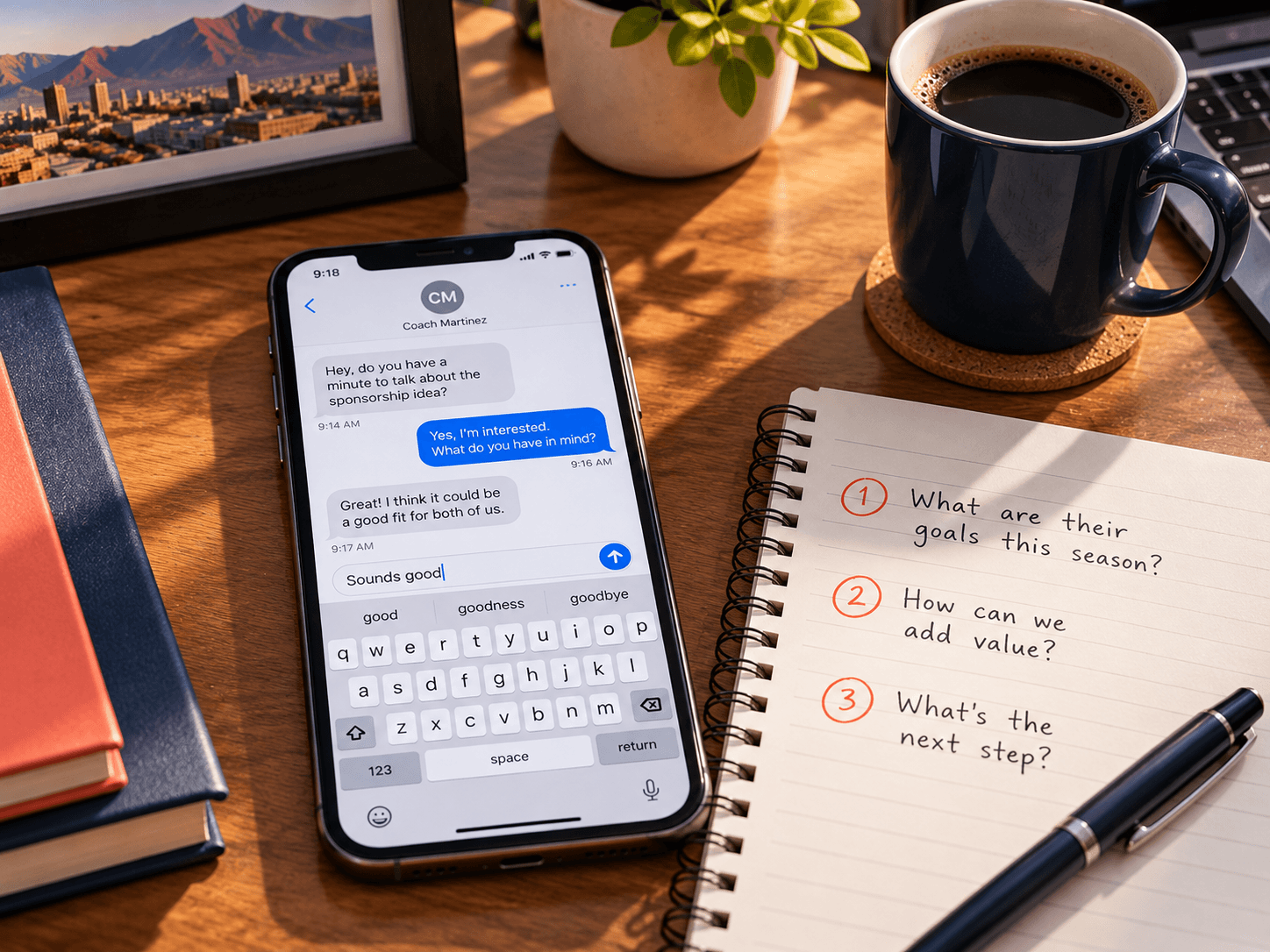
In short, the best time to start is before the season. First, contact the athletic department or the booster club. Next, ask what they actually need, instead of assuming. Then deliver early: banners, logos, payment and anything else on their list.
At some schools, sponsorships may run through a booster club. So it helps to know how booster clubs operate. The UIL publishes guidance for booster clubs, which is a useful read before you commit. Also, keep your own file of dates and contacts, so nothing slips once the season starts.
Early setup is a gift to a busy staff. As a result, there is one less thing to chase when practice starts. The outcome: a sponsorship that runs itself, because the work was done in the off-season.
Showing up: games, events and where to stand
Of course, showing up matters. A sponsor who comes to a few games, a banquet or a fundraiser is part of the program's season. However, how you show up matters just as much.
Stand with the fans, not on the sideline, unless you are invited there. Then keep the focus on the kids, not on your business. Also, skip the hard sell at school events. After all, people know who you are, so that is the point. Also, if you bring staff, brief them too, since they represent your business at every game. The outcome: a presence people welcome, not one they work around.
What actually helps a program
One of the most useful things a sponsor can do is ask, then listen. Needs vary from school to school, of course. Still, a few kinds of help tend to land well.
- Reliable funding. Money that arrives on time, as promised, so the program can plan around it.
- Help with a specific need. Meals, travel or equipment, if that is what the program asks for.
- Amplifying the program. Sharing the team's news and wins on your own channels, such as an update on your Google Business Profile. Google's Business Profile help pages explain how to post one. That is also where engaging your audience on social media comes in.
- Consistency. Coming back next year, so the program can count on you.
None of this requires a big budget. Instead, it requires follow-through, so the help arrives when promised. The outcome: help the program can actually use.
What to never ask for
Some requests cross a line. So keep these off the table entirely.
- Playing-time favors. A sponsorship never buys a spot on the field for anyone.
- Access to athletes. Students are not part of your marketing, and their time belongs to the team.
- Special treatment. Sideline passes, locker room visits or recognition the program did not offer.
In short, your sponsorship supports the program. However, it does not buy influence over it. If you are unsure whether a request is fair, ask the athletic director first. A good program will tell you plainly. The outcome: a clean relationship that coaches can defend to parents.
Why renewed sponsors are relationship sponsors
In our view, the businesses that get renewed are the ones that treat it as a relationship. They check in during the off-season. Also, they show up at a game or two. They say thanks when the team does well, and they stay kind when it does not.
That is the same logic behind any lasting customer relationship. In fact, trust is built in small, steady moments, not in one big gesture. A simple rhythm helps: a note before the season, a visit or two during it, and a thank-you after the last game. So a sponsor who stays in touch may rarely need to ask for renewal. The outcome: a sponsorship that lasts for years, because both sides want it to.
Building customer loyalty →How a broadcast sponsorship fits alongside a school sponsorship
A school sponsorship and a broadcast sponsorship do different jobs. Indeed, many businesses do both.
- A school sponsorship supports a program directly. Your help goes to one team, and your name lives in that school's community.
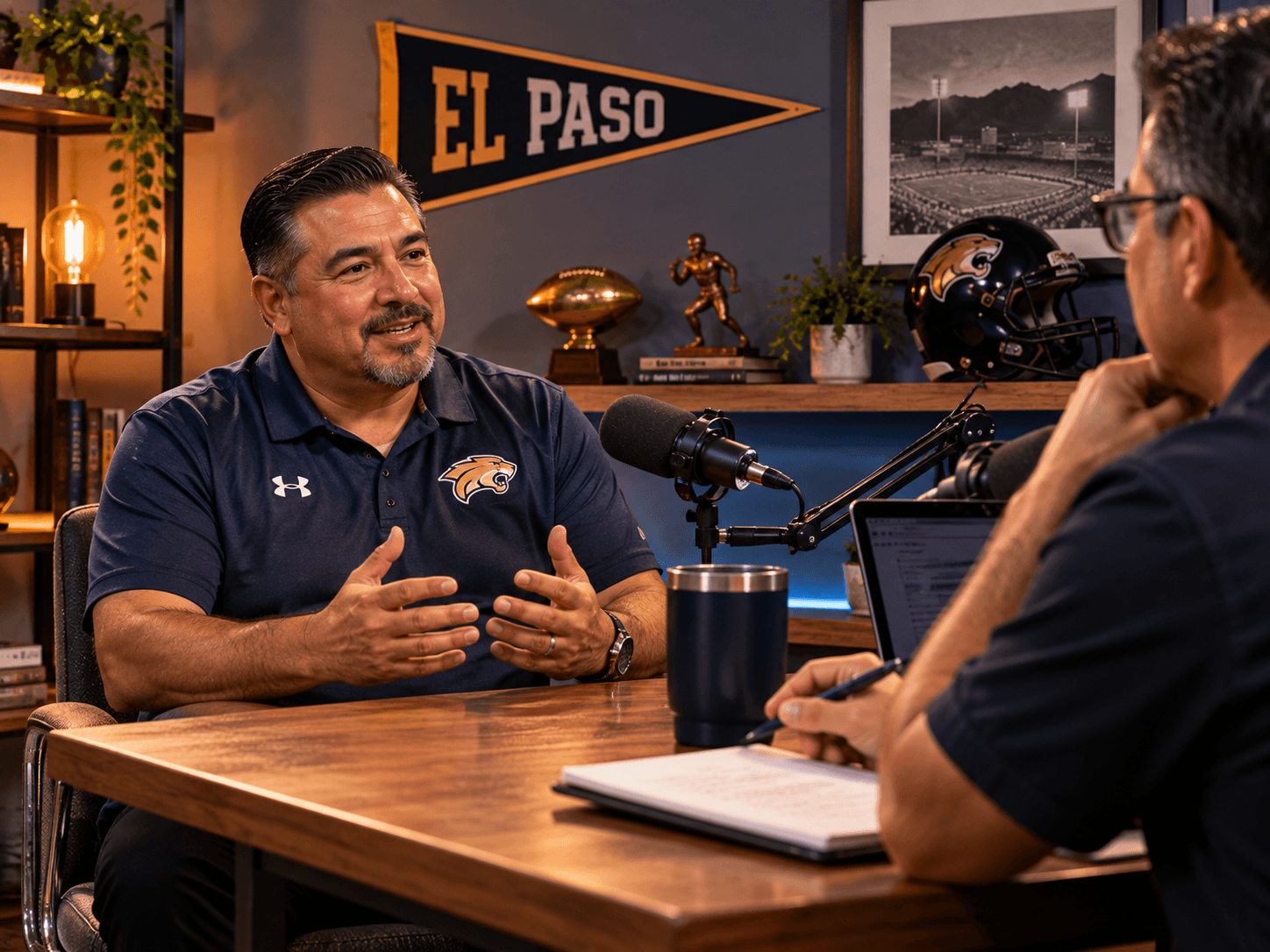
- A broadcast sponsorship reaches the audience across the city. Your name is heard on the Friday night call on 600 ESPN El Paso, by listeners from many schools.
- Doing both gives you roots in one program and reach across the city.
On a tight budget? The Small Business Administration has plain guidance on community involvement for small businesses. Also, our guide to brand awareness on a budget covers where local support fits. The outcome: support that fits your goals, whether that is one school, the whole city or both.
Sun City Podcast Studio →Frequently Asked Questions
Q1 Is there a simple guide on how to sponsor a high school team?
Q2 How do I sponsor a high school football team?
Q3 Is a broadcast sponsorship the same as a school sponsorship?
Q4 What do athletic directors dislike?
Q5 How do I get started?
Want to do it right? Message us SPONSOR
So now you know how to sponsor a high school team the way athletic directors wish you would: start early, show up, ask for nothing and stay in touch. For a school, contact the athletic department or booster club before the season. For a Friday night broadcast, the next step is one word. Message us SPONSOR on Instagram or Facebook.