





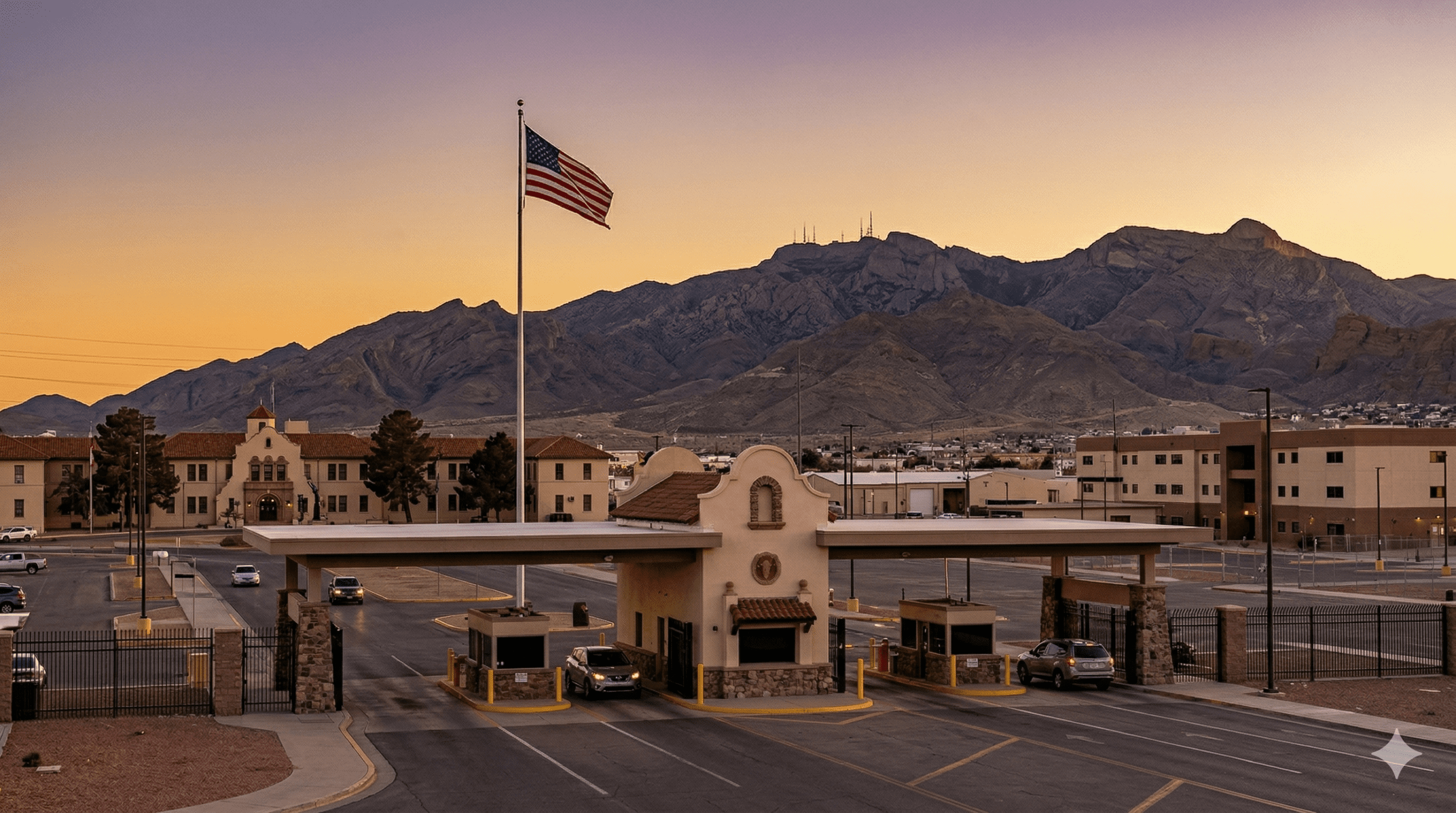
Fort Bliss Has Been Part of El Paso Since Before Texas Was a State — Here's That Story
There are not many cities in America that can say a military installation has been part of their identity for longer than the state itself has existed. El Paso is one of them. Fort Bliss has been woven into the fabric of this community since 1848 — a full three years before Texas was admitted to the Union as the 28th state. That is not a footnote in a history book. That is a living, breathing relationship that has shaped everything from our neighborhoods to our economy to the way El Pasoans see themselves and their city.
When the U.S. Army announced earlier this week that Fort Bliss will be home to a new commercial data center — bringing 2,000 jobs and billions in private investment to our region — it was not the beginning of a story. It was the latest chapter in one that has been unfolding for nearly two centuries. To understand why this moment matters, it helps to understand where it comes from.
Year | Milestone |
1848 | U.S. Army establishes a military post in El Paso following the Mexican-American War |
1854 | Post officially named Fort Bliss in honor of Lt. Col. William Wallace Smith Bliss |
1861–1865 | Fort Bliss changes hands during the Civil War between Union and Confederate forces |
1917–1918 | Fort Bliss expands significantly during World War I as a training and mobilization hub |
1940s | Massive WWII expansion — Fort Bliss becomes one of the Army’s most important installations |
1946 | Fort Bliss becomes home to U.S. Army Air Defense Artillery — a role it holds to this day |
2005–2011 | Post-9/11 military buildup brings thousands of additional soldiers and families to El Paso |
2026 | U.S. Army announces conditional data center agreement with Carlyle — the next chapter begins |
How It All Started — Fort Bliss in 1848
The year was 1848. The Mexican-American War had just ended. The Treaty of Guadalupe Hidalgo had been signed, and the United States had acquired a vast stretch of land across the southwest. The Army needed a presence in the region — to protect settlers moving westward, to maintain order along the newly drawn border, and to establish a foothold in territory that was still very much being defined.
A small military post was established near the Rio Grande, in the place that would eventually become El Paso. It was a modest beginning — a garrison in the desert, far from the centers of American power and commerce. But it was a beginning. And from that beginning, something remarkable grew.
The post was named Fort Bliss in 1854, honoring Lt. Col. William Wallace Smith Bliss — a decorated Army officer and aide to President Zachary Taylor. The name stuck. And over the decades that followed, the fort and the city it sat beside grew up together in ways that neither could have anticipated at the start.
How Fort Bliss Grew — And Took El Paso With It
The history of Fort Bliss is, in many ways, the history of El Paso itself. Every time the base expanded, the city expanded with it. Every time the nation called on Fort Bliss, El Paso answered alongside it.
During the Civil War, the fort changed hands between Union and Confederate forces — a reflection of the broader struggle playing out across the country. After the war, it was reestablished as a Union post and began a long period of growth tied to the westward expansion of the United States.
World War I brought the first major modern expansion. Fort Bliss became a critical training and mobilization hub, and the population of El Paso swelled with soldiers, their families, and the businesses that grew up to serve them. The pattern repeated itself on an even larger scale during World War II. The fort became one of the Army’s most strategically important installations, and El Paso transformed from a border town into a genuine military city.
The Cold War era cemented Fort Bliss’s role as home to U.S. Army Air Defense Artillery — a mission it holds to this day. Soldiers trained here learned to operate the systems designed to defend American skies. The Patriot missile system, one of the most recognized names in modern air defense, has deep roots at Fort Bliss. The base was not just part of El Paso’s story. It was part of America’s story.
The Military Families Who Made El Paso Home
Behind every major chapter in Fort Bliss history are the people who lived it. The soldiers who trained here, deployed from here, and returned here. The families who packed up their lives and moved to El Paso — sometimes reluctantly, sometimes eagerly — and discovered a city worth staying in.
Military families have always had a unique relationship with place. They move often. They adapt quickly. They build community wherever they land. And a remarkable number of them, after being stationed at Fort Bliss, chose to make El Paso permanent. They bought homes here. Their children went to EPISD and Socorro ISD schools. They started businesses, joined churches, coached little league teams, and became El Pasoans in every meaningful sense of the word.
Walk through any neighborhood on the east side of El Paso and you will find families whose connection to this city traces back to a military assignment at Fort Bliss. Talk to business owners across the region and you will find veterans who decided to plant roots here after their service ended. The base did not just bring people to El Paso temporarily. It gave El Paso some of its most committed and community-minded residents permanently.
That human dimension is easy to lose in conversations about economic investment and strategic infrastructure. But it is the most important part of the story. Fort Bliss did not just shape El Paso’s economy. It shaped El Paso’s character.
How Fort Bliss Shows Up in El Paso Everyday Life
Most El Pasoans interact with the reality of Fort Bliss every single day — often without thinking about it. It shows up in ways large and small, visible and invisible.
It shows up in the traffic on Dyer Street and Montana Avenue during morning rush hour, as soldiers and civilian employees head onto the base. It shows up in the school enrollment numbers across northeast El Paso, where military families cluster in neighborhoods close to the installation. It shows up in the restaurants along the corridors near the base — the ones that have served generations of soldiers and learned to stay open late.
It shows up in the local economy in ways that are harder to see but just as real. Fort Bliss is one of the largest employers in the El Paso region. The base’s annual economic impact runs into the billions — through military salaries, civilian employment, contractor spending, and the consumer activity of thousands of families living in the surrounding community.
It shows up in the culture of the city too. El Paso has a deep and genuine respect for military service — not the performative kind, but the kind that comes from living alongside soldiers and their families for generations. That respect is earned through proximity, through shared experience, through the slow accumulation of a relationship that has lasted nearly 180 years.
From History to the Future — What the Data Center Deal Means in This Context
When Lt. Col. Jessica Rovero spoke about the data center announcement, she chose her words carefully. “Fort Bliss has been part of El Paso since 1848,” she said. “This project reflects that history — contributing to national security while honoring our commitment to this community.”
Those words were not accidental. They were a deliberate acknowledgment that this latest development is not separate from everything that came before. It is a continuation of it.
The data center deal — the partnership with Carlyle, the 2,000 jobs, the billions in private investment — is the newest expression of a relationship that has always been defined by mutual growth. Fort Bliss has never just taken from El Paso. It has always given back. The soldiers and families it brought here enriched the community. The jobs it created strengthened the economy. The investment it attracted built the city.
This data center is that same dynamic playing out in 2026. The technology is new. The scale is significant. But the underlying relationship — the Army and El Paso growing together, investing in each other, building something bigger than either could build alone — is as old as the city itself.
Why This Moment Feels Different for the Fort Bliss El Paso Community
There is something genuinely worth pausing on here. In a news cycle that moves fast and rarely slows down to reflect, the Fort Bliss data center announcement deserves a moment of real appreciation.
This is not a foreign company arriving in El Paso with no roots here. This is an institution that has been part of our community since before most of the institutions we take for granted even existed. Fort Bliss was here before Texas statehood. It was here before El Paso was incorporated as a city. It has seen this community through wars, economic booms, demographic shifts, and every kind of change a city goes through over nearly two centuries.
And now it is bringing something new — a major technology investment, a signal to the private sector that El Paso is ready for the next chapter, and a promise of opportunity for thousands of families in our community. That feels different because it is different. This is not outside investment arriving to extract value from El Paso. This is a partner of nearly 180 years doubling down on a relationship that has always been about more than economics.
El Paso has always been a city that earns what it gets. Fort Bliss has always been a base that gives back to the community it calls home. That has not changed. If anything, it is just getting started.
Frequently Asked Questions About Fort Bliss El Paso Community History
When was Fort Bliss established in El Paso?
Fort Bliss was established in 1848 following the Mexican-American War, making it one of the oldest continuously operating military installations in the United States. It was formally named Fort Bliss in 1854 in honor of Lt. Col. William Wallace Smith Bliss.
How has Fort Bliss shaped the El Paso community over the years?
Fort Bliss has shaped El Paso in nearly every dimension — economically, culturally, and demographically. The base has brought thousands of military families to the region, many of whom chose to stay permanently. It has been one of the largest employers in El Paso for generations and has anchored the city’s identity as a military community.
How many people does Fort Bliss employ in El Paso?
Fort Bliss is one of the largest employers in the El Paso region, with a workforce that includes active duty soldiers, civilian employees, and contractors. The base’s total economic impact on the region runs into the billions of dollars annually.
Why do so many military families stay in El Paso after their service ends?
El Paso offers military families an affordable cost of living, a strong sense of community, a warm climate, and deep cultural roots. Many veterans and military families who were stationed at Fort Bliss choose to stay because they find El Paso to be a city that genuinely welcomes and values them.
What is Fort Bliss's military mission today?
Fort Bliss is home to the 1st Armored Division and serves as the Army’s primary center for Air Defense Artillery training. It is one of the largest and most strategically important military installations in the United States, with missions spanning training, readiness, and national defense.
How does the new data center project connect to Fort Bliss's history in El Paso?
The data center project is the latest chapter in a nearly 180-year relationship between Fort Bliss and the El Paso community. Just as the base has always contributed to the city’s economic growth and community strength, this new investment continues that tradition — bringing jobs, private capital, and long-term opportunity to the region.
Has Fort Bliss always had a positive relationship with the El Paso community?
By and large, yes. The relationship between Fort Bliss and El Paso has been defined by mutual respect and shared growth. The base brings economic activity and community members to El Paso, while the city provides the infrastructure, services, and sense of home that military families need. That relationship has deepened over nearly 180 years.
At VenPro Solutions, we are proud to call El Paso home — and we believe that understanding our city’s story makes us better at serving the businesses and communities within it. The Fort Bliss story is El Paso’s story. And it is still being written. Follow the VenPro Insights blog for content that connects the past, present, and future of our community.
Explore more at venpro.solutions/insights