





Best Podcast Studio El Paso? Six Kinds of Content Recorded Here
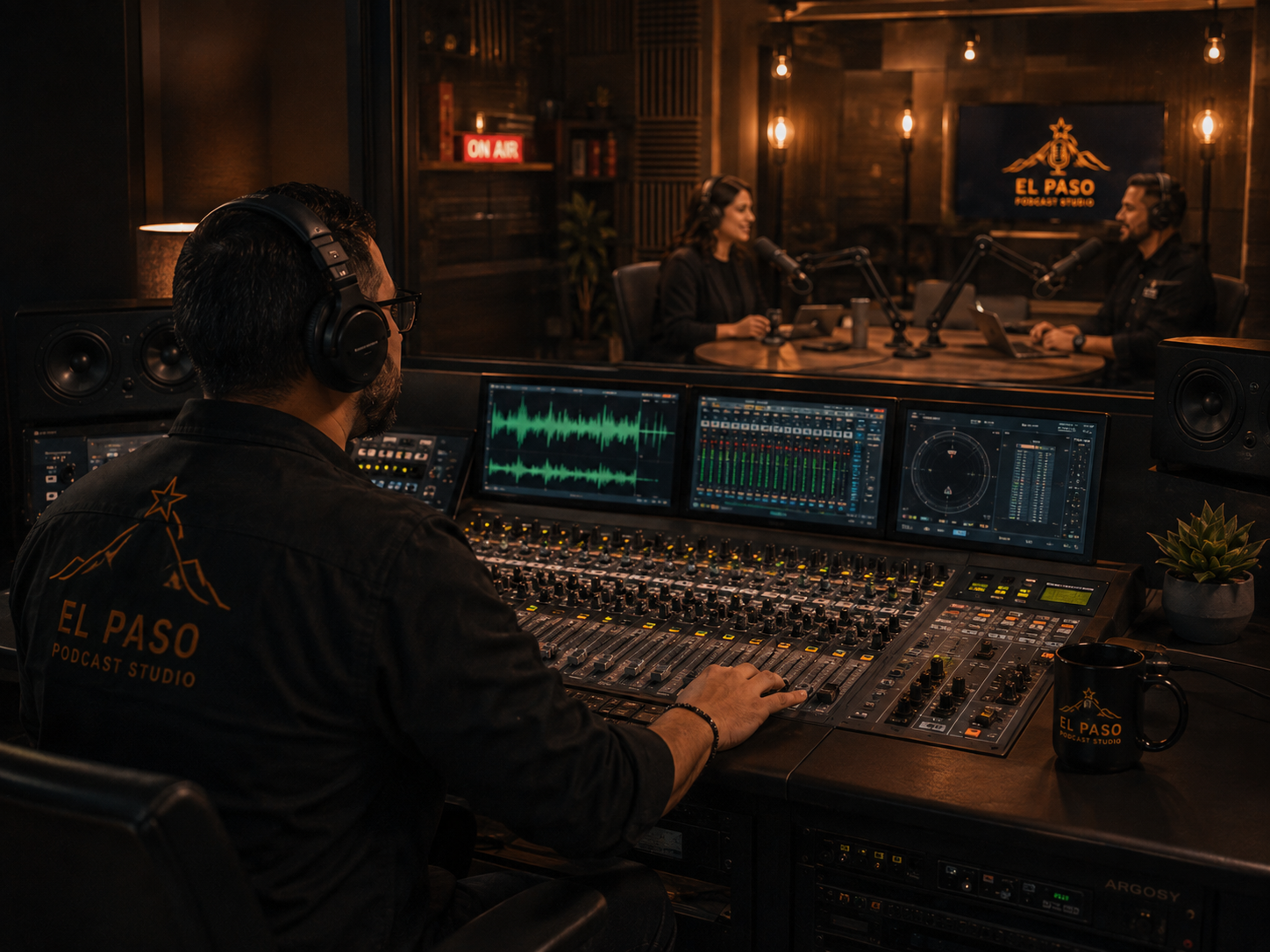
What's the best podcast studio El Paso has to offer? However you ask it, every studio website answers the same way — same adjectives, same gear lists, same promises. So this post answers differently: with the work. Here are six kinds of content El Paso brands and creators recorded with us this summer, the setups used for each, and what every client walked away with. Read it to picture your own project in the room before you ever book.
Best Podcast Studio El Paso: The Short Answer
Format 1: Sports and Community Interviews
Summer in El Paso means Chihuahuas home stands at Southwest University Park, and it means local stories worth sitting down for. In fact, sports and community interviews were the season's signature format: two mics, two chairs, and a guest with a story the city already half-knows.
For example, our Stephanie Han episode recap shows the shape — a local figure, a real arc, and an hour that becomes an episode plus clips with genuine local reach. The setup: a two-mic interview set framed by cinema-grade cameras, with the engineer balancing both voices live. Also, clips come from the same take: one strong minute travels on social all week, and the full episode holds the fans who want more.
Could your brand do this? Yes, if you have a guest list. So think about who your customers would sit and listen to: a coach, a founder, a chef, a vet. Then book the chairs — the set is lit before you walk in, and the engineer runs the board while you talk.
Best Podcast Studio El Paso Proof: Six Formats at a Glance
First, the whole summer in one table. Every row is a session format we actually ran, and also a picture of what your version would look like. Then keep reading — each format below gets its own section, with links to hear real examples.
| Format | Typical booking | Setup used | What clients took home |
|---|---|---|---|
| Sports & community interviews | Local figures, community stories | Two-mic interview set, cinema-grade cameras | Episodes and clips with local reach |
| Corporate leadership series | Businesses building authority | Branded set, customizable lighting | A repeatable, on-brand episode look |
| Voiceover & audio ads | Brands, narrators, voice actors | Sound-treated booth, Shure SM7B | Finished spots at the published audio rates |
| On location event coverage | Brands working events | Mobile rig, directional microphones | Interviews, clips, and testimonials |
| Student & nonprofit shows | Campus orgs, community groups | Shared sessions, engineer-led | Professional sound on a split cost |
| Multi-episode batch days | Teams locking a quarter of content | Multiple set looks in one day | Three to six episodes from one booking |
Format 2: Corporate Leadership Series
A leadership series is the quiet workhorse of business podcasting: an executive, a branded set, and a standing episode look the audience learns to recognize. Also, it's the format where the room earns its keep — customizable lighting and a consistent frame make episode nine match episode one. The host gets a rhythm too: same chair, same light, same opening beat — and in fact the show starts to feel like a place.
That steady look is the real product. A corporate podcast series El Paso executives can sustain becomes a library of authority: episodes for the audience, clips for the sales team, stills for the deck. Meanwhile, the engineer resets everything between sessions, so the series survives busy quarters. Also, this format loves a batch day: four episodes in one booked block keeps the series ahead of the calendar, not behind it. So the series works even when the news is slow.
Format 3: Voiceover and Audio Ad Work
Granted, not everything recorded here is a show. Voiceover and audio ad work ran all summer in the sound-treated booth — narration, radio-style spots, on-hold messages, audiobook-style reads — on the Shure SM7B microphones that give voice work its broadcast weight.
This lane also has the simplest pricing in the building: $75 per hour for raw recording or $150 per hour fully processed, the two published audio rates. Also, audio recording and voiceover sessions book just like podcast sessions, engineer included. Voice actors cut demos here; brands cut ads that need to sound big. Of course, you can book a single hour and just try it — the rate sits on one line, so the math is easy.
Format 4: On Location Event Coverage
Meanwhile, some of the summer's best tape never touched the studio. On location event coverage brings the rig to the venue — portable mixer, directional microphones, backup recorder — and an engineer who keeps event audio publishable in a loud room.
So one afternoon at a booth becomes interviews, clips, and testimonials a brand can publish for weeks. For the full logistics, our on location recording in El Paso page covers space needs and booking windows. El Paso's event calendar keeps this format busy — the City of El Paso maintains the official version. The trick is planning: the interviews get named before doors open, the corner gets picked away from the noise, and a backup recorder runs the whole time. So the event ends — the content does not. Then the cut-down starts: episodes first, clips second, testimonials third.
Format 5: Student and Nonprofit Shows
Campus orgs and community groups recorded here all summer, usually by sharing sessions: several shows splitting one booked block to reduce the cost per episode. Also, every one of them got the same room, the same engineer, and a walkthrough of the whole process — first-timers included, especially first-timers.
Community shows fit this lane too. For instance, our intake counseling episode pairs a service organization's story with feel-good local segments — proof that a mission-driven show can sound just as professional as a funded one. For campus groups, timing is the whole game: fall classes start in late August, so the smart move is to book early, split the block, and then record before midterms eat the term. Nonprofits get the same math: one shared block, several voices, and a story that finally sounds as strong as the mission.
Format 6: Multi-Episode Batch Days
The busiest format of the summer, and the one August exists for: batch days. A team arrives with scripts, records three to six episodes back to back, and leaves with a quarter of content from a single booking. Then the resets do the visual work — multiple set looks in one day, so nothing reads as recorded together.
So batch days pull the widest mix of clients: marketers locking a fall calendar, hosts stockpiling before a busy season, and student orgs stacking a semester before midterms. If a season's worth of content in one day sounds like your project, this is the format to ask about first. The room makes it work: sets move, lighting changes, and the engineer resets it all between takes. In short, you bring the scripts and one good voice day — the studio brings the rest.
Start a podcast in El Paso →How to Judge a Podcast Studio Before You Book
Every studio pitch sounds alike, so judge on fundamentals instead. Also, none of the five checks below need an audio degree — you can run them all on a single visit. These are the same criteria we'd tell you to hold us to — the Audio Engineering Society publishes the standards work behind the first two:
- Room treatment. A sound-treated room fixes echo and noise before the mic hears them; software can't fully do it afterward.
- An engineer on the session. If you're running your own levels, you're the engineer — and also the host. That splits your attention on both jobs.
- Camera and lighting quality. Cinema-grade cameras and adjustable lighting also decide whether clips look like a show or a webcam call.
- Set flexibility. Repositionable sets keep a weekly show from going visually stale — and they also make batch days possible.
- Published proof of past work. Real episodes you can hear beat any claims page. This post is ours.
Granted, budgets matter too — the U.S. Small Business Administration covers vendor-selection fundamentals for small businesses. One more tell: ask who runs the board on your session — if the answer is "you do," keep looking. In short: hear the work, meet the engineer, then decide. That's El Paso podcast studio work judged the honest way, and a podcast studio portfolio El Paso prospects can check beats a brochure every time.
El Paso podcast studio for rent →Frequently Asked Questions
Q1 What is the best podcast studio El Paso has to offer? +
Q2 What kinds of content can be recorded at a podcast studio? +
Q3 Can I see examples before booking a studio? +
Q4 How do I book a session at Sun City SITREP? +
Q5 What should I look for when comparing podcast studios? +
Best Podcast Studio El Paso: Which Format Fits Your Project?
So run the match yourself: a story to tell points to the interview set, authority to build points to a leadership series, a season to fill points to a batch day. Ultimately, the best podcast studio El Paso test is the one this post just ran — real formats, real setups, real deliverables. If your project fits one of the six, the room is ready. And if we've already worked together this summer, leave us a review — it's how the next reader finds their format. Naturally, the first call is simple: tell us the format, and we'll tell you what the day looks like.