





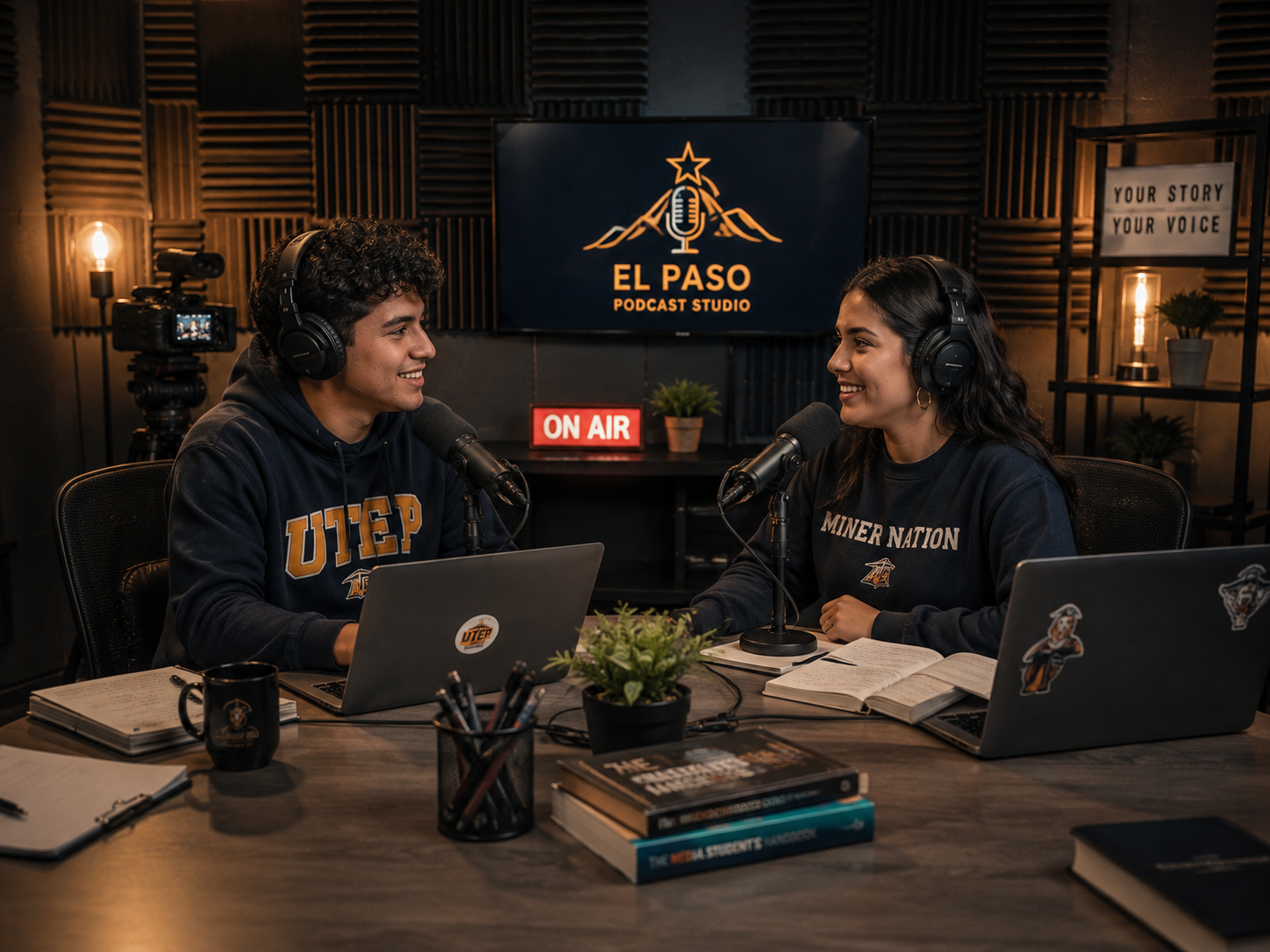
Podcast Studio Near UTEP: A Recording Home for El Paso Students
Finding a podcast studio near UTEP shouldn't be the hardest part of your semester. However, most campus shows in El Paso start the same way: a dorm room, a laptop mic, an echo that swallows episode one. Then nobody finishes episode two. So this guide is for students, clubs, and campus creators who want a show that sounds professional — where to record, how to plan a semester around your class schedule, and how to split the cost with other orgs.
Podcast Studio Near UTEP: The Short Answer
Why Dorm-Room Audio Costs You Listeners
Echo, hallway noise, and inconsistent audio quietly cost you listeners before your content ever gets a chance. That's the frustrating part: the ideas are usually good. The room is what loses people.
A dorm room is built from hard, parallel surfaces, so your voice bounces back into the mic a split second late. Also, campus life doesn't pause for your recording — doors slam, hallways talk, air conditioning hums under every take. None of that is your fault, and none of it is fixable with a better laptop.
Meanwhile, listeners rarely say "the acoustics bothered me." They just don't press play on episode three. So before you blame your content or your delivery, fix the room — that's what the rest of this guide is about.
Planning a Semester of Episodes Around Class Schedules
First, the semester at a glance. Fall classes at UTEP and EPCC begin August 24, and the calendar below is built around the one truth of campus publishing: exam weeks always win. Plan so they don't have to fight your show.
| Part of term | What to record | What to publish | Why it works |
|---|---|---|---|
| Late August | Batch-record your first episodes | Tease the show at Miner Welcome | The term starts with a library, not a to-do list |
| Early term | A second, shorter batch | Weekly releases begin | Energy is high and schedules are still loose |
| Midterms and finals | Nothing — you planned for this | The batch keeps releasing weekly | Publishing survives exam weeks untouched |
| Winter break | Plan next season's topics | Best-of clips from the fall run | Next semester starts pre-loaded |
What a Sound-Treated Room Fixes That Software Cannot
Noise-removal software is real, but it works on what's already in the recording. Echo isn't noise on top of your voice — it is your voice, arriving twice. Therefore no filter can fully separate the two; the fix has to happen before the mic hears anything. The Audio Engineering Society publishes the standards work behind that reality.
A sound-treated room solves it at the source: treated walls absorb reflections, the booth blocks hallway life, and an engineer sets consistent levels across every voice. Consequently, two cohosts with very different volumes come out balanced — the thing campus recordings almost never get right. We've also broken down how location affects audio quality if you want the deeper dive.
How Close Is the Podcast Studio Near UTEP and EPCC?
Minutes from campus — close enough that a recording session fits between classes the way a gym block does. When students search for a podcast studio near UTEP, the real question is time: can you get there, record, and get back without wrecking the day? Yes.
Also, distance matters less when you carry nothing. The studio supplies microphones, headphones, cameras, and the engineer to run them, so there's no gear to haul on the bus. Evening and weekend blocks exist specifically because campus schedules rarely fit weekday daytime sessions — EPCC podcast recording sessions book the same way. One more campus reality: time between classes decides what actually happens. A room you can reach, record in, and leave inside a two-hour window is a room that gets used all semester.
How Student Orgs Can Share a Single Session
Here's the argument to forward to your advisor, word for word. One booked session can carry more than one show: splitting a session across shows is a common way for campus orgs to reduce cost per episode. So three orgs recording back to back each pay a fraction of the block — and every one of them gets the same sound-treated room and the same engineer.
Additionally, the shows come out looking distinct, because repositionable sets and customizable lighting change the look between recordings. For instance, a UTEP student org podcast, a club interview show, and a class project can run through one afternoon without sharing a single visual. That's the pitch: professional sound, split cost, zero equipment purchases. Advisors sign off on math like that. Put real numbers on it in your funding request — hours, shows, episodes per show — and attach the semester table above. A specific ask gets a faster yes than a vague one.
Your First Booking: What to Bring and What to Expect
Bring your topics, your cohost, and your notes — that's genuinely the whole list. No experience needed: engineers set up the session and walk first-time recorders through the whole process, from mic technique to headphone mix. Wear what you'd wear to class, plan for about an hour of talking, and let the engineer worry about everything with a cable attached.
Then the session itself is simple: you talk, the engineer handles levels and monitoring, and you leave with clean audio instead of homework. If you're still comparing rooms first, our guide to finding a podcast studio near you covers what separates a real studio from a rented room.
Publishing and Promoting a Campus Show
Publishing works like any show: pick a hosting platform, submit to the directories once, and release on a fixed day your audience can learn. Campus shows earn a real edge here: your release day can match the campus rhythm — a Monday episode for the week's events, a Friday recap when the week winds down. For industry practice beyond campus, the Podcasters Association is worth a bookmark.
Promotion, however, is where campus shows have an unfair advantage: a built-in audience within walking distance. Table at Miner Welcome and Minerpalooza in late August, trade shout-outs with other orgs, and post clips where your classmates already scroll. Also, UTEP's own site lists the student engagement channels a new show should be visible in — make yours the student podcast El Paso classmates see on campus first, then look up later.
Start a podcast in El Paso →Getting Started Before the Semester Fills Up
Fall moves fast: syllabus week becomes midterms before your org has met twice. So here's the short path from idea to published campus show:
- This week: pick the format. Solo, interview, or panel — choose whichever your schedule can survive, then name the show.
- Next: rally the orgs. Find one or two other clubs to share a session, so the cost per episode drops before anyone asks for budget.
- Then: book an evening or weekend block. Those slots fit class schedules best, so they're the ones that go first.
- Before midterms: batch-record. Several episodes early in the term means publishing continues through midterms and finals without you touching a mic.
Granted, the hardest step is the first email to your advisor. Forward the shared-session section above — it makes the argument for you.
El Paso podcast studio for rent →Frequently Asked Questions
Q1 Is there a podcast studio near UTEP? +
Q2 Can student organizations record multiple shows in one session? +
Q3 Do I need experience to record at a studio? +
Q4 How should students plan podcast episodes around a semester? +
Q5 Can students record in the evening or on weekends? +
Podcast Studio Near UTEP: Your Semester Starts in the Booth
So that's the case for a podcast studio near UTEP: a sound-treated room minutes from campus, an engineer who handles everything technical, and a schedule built around yours. The campus podcast studio question is settled — what's left is your show. Book the block, bring the orgs, and start the semester loud.