





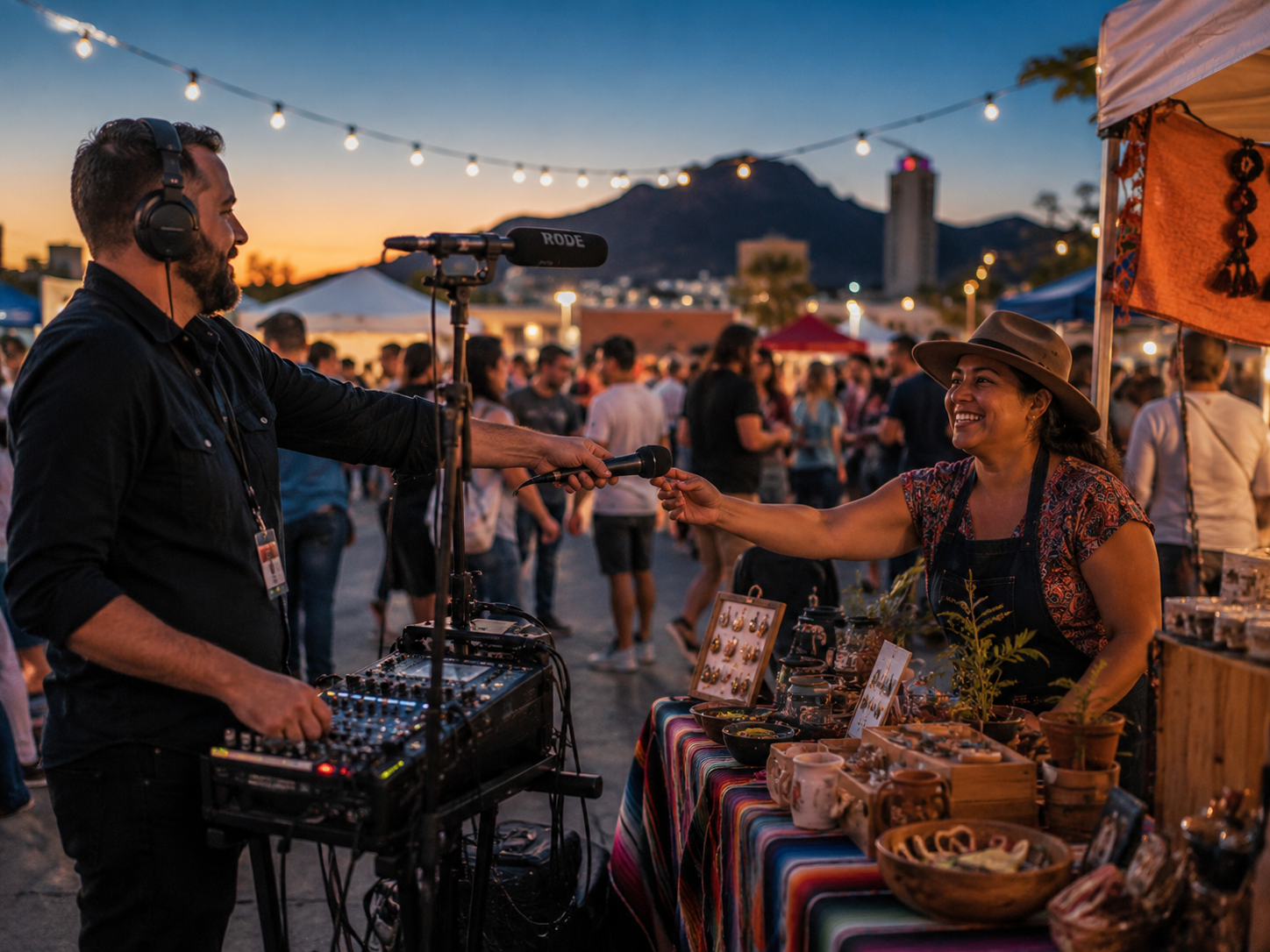
On Location Podcast Recording El Paso: Event Season Playbook
On location podcast recording El Paso brands can book means one thing: the studio comes to your event instead of the other way around. However, most businesses never consider it. So they work a booth all day, collect blurry phone photos, and drive home with nothing to publish. Meanwhile, the vendors, customers, and stories that made the day worth attending walk out the door unrecorded. This playbook shows you how to capture a West Texas event properly — and stretch one afternoon into a month of content.
On Location Podcast Recording El Paso: The Short Answer
Why Event Content Dies in the Camera Roll
First, think about the last event you worked in West Texas. You met great people, the booth stayed busy, and somebody said something worth quoting. So where is all of it now? If you're honest: in a camera roll — shaky video, crowd noise, nothing you'd publish.
The energy of a live event is real, and it disappears the moment you pack up. In fact, that's the core problem: events are experiences, not assets. A phone can witness one; it can't turn one into content.
Also, the fix is not filming more. It's recording on purpose — with a plan, a rig built for noise, and someone whose only job is the audio. For the wider small-business marketing picture, the U.S. Small Business Administration is the standing reference; for the recording itself, keep reading.
What On Location Podcast Recording El Paso Actually Involves
First, the honest logistics. Here's what shows up when you book a field session, and also what each piece is there to prevent.
| Element | What it is | Why it's there | What you get |
|---|---|---|---|
| Mobile rig | Portable mixer, cabling, and a backup recorder | One bad cable can't erase the day | A second copy of every take |
| Microphones | Directional and lavalier mics chosen for crowds | They hear the person, not the room | Interviews you can actually hear |
| Engineer | A pro running gain staging and live monitoring | Nobody at your booth is guessing at levels | You host; the sound is handled |
| Space plan | A booth corner, or roughly ten-by-ten for multi-guest setups | Traffic lanes and echo spots ruin takes | A booth that doubles as a set |
| Interview plan | Names, questions, and time slots set before doors open | Winging it on a loud floor wastes tape | More usable audio per hour |
| Booking window | Ideally two to three weeks before event day | Rushed logistics and missed guests | A calm event morning |
Capturing Clean Audio in a Loud Venue
Loud rooms are the whole challenge, so take them seriously. For example, a festival floor pours music, crowds, HVAC, and announcements into every open microphone. Therefore the rig leans on directional and lavalier microphones — they pick up the voice in front of them and let the room fall away.
Then there's gain staging: setting levels so voices stay clear without distorting. A backup recorder runs the entire time, and monitoring happens live on headphones, so problems get caught mid-interview rather than at home. The Audio Engineering Society publishes the standards work behind this kind of field practice.
Overall, the result sounds simple: interviews recorded at a loud El Paso event that play back like they happened somewhere quiet. Moreover, we've broken down how location affects audio quality if you want the theory behind the practice.
Choosing the Right Spot Inside a Busy Venue
Placement decides half your audio before a single cable is plugged in. So walk the venue like an engineer: away from traffic lanes, away from HVAC vents, away from hard empty walls that bounce sound back into the mic.
Likewise, furnished or carpeted corners absorb reflections and keep interviews clean. Equally, think about sightlines. A spot guests can find, with your branding behind the mic, turns every interview into brand event content El Paso attendees will recognize when it lands on social.
Planning Interviews Before Doors Open
Great event tape is planned, not caught. Before doors open, list the people you want on mic: vendors, organizers, longtime customers, the founder two booths down. Then write three questions per person — specific ones, not "tell me about your business."
Next, build a loose schedule around the event's own rhythm: the quiet first hour for longer conversations, peak hours for quick hits. Of course, plans flex on the day — that's normal. The point is that you record interviews at event pace without losing the thread.
Sun City Tiki and Festival Season: A Practical Example
Take Sun City Tiki at the El Paso Convention Center — exactly the kind of date festival season keeps handing El Paso brands, and the city's calendar runs deep into fall; the City of El Paso keeps the official version. Picture working a booth there: steady foot traffic, music, a stream of small conversations you won't remember by Monday.
Now picture the same booth with a recording corner. Then each vendor neighbor becomes a guest, and each happy customer becomes a testimonial. Also, the day itself becomes an episode — a field recap with real voices and real room tone, which is exactly the event podcast recording El Paso listeners can place themselves inside.
In short, the festival stops being a day you attended and becomes a season of material you own.
Turning One Afternoon Into Weeks of Episodes and Clips
Here's how one afternoon stretches. The raw material comes home as hours of interviews, ambience, and stage moments. Then the cut-down begins: full conversations become episodes, strong minutes become social clips, and single quotes become testimonial spots.
So a strong interview afternoon can feed a publishing calendar for weeks — an episode here, clips in between, testimonials rotating through your ads. In essence, think of it as a mobile recording studio El Paso events plug into: the venue changes, the deliverables don't.
Also, if event day convinces you to launch a show of your own, you can start a podcast in El Paso with the same team in the same booking.
On location recording in El Paso →Booking Timeline and What We Need From You
Basically, booking a field session is a logistics conversation, not a production contract. However, timing matters, so here's the sequence that makes event day easy:
- Two to three weeks out: reach out. Share the event, date, and venue — that window keeps interviews and logistics unrushed.
- One to two weeks out: lock the plan. We confirm the space — a booth corner works, and multi-guest setups want roughly ten-by-ten — and build the interview list with you.
- Event week: confirm guests. Names, time slots, and three questions each, so doors-open chaos can't eat your schedule.
- Event day: host, don't engineer. The rig, the levels, and the backups are our job, so your only job is the conversation.
Naturally, the easiest first step is a logistics quote, not a commitment: tell us the event and we'll tell you what it takes. Want to hear what a finished local interview sounds like first? Play the episode below.
Stephanie Han episode recap →Frequently Asked Questions
Q1 On location podcast recording El Paso: can you record at my event? +
Q2 How much space does an on location setup need? +
Q3 Will background noise ruin event audio? +
Q4 How far in advance should I book on location recording? +
Q5 Where should you set up to record inside a busy venue? +
On Location Podcast Recording El Paso: Bring the Studio to Your Event
So that's on location podcast recording El Paso event season was made for: one planned afternoon, a rig built for noise, an engineer on the levels, and a month of content on the other side. Your next event is already on the calendar. Make it the last one you leave empty-handed.