





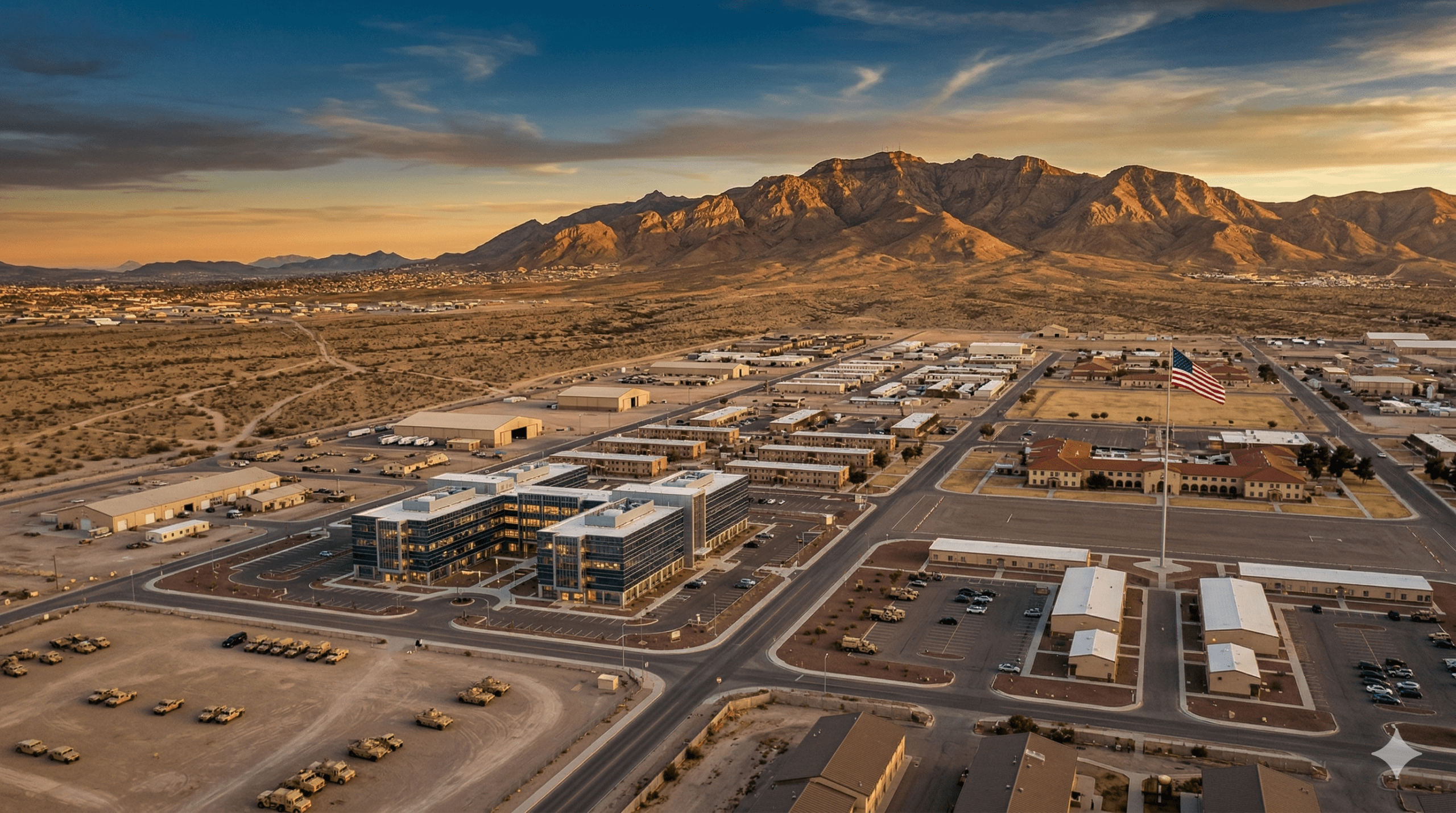
El Paso Just Got a Major Investment — Here's What the Fort Bliss Data Center Deal Really Means
Something big just happened in our city. On March 26, 2026, the U.S. Army announced it has conditionally selected global investment firm Carlyle to build and operate a commercial data center right here on Fort Bliss land. For a lot of people, that headline might sound like government noise. But when you slow down and look at what this deal actually involves — the jobs, the investment, the zero cost to El Paso taxpayers — it starts to feel like something worth paying attention to.
This is not a distant policy decision made in Washington. This is happening on the west side of our city, on land that has been part of El Paso’s story since 1848. And the ripple effects — for families, businesses, and the broader community — are only beginning to take shape.
| Project Detail | Information |
|---|---|
| Announcement Date | March 26, 2026 |
| Location | Fort Bliss, El Paso, Texas |
| Investor / Developer | Carlyle (Global Investment Firm) |
| Project Type | Commercial Data Center |
| Cost to Taxpayers | $0 — fully privately funded |
| Funding Mechanism | U.S. Army Enhanced Use Lease (EUL) Program |
| Projected Jobs Created | Estimated 2,000 |
| Projected Private Investment | Billions of dollars |
| Lead Negotiating Body | Department of the Army + U.S. Army Corps of Engineers |
| Military Spokesperson | Lt. Col. Jessica Rovero, 1st Armored Division |
| Current Status | Conditional agreement — final negotiations underway |
| Reference | Fort Bliss Public Affairs |
What Is the Fort Bliss Data Center Deal — And How Did It Happen?
The U.S. Army has conditionally selected Carlyle — one of the world’s largest private investment firms — to build and run a commercial data center on underutilized land at Fort Bliss. The word “conditionally” matters here. This is not yet a done deal. Final negotiations are still being led by the Department of the Army and the U.S. Army Corps of Engineers, alongside Fort Bliss installation leadership. But the direction is clear, and the momentum is real.
The program making this possible is called the Enhanced Use Lease, or EUL. It is a federal program that allows the military to lease underused land to private companies. The private partner — in this case Carlyle — pays to build, operate, and eventually decommission the facility entirely with private capital. The Army collects revenue from the lease. That revenue then gets reinvested directly into quality-of-life improvements for soldiers and families stationed at Fort Bliss.
In short: El Paso gets a massive new facility, thousands of jobs, and billions in investment — and it costs taxpayers nothing.
What Does "No Cost to Taxpayers" Actually Mean?
This is probably the part most people will want to understand first. When government announcements say “no cost to taxpayers,” it can sometimes be hard to believe. In this case, the mechanism is straightforward.
Under the EUL program, Carlyle takes on full financial responsibility. They finance the construction. They operate the facility. They eventually decommission it when the lease ends. The Army simply leases the land — land that was already sitting underutilized inside Fort Bliss. The Army collects lease revenue. That money flows back into the base to fund things like childcare, housing improvements, recreational facilities, and other quality-of-life programs for military families.
No federal budget line. No El Paso city funds. No state money. Private capital does the work, and the community shares in the benefit.
What This Means for El Paso Jobs and the Local Economy
Here is the number that most people in El Paso will care about most: 2,000 jobs.
That is the Army’s projected employment impact from this project. Some of those positions will come during the construction phase — skilled trades, engineers, project managers, logistics workers. Others will be permanent roles once the facility is operational, including data center technicians, security personnel, facility management, and administrative staff.
Beyond direct hiring, the downstream effects on El Paso’s broader economy could be just as significant. A project of this scale brings spending. Workers need housing, food, services, and transportation. Contractors need local suppliers. A major data center campus creates an entire ecosystem of activity around it.
For El Paso businesses — especially those in construction, real estate, staffing, and professional services — this is an early signal worth watching closely.
Why Fort Bliss? The Strategic Reason El Paso Was Chosen
This deal is not just about real estate. The Army was direct in its announcement: this project advances the military’s goal of building artificial intelligence capability at speed to outpace adversaries.
Data centers are the physical backbone of AI. They house the computing power that trains AI models, processes intelligence data, and supports the next generation of military technology. By placing a commercial-grade data center on Fort Bliss land, the Army gains proximity to that infrastructure while keeping the financial burden off the public.
El Paso’s geography plays a role too. The region offers available land, a growing workforce, and a strategic position in the southwestern United States. Fort Bliss itself is one of the largest military installations in the world by area — making it a natural fit for a project that needs space and security.
What El Paso Residents Can Expect Next
The announcement made clear that this is a conditional agreement, not a finalized contract. Final lease terms are still being negotiated by the Department of the Army and the U.S. Army Corps of Engineers. Fort Bliss installation leadership is part of that evaluation team.
Lt. Col. Jessica Rovero, spokesperson for the 1st Armored Division and Fort Bliss, was direct about the community’s stake in this process: the base has been part of El Paso since 1848, and the Army intends to keep residents informed as the project progresses.
What that means practically: expect public updates as negotiations advance, environmental assessments, and eventually a construction timeline. This will not happen overnight. But the foundation is being laid right now.
How Fort Bliss Has Always Been Part of El Paso's Story
Fort Bliss and El Paso have grown up together. The installation has been a presence in this community since 1848 — longer than Texas has been a state. Over nearly 180 years, the base has shaped the city’s economy, its culture, and its identity in ways that are easy to take for granted.
Military families live in our neighborhoods. Their children go to our schools. They shop at our stores, eat at our restaurants, and contribute to every corner of El Paso life. The base has always been more than a military installation — it has been a neighbor.
This new data center project reflects that same long relationship. It is not the Army doing something to El Paso. It is the Army doing something with El Paso — investing in land that has always been woven into the fabric of this city, and creating opportunity that will reach far beyond the base’s fences.
Frequently Asked Questions About the Fort Bliss Data Center El Paso
What is the Fort Bliss data center project?
The U.S. Army has conditionally selected Carlyle, a global investment firm, to build and operate a commercial data center on underutilized land at Fort Bliss in El Paso, Texas. The project is funded entirely through private capital at no cost to taxpayers.
How many jobs will the Fort Bliss data center create in El Paso?
The project is projected to bring an estimated 2,000 jobs to the El Paso region, spanning construction-phase roles and permanent operational positions once the facility is running.
Will this cost El Paso taxpayers anything?
No. The project operates under the Army’s Enhanced Use Lease program, meaning Carlyle finances, builds, and operates the entire facility using private capital. The Army collects lease revenue, which is reinvested into quality-of-life improvements at Fort Bliss.
Who is Carlyle and why were they chosen?
Carlyle is one of the world’s largest private investment firms. The Army conditionally selected them to build and operate the Fort Bliss data center. Final negotiations are still underway and being led by the Department of the Army and the U.S. Army Corps of Engineers.
When will construction begin on the Fort Bliss data center?
No construction timeline has been announced yet. The current agreement is conditional, and final lease negotiations are still in progress. The Army has committed to keeping the community informed as the project moves forward.
Why does the Army need a data center at Fort Bliss?
The Army stated that the project advances its strategic goal of building artificial intelligence capability at speed to outpace adversaries. Data centers provide the computing infrastructure needed to support AI-driven military technology.
At VenPro Solutions, we keep an eye on the stories shaping El Paso’s business landscape — because what happens in our city matters to the businesses and communities that call it home. Stay connected with the VenPro Insights blog for analysis, perspective, and practical guidance built for El Paso.
Explore more at venpro.solutions/insights